SN Bioscience Co. Ltd., headquartered in Seongnam-si, Gyeonggi-do’s second Pangyo Valley, gained U.S. FDA fast track designation for SNB-101 (SN-38), its new polymer nanoparticle cancer drug candidate for small-cell lung cancer.
The U.S. FDA’s final rule for lab-developed tests was a long time in coming even if the agency shorted the public comment period for the draft rule, and the final rule makes several major concessions about circumstances in which the agency would exercise enforcement discretion.
Imaging is the number one way physicians track cancer progression and burdens within neurology and cardiology, but the ability to take imaging information and interact with it to make better decisions is becoming ever more complicated.
Right on cue, the U.S. FDA’s Center for Drug Evaluation and Research (CDER) is scheduling its first in-person advisory committee meetings since the COVID-19 pandemic. Speaking during a May 6 webinar hosted by the Alliance for a Stronger FDA, CDER Director Patrizia Cavazzoni said the center was preparing to go back to in-person adcoms, adding that the first step likely would be a hybrid model.
In a May 8 Senate hearing, U.S. FDA commissioner Bob Califf described the agency’s advisory committee process as a useful source of information, but Califf reassured members of the Senate that the FDA is not intent in doing away with advisory hearing votes altogether.
The U.S. FDA finalized a guidance for third-party servicing of medical devices, which helps to clarify the distinction between servicing and remanufacturing of a device. However, the most significant change from the draft guidance is that the agency openly declared that it will inspect these independent services organizations, a dramatic shift from the agency’s previous formal stance on these entities.
Right on cue, the U.S. FDA’s Center for Drug Evaluation and Research (CDER) is scheduling its first in-person advisory committee meetings since the COVID-19 pandemic. Speaking during a May 6 webinar hosted by the Alliance for a Stronger FDA, CDER Director Patrizia Cavazzoni said the center was preparing to go back to in-person adcoms, adding that the first step likely would be a hybrid model.
It’s no surprise to hear that industry’s view of a device’s inherent risk differs from that of the U.S. FDA, a disparity that came to surface in a new citizen petition from Metaltronica SpA of Pomezia, Italy. The company petitioned the agency to down-classify digital breast tomosynthesis system to class II, a move that would align the risk classification with full-field digital mammography and ease the premarket path for future digital breast tomosynthesis applications.
In a May 8 Senate hearing, U.S. FDA commissioner Bob Califf described the agency’s advisory committee process as a useful source of information, but Califf reassured members of the Senate that the FDA is not intent in doing away with advisory hearing votes altogether.
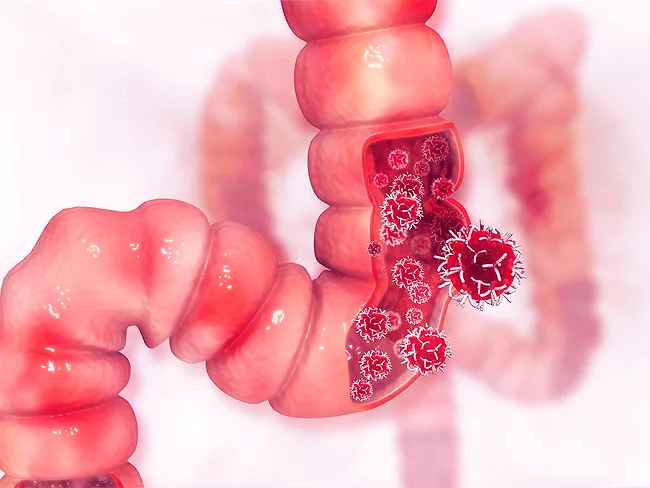
This time a positive result for a cancer screening test brought good news, as Geneoscopy Inc. secured U.S. FDA approval for its RNA screening test for colorectal cancer. The agency based its decision on strong results from the phase III CRC-PREVENT trial in its approval of the noninvasive test for use in individuals aged 45 years and older with average risk for the disease.
 RSS
RSS