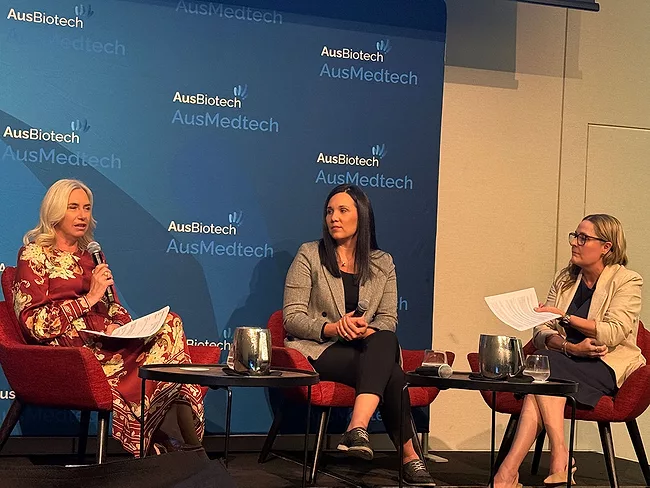
Artificial intelligence, remote monitoring and need-based innovation are beginning to reshape Australia’s medtech sector’s devices, as well as the way health care itself is delivered, according to speakers at the 2026 Ausmedtech conference in Perth May 19-20.
Shanghai Henlius Biotech Inc.’s HLX-3902, a trispecific antibody targeting STEAP1xCD3xCD28, has received approval from the Human Research Ethics Committee (HREC) in Australia and has been filed with the Therapeutic Goods Administration (TGA). The T-cell engager is intended for the treatment of metastatic castration-resistant prostate cancer and other advanced solid tumors.
Scribe Therapeutics Inc. has obtained clearance from Australia’s Therapeutic Goods Administration (TGA) to initiate a first-in-human study of STX-1150 for the treatment of hypercholesterolemia, a major driver of atherosclerotic cardiovascular disease (ASCVD). The phase I study will enroll adults with elevated LDL-C at increased cardiovascular risk at sites in Australia and New Zealand.
Artificial intelligence, remote monitoring and need-based innovation are beginning to reshape Australia’s medtech sector’s devices, as well as the way health care itself is delivered, according to speakers at the 2026 Ausmedtech conference in Perth May 19-20.
Shanghai Henlius Biotech Inc.’s HLX-48 for injection has received approval from the Human Research Ethics Committee (HREC) in Australia and been acknowledged by the Therapeutic Goods Administration (TGA). The first-in-human phase I study in Australia will evaluate HLX-48 in patients with advanced or metastatic solid tumors.
A pricing standoff between Pfizer Inc. and the Australian government has left women with advanced breast cancer facing tens of thousands of dollars in out-of-pocket costs, underscoring a growing global trend in which access to life-extending drugs is increasingly being shaped by pricing negotiations rather than clinical merit.
A pricing standoff between Pfizer Inc. and the Australian government has left women with advanced breast cancer facing tens of thousands of dollars in out-of-pocket costs, underscoring a growing global trend in which access to life-extending drugs is increasingly being shaped by pricing negotiations rather than clinical merit.
Ibio Inc. has received clinical trial notification (CTN) acknowledgement from Australia’s Therapeutic Goods Administration (TGA), as well as Human Research Ethics Committee approval, for IBIO-600, enabling the initiation of a first-in-human trial in Australia.
Alltrna has obtained approval in Australia to initiate a phase I trial of AP-003 in healthy volunteers under Australia’s TGA clinical trial notification scheme. AP-003 is a chemically modified, engineered transfer RNA (tRNA) oligonucleotide encapsulated in a clinically validated, liver-directed lipid nanoparticle.
Ovid Therapeutics Inc. has announced plans to initiate a phase I study of OV-4071, an oral, direct activator of potassium-chloride cotransporter 2 (KCC2), having received Australian Human Research Ethics Committee (HREC) approval and clinical trial notification (CTN) acknowledgement from Australia’s TGA.
 RSS
RSS