Bleeding of unknown cause is a group of rare disorders that are still difficult to accurately diagnose. A case report on a patient with hematoma in the perineal region after her first delivery was presented.
The most common genetic cause of hereditary deafness in humans are mutations in the GJB2 gene, especially the 35delG and 235delC mutations. At the recent ARO meeting, researchers from Ear Nose and Throat Hospital of Fudan University presented the creation of a novel mouse model for studying the pathogenic mechanisms of hereditary deafness resulting from these mutations.
Researchers from the University of Queensland and affiliated organizations recently presented preclinical data for the novel C3a receptor (C3aR) antagonist JR-14a, being developed as a neuroprotective agent for the treatment of post-stroke neuroinflammation.
The rare hereditary fibrinogen disorder hypodysfibrinogenemia is characterized by fibrinogen defects, which can cause thrombotic and hemorrhagic phenotypes that are not always predicted by routine coagulation tests. Researchers from Academic Hospital Maastricht aimed to characterize the genetic profile of a family with hypodysfibrinogenemia and predict bleeding and/or thrombotic phenotypes in asymptomatic family members using innovative testing.
The main causes of vascular cognitive impairment and dementia (VCID) are the breakdown of the blood-brain barrier, reactive astrogliosis and loss of myelination, but its molecular and cellular mechanisms are not clear enough.
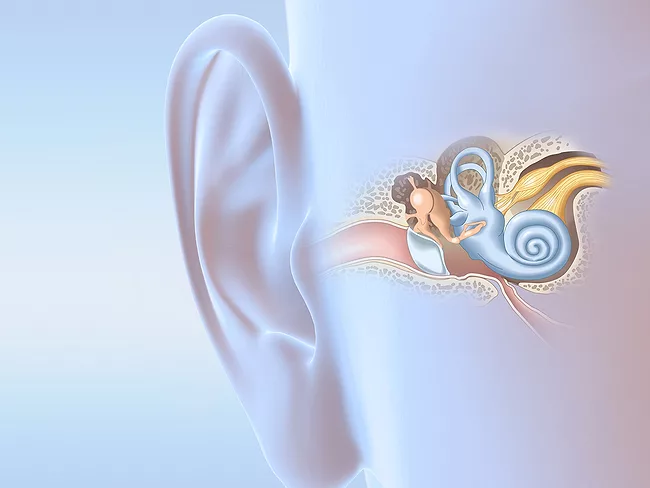
Noise-induced hearing loss is still the most common cause of acquired hearing loss nowadays. The mechanisms behind this may be explained through inflammatory responses in the cochlea after acoustic trauma.
At this week’s WORLDSymposium meeting, researchers from M6P Therapeutics Inc. reported on the preclinical efficacy of M-021, a novel enzyme replacement therapy (ERT) that co-expresses recombinant GAA with a bicistronic vector encoding N-acetylglucosamine-1-phosphotransferase (PTase; S1-S3).
Researchers from JCR Pharmaceuticals Co. Ltd. have presented new data for JR-171, a novel enzyme replacement therapy currently in early clinical development for the treatment of mucopolysaccharidosis type I (MPS I), also known as Hurler syndrome.
It has been previously demonstrated that noise exposure leads to activation of the mitogen-activated protein kinase (MAPK) pathway, and that inhibition of this pathway protects from hearing loss. Tizaterkib (formerly AZD-0364) is a novel, highly selective, orally bioavailable ERK1/2 inhibitor that is currently in early clinical development for the treatment of cancer. In recent work, investigators from Creighton University aimed to assess the potential of tizaterkib for the treatment of noise-induced hearing loss (NIHL).

 RSS
RSS