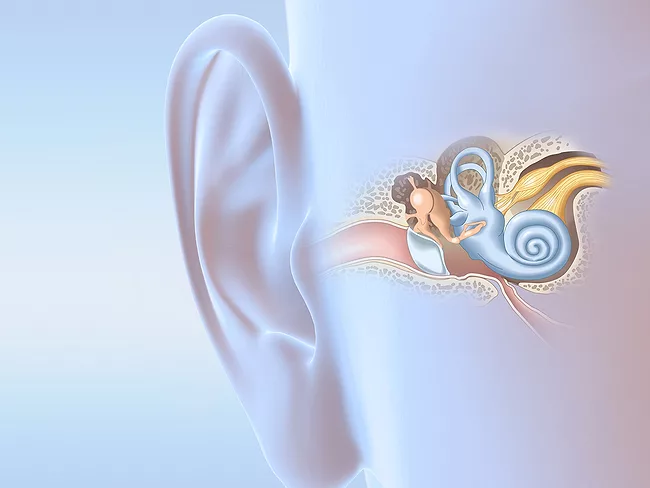
It has been previously demonstrated that noise exposure leads to activation of the mitogen-activated protein kinase (MAPK) pathway, and that inhibition of this pathway protects from hearing loss. Tizaterkib (formerly AZD-0364) is a novel, highly selective, orally bioavailable ERK1/2 inhibitor that is currently in early clinical development for the treatment of cancer. In recent work, investigators from Creighton University aimed to assess the potential of tizaterkib for the treatment of noise-induced hearing loss (NIHL).
Bleeding of unknown cause (BUC) is a diagnosis of exclusion, and it is common for these patients to have congenital platelet function disorders. Whole-exome sequencing may help reach a more accurate diagnosis in these cases.
Agonists of the glucagon-like peptide-1 receptor (GLP-1RAs) have emerged as effective treatments for obesity, but have a negative impact on lean mass during weight loss.
Stroke is the main neurologic cause of global morbidity and mortality with a global prevalence of more than 100 million last year. Under neuropathological conditions such as excitotoxicity associated with stroke, the pro-glycolytic enzyme 6-phosphofructo-2-kinase/fructose-2,6-bisphosphatase-3 (PFKFB3) enhances glucose consumption which leads to redox stress and apoptotic neuronal death.
At the ongoing WORLDSymposium meeting in San Diego, Gain Therapeutics Inc. presented preclinical data on the company’s GCase enhancer GT-02287 as a potential approach to rescue motor function in Parkinson’s disease (PD).
Researchers from Scynexis Inc. have recently presented details on the preclinical characterization of SCY-247, a second-generation triterpenoid with glucan synthase inhibitor activity and intended to be used for the treatment of invasive mucormycosis.
Phosphodiesterase-4 (PDE4) is an intracellular pro-inflammatory enzyme that is considered a therapeutic target in inflammatory disorders such as psoriasis, asthma or ulcerative colitis (UC), among others. Researchers from Palisade Bio Inc. have reported preclinical data on PALI-2108, a PDE4 inhibitor prodrug, in models of UC.
 RSS
RSS