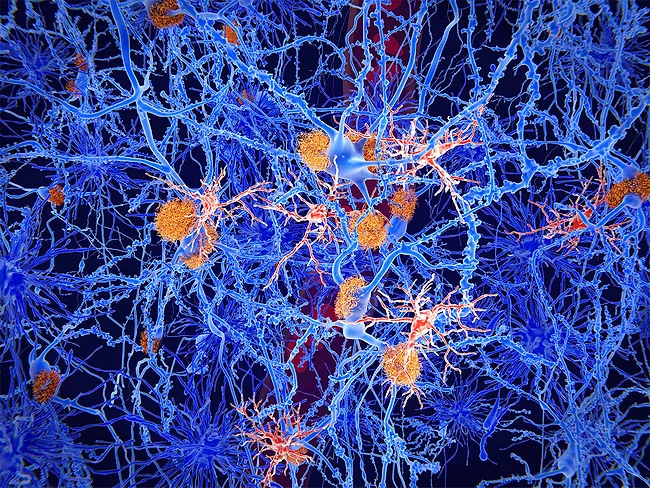
The survival and plasticity of neurons depends on the signaling of the nerve growth factors BDNF and NGF acting through TRK receptors, which is crucial in neurological disorders such as Alzheimer’s disease (AD). Alzecure Pharma’s ACD-856 is a positive allosteric modulator (PAM) of TRK receptors that is in phase I trials for AD, and has shown good safety, pharmacokinetics and target engagement in the central nervous system.
The detection of metastases in Merkel cell carcinoma (MCC) requires additional testing, such as pancytokeratin (panCK) or CK20, with no guarantee of success. Recent findings have identified transcription factor SOX11 and insulinoma-associated protein 1 (INSM1) as sensitive nuclear neuroendocrine markers, but their usefulness in MCC has not been proven.
Spark Therapeutics Inc. has presented a proprietary adeno-associated viral (AAV) vector expressing an artificial miRNA targeting human α-synuclein (α-Syn) mRNA. Accumulation of misfolded and insoluble α-Syn causes neuronal toxicity in preclinical models and has been identified as the underlying cause of synucleinopathies.
Dual-specificity tyrosine phosphorylation-regulated kinase 1A (DYRK1A) is an attractive therapeutic target due to its involvement in cancer and neurodegenerative diseases. Researchers from the National Health Research Institutes and their collaborators have presented a series of DYRK1A inhibitors for reducing neurofibrillary tangle formation in Alzheimer’s disease.
Previous work uncovered the role of the complement system in neuroinflammation and synaptic loss in neurodegenerative disorders such as Alzheimer’s disease (AD). The third component, C3, central in all complement activation pathways, has been proposed as a potential therapeutic target in AD.
Growing evidence exists on regulation of the chloride importer solute carrier family 12 member 2 (SLC12A2), also known as NKCC1, as a therapeutic approach to treat neurological disorders. Altered expression of NKCC1 leads to impaired intracellular chloride levels in neurons and imbalance in the excitatory-inhibitory axis in the brain.
COVID-19 has continued to alarm public health, and although several therapeutics and vaccines have been developed, the development of effective vaccines or antibodies is challenging due to mutations in the surface of the spike protein in the SARS-CoV-2 virus.
At this week’s International Conference on Alzheimer’s and Parkinson’s Diseases and Related Neurological Disorders, researchers from Suntec Medical Inc. and collaborators presented a poster introducing a novel biologic (STM-003) targeting several pathological mechanisms involved in Alzheimer’s disease (AD), aiming to delay disease progression and improve cognitive function.
During the first oral sessions on Translational Drug Discovery at the 19th Alzheimer’s & Parkinson’s Diseases (ADPD) Conference, Beka Solomon from Tel Aviv University presented her work on the therapeutic potential of bone-marrow-derived microglia in Alzheimer’s disease (AD). “After working more than 30 years in immunotherapy, I decided to totally change the subject of the work,” Solomon told the audience.
Pannexin 1 (PANX1) forms channels that may release signaling metabolites that are involved in a variety of pathophysiological processes, such as asthma, diabetes, hypertension or inflammatory bowel disease (IBD), among others. Inhibition of PANX1 when dysregulated has been proposed as a therapeutic approach in the treatment of IBD.

 RSS
RSS