Rett syndrome (RTT) is a rare neurodevelopmental condition affecting multiple organ systems and is most often driven by mutations in the X-linked MECP2 gene. Researchers at Shanghai Duomirui Biological Technology Co. Ltd. have developed a new class of trofinetide prodrugs aimed at addressing limitations related to drug administration and pharmacokinetic properties.
In previous work, researchers from Kawasaki Medical School and collaborating institutions engineered a modified HEXB construct, modHexB, to improve GM2 ganglioside (GM2) recognition and GM2-activating protein (GM2A) interaction. The team has now combined these previous advancements to develop a new gene therapy strategy for Sandhoff disease.
A modified version of CRISPR-Cas9 has enabled, for the first time, the efficient integration of a large transgene capable of inactivating entire chromosomes into one of the three copies of chromosome 21 in Down syndrome-derived cells. The goal is to silence the extra copy to limit the gene-dosage imbalance that drives many features of trisomy 21. Researchers at Beth Israel Deaconess Medical Center turned to XIST, the long noncoding RNA responsible for the natural silencing of the X chromosome in females. Using this strategy, they achieved integration efficiencies of 20% to 40% and a partial reduction in the overexpression of chromosome 21 genes.
Genes that are switched on or off in the human brain differ between men and women. Moreover, these differences are not uniform. They vary across cortical regions and cell types. Scientists at the National Institute of Mental Health (NIMH) and the National Institute on Aging (NIA) used single-cell sequencing and unveiled distinct gene expression patterns regulated by hormones and sex chromosomes. This detailed map of the brain’s molecular biology shows how women and men switch on and off more than 3,000 brain genes differently and expands the catalogue of X chromosome genes that escape inactivation.
Proqr Therapeutics NV has highlighted the continued progression and expansion of its early-stage pipeline of RNA editing therapies, including programs in cholestatic diseases, Hurler syndrome, metabolic dysfunction-associated steatohepatitis and Rett syndrome.
Werner syndrome results from biallelic mutations in the WRN gene on chromosome 8, leading to accelerated aging symptoms. Researchers at Sumitomo Pharma Co. Ltd. have reported the development and characterization of WRN-108, a splice-switching antisense oligonucleotide (ASO) designed to induce exon 27 skipping in WRN transcripts carrying the c.3139-1G>C mutation.
Alltrna has obtained approval in Australia to initiate a phase I trial of AP-003 in healthy volunteers under Australia’s TGA clinical trial notification scheme. AP-003 is a chemically modified, engineered transfer RNA (tRNA) oligonucleotide encapsulated in a clinically validated, liver-directed lipid nanoparticle.
Currently available disease management options for Duchenne muscular dystrophy (DMD) are mostly symptomatic. Several strategies based on exon-skipping or gene transfer have been proposed to restore dystrophin expression, but can only address specific subsets of DMD patients and/or provide limited clinical benefits. Upregulating utrophin (UTRN), a structural and functional paralogue of dystrophin, has been proposed as an alternative therapeutic approach that may be suitable for all DMD patients, regardless of their genetic defect.
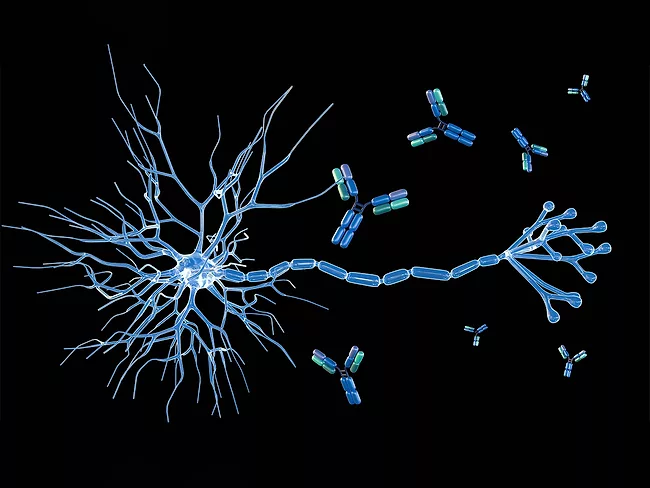
Certain cancers, such as triple-negative breast cancer, produce antibodies that, although they help fight the tumor, can cross the blood-brain barrier and alter the function of NMDA receptors (NMDAR) in the brain, which are essential for neuronal signaling. Scientists at Cold Spring Harbor Laboratory (CSHL) have identified their origin and described how this process is linked to the maturation of these antibodies, which can activate or inhibit the receptor, causing neurological and psychiatric symptoms.
Parkinson’s disease is a progressive neurodegenerative disorder best known for its motor symptoms. However, a proportion of patients also develop dementia as the condition advances. Yet the biological divide between those who experience this cognitive decline and those who do not has remained an open question. Are they different conditions or simply stages of the same disease?
 RSS
RSS