South Korea is moving ahead with its biggest reform of drug review and pricing in more than a decade, reflecting a wider shift across Asian markets to reward innovation and tighten controls on generics.
South Korea is moving ahead with its biggest reform of drug review and pricing in more than a decade, reflecting a wider shift across Asian markets to reward innovation and tighten controls on generics.
Regulatory uncertainty that dominated the life science sector in 2025 is transitioning into an execution framework for biotechnology companies, provided companies can tailor regulatory strategies early, and across the entire development cycle.
South Korea’s Ministry of Food and Drug Safety (MFDS) approved Curocell Inc.’s Rimqarto (anbalcabtagene-autoleucel; anbal-cel) April 29 as the first homegrown CAR T-cell therapy to treat patients with advanced diffuse large B-cell lymphomas.
Regulatory uncertainty that dominated the life science sector in 2025 is transitioning into an execution framework for biotechnology companies, provided companies can tailor regulatory strategies early, and across the entire development cycle.
South Korea’s Ministry of Food and Drug Safety (MFDS) approved Curocell Inc.’s Rimqarto (anbalcabtagene-autoleucel; anbal-cel) April 29 as the first homegrown CAR T-cell therapy to treat patients with advanced diffuse large B-cell lymphomas.
South Korea is rolling out regulatory changes to speed biosimilar development, including reforms to shorten review timelines, ease phase III trial requirements and simplify oversight of manufacturing changes.
AI and advanced biotechnology are reshaping South Korea’s med-tech sector, but great technology alone is not enough to build a successful medical device company, speakers said at MedTech Innovator’s Medtech Spotlight: New Impact Korea 2026.
AI and advanced biotechnology are reshaping South Korea’s med-tech sector, but great technology alone is not enough to build a successful medical device company, speakers said at MedTech Innovator’s Medtech Spotlight: New Impact Korea 2026.
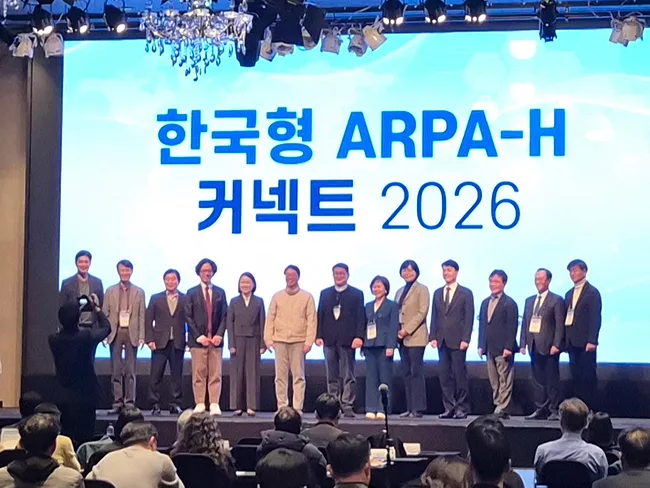
The K-health MIRAE Initiative, also known as Korean ARPA-H, announced plans to allocate about ₩162 billion (US$110 million) in nine new projects over the next five years, with a focus on strengthening national health security.
 RSS
RSS