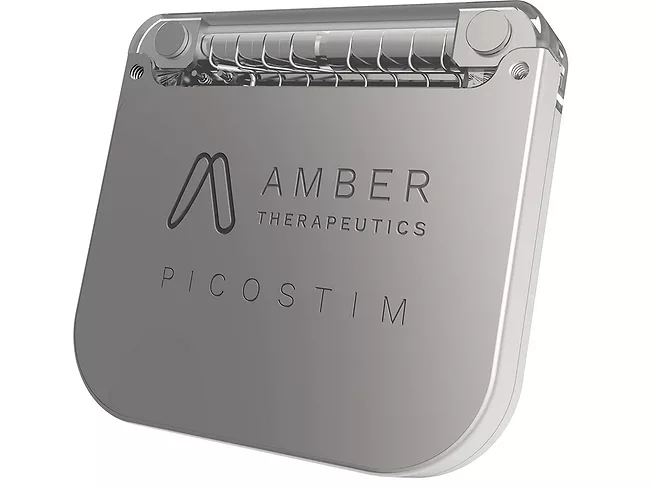
At least half of women experience urinary incontinence at some point in their lives but few discuss the condition with their physicians. In part, that’s because most women believe few effective treatments exist for urinary leakage – and until recently, they were right. Several advances in 2024, however, offer new hope.
Women with endometriosis may soon be able to have a simple blood test to diagnose their disease thanks to a breakthrough by Proteomics International Ltd. that has developed a plasma protein biomarker panel that identifies all stages of endometriosis.
Celmatix Therapeutics (Celmatix Inc.) has announced a new drug program for endometriosis, with the development of a novel Jun-N-terminal kinase (JNK) inhibitor that targets pain and inflammation. The company’s aim to focus on JNK inhibitors with greater specificity for JNK1 and JNK3 than for JNK2 led it to license lead compounds from Baylor College of Medicine.
Artificial intelligence (AI)-based models developed by a team of international researchers were able to identify ovarian cancer in ultrasound images more accurately than humans. Results from a study published in Nature Medicine showed that the AI models achieved an accuracy rate of 86.3%, compared to 82.6% for the experts and 77.7% for the non-expert examiners.
For more than a decade, HIV remained the only sexually transmitted infection (STI) with U.S. FDA approval of at-home sample collection, but a growing number of tests for sexually transmitted infections have received the regulatory greenlight for patients to swab themselves in the privacy of their own homes in recent years. With STIs reaching levels not seen in decades, regulators and physicians hope that the move will increase diagnostic rates and reduce disease spread by overcoming stigma and access barriers.
Companies working in the field of women’s health have long struggled for funding, but as the number of these companies increase and new dedicated venture capital funds emerge, the conversation is changing.
Around the end of every year, the media reports on pregnancy and women who give birth on the last and first days of the new year. They tell their stories, the names of their babies and the cities where they were born. While 2024 was coming to an end, gynecologists and other researchers finalized their publications to improve the health of women and their babies. The formation of the placenta or the study of preeclampsia are some of the first and last stories that greet and say goodbye to 2024. Those of 2025 will be born soon.
Around the end of every year, the media reports on pregnancy and women who give birth on the last and first days of the new year. They tell their stories, the names of their babies and the cities where they were born. While 2024 was coming to an end, gynecologists and other researchers finalized their publications to improve the health of women and their babies. The formation of the placenta or the study of preeclampsia are some of the first and last stories that greet and say goodbye to 2024. Those of 2025 will be born soon.
Cyclins regulate steroid receptor action in cyclin-dependent kinase (CDK)-dependent and independent manners. In addition to regulating the cell cycle, cyclin A2 (CCNA2) also mediates female sex steroids 17 β-estradiol and progesterone signaling in vitro, which is essential for fertility.
Dexcom Inc. put real money behind expanding its integration efforts, with a $75 million investment in the $200 million series D for Ōura Health Oy, the maker of the Ōura smart ring. Ōura and Dexcom also provided details on a strategic partnership that integrates data from Dexcom’s continuous glucose monitors with vital sign, sleep, stress, heart health and activity data from the Ōura ring.
 RSS
RSS