Worrisome new signals caused the U.S. FDA – which earlier this month OK’d revised labeling for Valneva SE’s chikungunya virus vaccine Ixchiq – to suspend the product’s license altogether. Regulators pointed to four added reports of serious adverse events consistent with chikungunya-like illness, and told Valneva, of Saint Herblain, France, that the company must stop U.S. shipping and sales of the product. Shares (NASDAQ:VALN) closed Aug. 25 at $9.43, down $2.21, or 19%.
Multiple datasets are due to roll out soon in the Prader-Willi syndrome (PWS) space, where contenders are trying varied mechanisms of action to tackle the rare genetic disorder characterized by insatiable hunger, or hyperphagia. In the mix are Aardvark Therapeutics Inc., Acadia Pharmaceuticals Inc., Rhythm Pharmaceuticals Inc. and Soleno Therapeutics Inc.
Celldex Therapeutics Inc. will not advance barzolvolimab (CDX-0159, barzo) in eosinophilic esophagitis (EoE) after taking a look at top-line data from the ongoing phase II effort. The study met its primary endpoint, proving barzo’s efficacy in depleting mast cells in the gastrointestinal (GI) tract, but this didn’t improve symptoms of EoE – a chronic inflammatory disease of the esophagus – which means mast cells are not a primary driver. Hampton, N.J.-based Celldex noted that barzo did turn up a favorable safety profile.
Rates of adverse events (AEs) gave pause to some on Wall Street, and shares of Viking Therapeutics Inc. (NASDAQ:VKTX) fell 42%, or $17.73, to close Aug. 19 at $24.36 after the firm reported 13-week data from the phase II trial with the oral tablet form of VK-2735, the company's dual agonist of the glucagon-like peptide 1 (GLP-1) and glucose-dependent insulinotropic polypeptide (GIP) receptors.
With the U.S. FDA clearance of the sNDA for Wegovy (semaglutide) from Novo Nordisk A/S to treat noncirrhotic metabolic dysfunction-associated steatohepatitis (MASH), Wall Street speculation deepened as to the consequences for Madrigal Pharmaceuticals Inc.’s Rezdiffra (resmetirom), a thyroid hormone receptor-beta (THR-beta) agonist that won the MASH go-ahead last year.
Elysium Therapeutics Inc. aims to tackle the problem of opioid overdose with a longer-lasting rescue agent that gets around the not-much-publicized problem of fentanyl rebound, or re-narcotization, which happens when the standard reverser wears off and the culprit drug stays active in the body, potentially killing the patient.
In part one of this story on Elysium Therapeutics Inc., published Aug. 14, company officials explained the rationale and technology behind the plan to formulate a longer-lasting opioid-overdose rescue agent – one that remedies the problem of fentanyl rebound, or re-narcotization, which happens when the standard reverser wears off and the culprit drug stays active, potentially killing the patient.
Elysium Therapeutics Inc. aims to tackle the problem of opioid overdose with a longer-lasting rescue agent that gets around the not-much-publicized problem of fentanyl rebound, or re-narcotization, which happens when the standard reverser wears off and the culprit drug stays active in the body, potentially killing the patient.
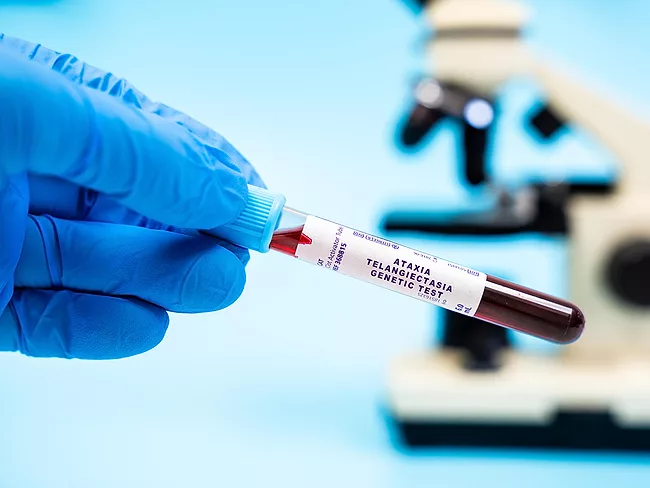
Quince Therapeutics Inc.’s mid-July completion of enrollment in the pivotal phase III study in ataxia-telangiectasia (A-T) marked an important milestone for the South San Francisco-based firm, which is not the only contender in the space. The study called NEAT – a rough acronym for “Neurological Effects of eDSP on Subjects with A-T” – will evaluate Quince’s lead asset, eDSP, in the neurodegenerative illness.
Insmed Inc. CEO William Lewis said that offering two doses of Brinsupri (brensocatib) will complicate payer coverage “not at all, just the opposite. It’s going to give the flexibility to physicians to choose how they want to engage with their patients, wrestle with whatever issues may be in their minds related to safety [and] what have you.” The U.S. FDA approved Insmed’s first-in-class dipeptidyl peptidase 1 inhibitor, Brinsupri, given in 10-mg and 25-mg tablets as a once-daily treatment for noncystic fibrosis bronchiectasis in adults and children 12 and older.