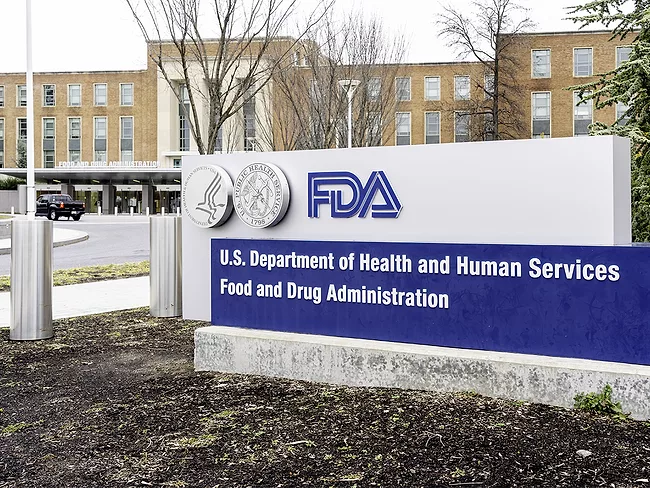
U.S. federal preemption of state law for devices approved by the FDA is a matter of record, but a recent case affirms the staying power of Supreme Court jurisprudence on that point.
The proposal to overhaul the use of terminal disclaimers in U.S. patent filings won over no fans among former directors of the U.S. Patent and Trademark Office, but device and drug makers, too, are concerned about the proposal.
The U.S. Agency for Healthcare Research and Quality posted a request for information on the current state of multi-cancer screening tests for a review that poses several questions.
The U.S. CMS proposed a series of changes to the Medicare series of codes for diagnostic-related groups, and device makers had pointed remarks about some of those proposals.
The U.S. FDA proposed to overhaul guidances for maxillofacial systems that accumulated at least 18 years' of dust, in an effort to keep up to date with modern medical technology.
The U.S. FDA approved the PMA application for the Shield test by Guardant Health Inc., a diagnostic for colorectal cancer that avoids some of the issues with alternative diagnostic methods. There are lingering questions about Medicare coverage and physician adoption, however, the answers to which may take a year or two to emerge.
The U.S. FDA approved the PMA application for the Shield test by Guardant Health Inc., a diagnostic for colorectal cancer that avoids some of the issues with alternative diagnostic methods. There are lingering questions about Medicare coverage and physician adoption, however, the answers to which may take a couple of years emerge.
Thermoablation of thyroid nodules meets the patient’s standard of minimal invasiveness and is supported by the literature as an effective treatment for these nodules, which may become cancerous.
Artificial intelligence might solve a world of cost issues for medical science, but the results of a recent study suggest that the day has not yet come when hospitals and doctor’s offices can just feed data into a computer and expect a reliable and intelligible diagnosis.
Regulation of artificial intelligence for medical devices is still a developing space, but market competition authorities in the European Union, the U.K. and the U.S. are already examining the potential for anticompetitive behavior in this rapidly growing technological arena.