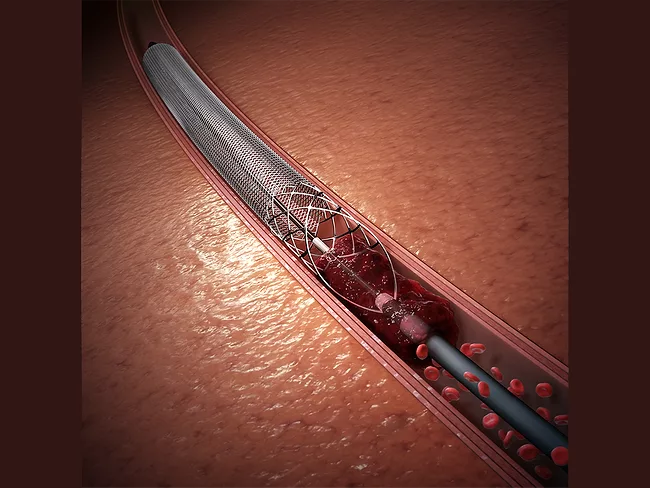
The U.S. FDA recently announced that Inari Medical Inc. issued a recall that corrects the instructions for use for roughly 2,500 units of the Clottriever XL catheter due to reports of device entrapment in the lung.
Additive manufacturing at the point-of-care (POC) might seem to open the world of medical device litigation to new theories of liability, but that isn’t likely in part because hospitals are wary of assuming the elevated legal risk associated with taking ownership of POC manufacturing activities.
Product liability is always a point of concern for manufacturers of medical devices and other U.S. FDA-regulated products, and the broad contours of product liability jurisprudence are well known by corporate counsel. However, artificial intelligence products are rapidly pressing their way into routine clinical use, representing a technological shift that may occasionally deviate from the existing rules of the road where product liability is concerned.
The U.S. CMS said its Medicare administrative contractors withdrew a draft local coverage determination that would have restricted the use of surveillance testing for allograft rejection.
TGA opened a consultation for regulation of assistive technologies, a key element of which is to make determinations about the regulatory status of some of these products. While the agency makes clear that some items that are currently unregulated may soon be subject to regulation, one of the more innocuous-seeming articles that may fall under regulation is the common and seemingly innocuous wig.
The U.S. FDA’s draft guidance for predetermined change control protocols for all device types fills in a gap left by previous draft guidance, but there is one potential stopping point for class III devices.
The U.K. Medicines and Health Care Products Regulatory Agency enacted its AI Airlock program for artificial intelligence – the agency’s branding for its regulatory sandbox for this type of medical software.
The U.S. FDA’s effort to regulate lab-developed tests was predictably controversial, but the final rule drew a second lawsuit, this time from the Association for Molecular Pathology.
The New York Times published an article on Aug. 20 about potential conflicts of interest on the part of Jeff Shuren, former director of the Center for Devices & Radiological Health (CDRH), arguing that Shuren may have failed to recuse himself in matters in which his wife, a regulatory attorney, represented a medical device maker.
The U.S. Government Accountability Office’s report on FDA oversight of medical devices acknowledges that the agency has made strides in its efforts to develop surveillance systems to track adverse events, but there are shortcomings.