The number of biopharma deals with nonprofits or government entities has dropped over last year, partly due to fewer COVID-19-related alliances, but the activity in 2022 is still strong in comparison to pre-pandemic years.
An increasing number and rising value of high-money biopharma deals has placed early 2022 above all recent years, even though there are fewer partnerships overall.
Stocks that make up BioWorld’s Drug Developers Index have tumbled by more than 17% since the start of the year, with only five of the 30 component companies showing a rise in share price. The Nasdaq Biotechnology Index and the Dow Jones Industrial Average also are down by 12.2% and 2.41%, respectively, indicating the biotech industry, which has experienced huge stock surges during the past two years, is now struggling, dropping more sharply than the broader markets.
The amount of money raised in January by biopharma companies has fallen 55% from the same month in 2021 and 31% from January of 2020, indicating less enthusiasm from investors and a potential slowdown in financings for 2022. In total, January of 2022 has recorded significantly less fundraising than each of the past two years, with $4.8 billion (79 transactions), well below 2021’s $10.79 billion (159 transactions) and down from 2020’s $6.95 billion (131 transactions).
Only three other years during the past three decades did the U.S. FDA approve more new molecular entities (NMEs) than the 50 cleared in 2021, a year that was plagued with numerous delayed decisions. There were 53 NME approvals in 1996 and 53 again in 2020. The record is held by 2018, which had 59 approvals.
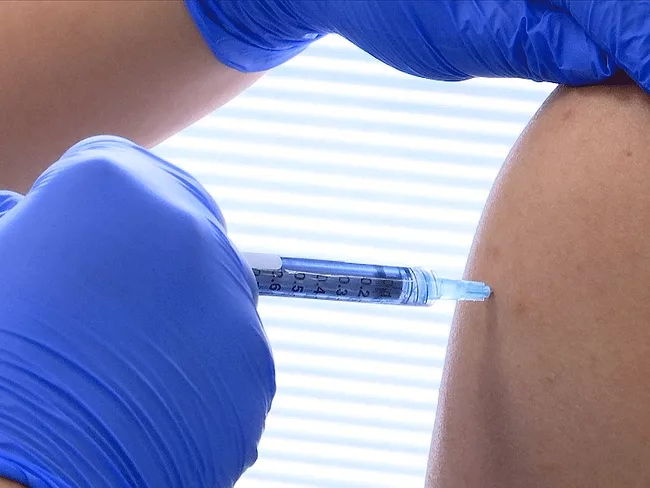
During the most infectious COVID-19 month since the pandemic began, January recorded an increase of 82.3 million confirmed cases worldwide, an amount that is fourfold the average monthly increase over the past year. It comes at a time when the highly transmissible omicron variant continues to circulate, bolstered by a new subvariant, BA.2, which is outcompeting its predecessor. Meanwhile, regulatory agencies are authorizing antivirals, swapping monoclonal antibodies based on their efficacy against omicron, and approving new vaccine options, including Novavax Inc.’s protein-based vaccine Nuvaxovid (NVX-CoV2373).
While BioWorld’s Infectious Disease Index showed a huge 144% climb in 2020, an enthusiastic response toward defeating the SARS-CoV-2 virus, the index dropped significantly in early 2021 and spent most of the year spiking up and down, reacting abruptly to the promises of herd immunity and the threats of vaccine-resistant variants.
The amount of clinical data reported in January so far is currently 30% below the amount reported during the same month last year, which was the slowest month of 2021.
In one of the most extraordinary years for med-tech mergers and acquisitions, 2021 is the culmination of a snowballing interest in maturing digital technologies amid mounting COVID-19 pandemic problems and uncertain futures. Societal lockdowns in 2020 boosted notice of telehealth, testing and remote monitoring devices, but that notice ramped up even more in 2021, not only as new SARs-CoV-2 variants emerged, but as businesses sought innovative ways of delivering their products.
While med-tech financings in 2021 fell about 17% below the amount raised in 2020, the industry still collected $49.26 billion, significantly more than each of the two previous years, and driven primarily by digital health and diagnostic technologies.