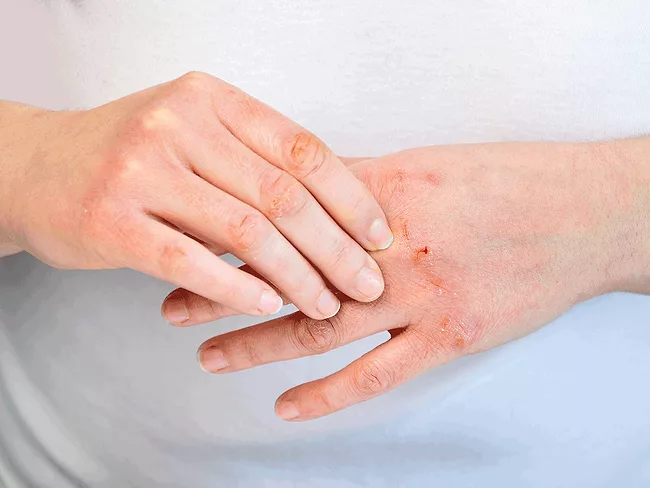
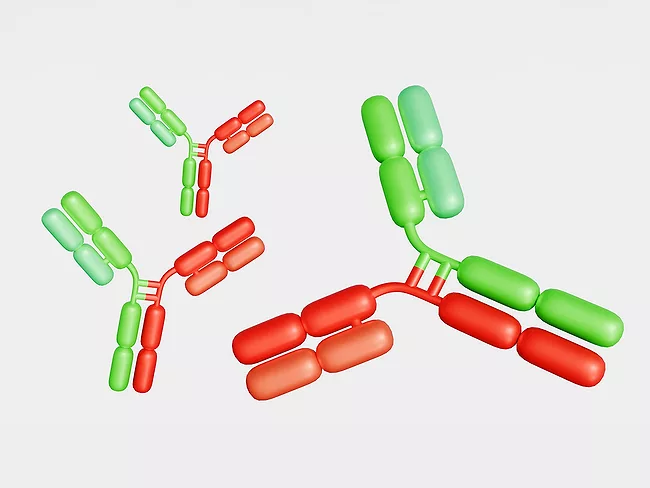
Simcere Pharmaceutical Group Ltd.’s monoclonal antibody, rademikibart (CBP-201), met the primary endpoint in a Chinese phase III study in adults and adolescents with moderate to severe atopic dermatitis.
Infinimmune Inc. has recently presented results at the annual American Academy of Dermatology conference regarding their anti-IL-22 antibody IFX-101 for the treatment of atopic dermatitis.
Dysregulated type 2 immune responses are central in atopic dermatitis (AD) pathophysiology. Key cytokine IL-13 drives epidermal barrier dysfunction and inflammation, while IL-31 mediates pruritus via activation of sensory neurons. Both represent clinically validated, complementary targets addressing both inflammation and itch in AD.
Data presented at the 2026 American Academy of Dermatology (AAD) meeting have put the spotlight on the arrival of target-selective oral therapies that are set to challenge injected biologics in terms of efficacy, while offering greater convenience and improving access to treatment.
Biolojic Design Ltd. has earned an additional milestone payment from its collaboration partner, Teva Pharmaceutical Industries Ltd., for TEV‘325 (TEV-56308, formerly BD-9), a multibody targeting IL-13 and thymic stromal lymphopoietin (TSLP) for autoimmune disease
In a competitive and still-needy space where Apogee Therapeutics Inc. CEO Michael Henderson noted that “even modestly differentiated products are quickly becoming blockbusters,” his firm’s IL-13 antibody zumilokibart (zumi, APG-777) has turned up satisfying phase II data in part A of the phase II atopic dermatitis (AD) experiment called Apex in moderate to severe disease. “We’re still digesting the data,” Henderson added, pointing out that the results proved better than Apogee expected at both time intervals tested.
Atopic dermatitis (AD) is an inflammatory skin disease accompanied by pruritus, for which IL-13 and IL-31 are clinically validated targets. Earendil Labs Inc. has developed a bispecific antibody targeting both IL-13 and IL-31, HX-16108, with an extended half-life.
Shortly after Amgen Inc. walked away from its partnership with Kyowa Kirin Co. Ltd., the Tokyo-based company said it is discontinuing all ongoing clinical trials for rocatinlimab due to safety concerns.
The signaling axis orchestrated by OX40L-OX40 is a T-cell costimulatory pathway implicated in multiple autoimmune diseases, such as atopic dermatitis (AD). Antibodies targeting this pathway have proven useful at treating AD in the clinical setting. Earendil Labs recently presented data regarding HXN-1021, an anti-OX40L antibody with potent activity and extended half-life, in vivo.
Harbour Biomed Ltd. and Sichuan Kelun-Biotech Biopharmaceutical Co. Ltd. have announced IND approval by China’s National Medical Products Administration (NMPA) for HBM-7575 (SKB-575) for the treatment of atopic dermatitis.