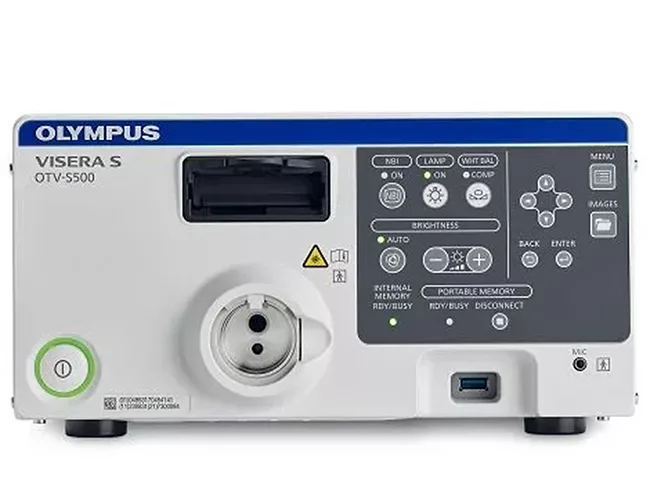
Tokyo-based Olympus Corp. launched a new video imaging platform called Visera S (OTV-S500) in Europe and select Asian countries September 2024 while advancing more rollouts for the product worldwide.
The U.S. FDA’s May 23 advisory hearing for the Shield test for colorectal cancer by Guardant Health Inc., included the expected debate over whether patients would abandon colonoscopy thanks to the advent of a new blood-based test. While much of that debate was fed by what some saw as the test’s poor performance with regard to adenoma, the advisory committee voted 7-2 that the benefits outweigh the risks in a decision the FDA is likely to affirm.
Endostart s.r.l. received U.S. FDA 510(k) clearance for Endorail, a magnetic balloon system which helps resolve intestinal looping and facilitates the efficiency and safety of colonoscopy procedures. The approval is an “important milestone” for the company as it will allow Endostart to bring its technology to the U.S. market to empower physicians, Alessandro Tozzi, co-founder and CEO of the company, told BioWorld.
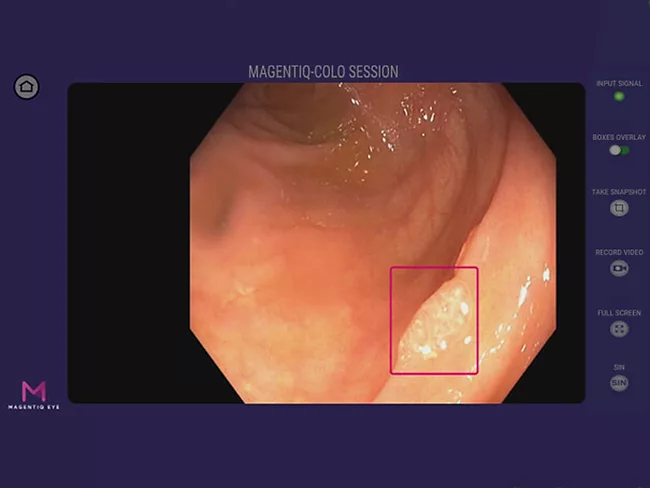
Magentiq-Eye Ltd. received U.S. FDA 510(k) clearance for its Magentiq-Colo, an artificial intelligence (AI) gastrointestinal software system that helps detect lesions in real time during colonoscopy procedures. With the rate of colorectal cancer expected to increase steadily through the decade, the company hopes that Magentiq-Colo will offer the gastroenterology community and its patients a significant increase in the adenoma detection rate.
Wuhan Endoangel Medical Technology Co. Ltd.’s artificial intelligence (AI)-assisted real-time quality control and auxiliary diagnosis system for lower gastrointestinal endoscopy has been approved by China’s NMPA.
The gastroenterology team at the Paoli-Calmettes Institute in Marseille, France is conducting a therapeutic trial using G-Eye, the latest generation of colonoscope from Hanofar, Israel-based Smart Medical Systems Ltd. “The aim is to increase the detection rate of polyps thanks to a new type of device that can be connected to the current colonoscopes on the market,” Jean-Philippe Ratone, the principal investigator of the study and gastroenterologist at the Paoli-Calmettes Institute told BioWorld.
Colorectal cancer (CRC) is expected to increase steadily through the decade to reach more than 2.2 million cases and 1.1 million deaths by 2030 as two concurrent trends tick up—an aging population, that typically has higher rates of the disease, and an alarming increase in cases in younger people. Iterative Scopes Inc. hopes to help gastroenterologists find precancerous lesions before they progress with its Skout device, which received U.S. FDA 510(k) clearance this week.
Despite wide availability and coverage for colonoscopy, many patients diagnosed with colorectal cancer (CRC) have never undergone the recommended screening procedure for the malignancy and its precursors. As a result, the cancer has already spread in the majority of cases at the time of diagnosis. CRC remains the third most common cancer diagnosed in the U.S. and the second leading cause of cancer death for both men and women.
Shenzhen Xzing Technology Co. Ltd. received marketing approval from China’s NMPA for its Endofresh disposable electronic colonoscope. The disposable colonoscope provides images with 1920 x 1080 pixels, which helps with diagnosis. It is equipped with auxiliary water and a lens-washing function to make sure of clear vision throughout endoscopy. It also allows users to insert endoscopic accessories at any bending angle no more than 210 degrees.
A 2,000-patient U.K. study has been set up to generate real-world evidence of the value of using AI technology to detect bowel polyps (adenomas) during colonoscopy procedures. The aim is to show whether Medtronic plc’s GI Genius system improves the detection of polyps when deployed in both expert centers and non-specialist units, in the routine diagnostic screening of patients referred from primary care or through the national fecal immunochemical testing program.