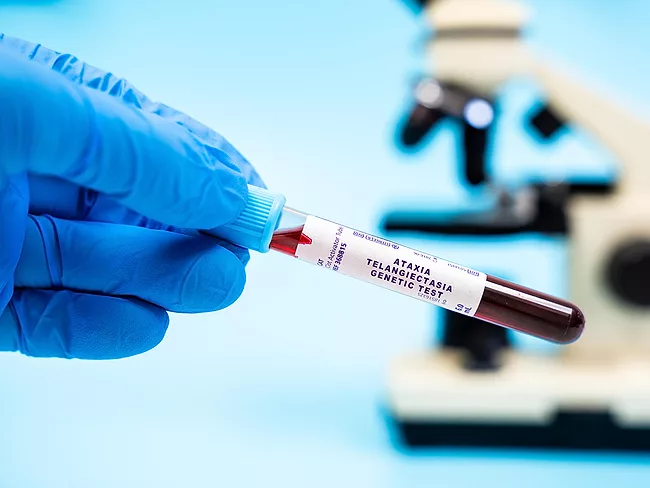
A Jan. 28 report on Medicare spending on lab tests indicated that spending on many types of tests flattened between 2022 and 2024, but spending on genetic tests rose 20% between 2023 and 2024 to $3.6 billion. While the report does not specifically call out fraud as a driver of spending, the U.S. Department of Justice posted a Jan. 26 press release identifying a case of Medicare gene testing fraud that amounted to $52 million, just one of several recent examples of this kind of fraud.
The U.S. Department of Justice said recoveries under the False Claims Act in fiscal year 2025 reached a record of more than $6.8 billion, more than 80% of which came from health care cases.
The U.S. Securities and Exchange Commission announced Dec. 23 that Bryan Scott McMillen has agreed to pay a total of more than $140,000 due to allegations of insider trading in connection with Boston Scientific Corp.’s acquisition of Apollo Endosurgery Inc. The failure of federal authorities to prosecute McMillan under the criminal code may be a reflection of the relatively small sums he had illicitly obtained in the transaction. A Department of Justice investigation resulted in a conviction for $1 billion in health care fraud.
Much has been made of the recent skyrocketing of Medicare spending on skin substitutes, but a new enforcement action by the U.S. Department of Justice might help to explain some of those spending increases.
Aesculap Implant Systems LLC has seen its share of bad news recently, but the company seems to have cleared the legal deck with an agreement to pay $38.5 million per a Nov. 17 announcement by the U.S. attorney’s office for the district of Eastern Pennsylvania.
The Advanced Medical Technology Association has updated its code of ethics for interactions with health care professionals, which includes some much-needed updates that address both the burgeoning reliance on data and the increasing emphasis on the part of U.S. regulators on data security.
Bard Peripheral Vascular Inc., agreed to pay $7.2 million to settle allegations that two photoplethysmography products it distributed were the subject of illicit Medicare claims, a problem the company inherited when it decided to do business with Semler Scientific Inc. of Campbell, Calif.
Kingsley Chin, the CEO of Spinefrontier Inc., has been sentenced to a year of supervised release for his role in the payment of less than $5,000 in consulting fees to a surgeon who provided no consulting services.
The U.S. Department of Justice announced July 31 that Illumina Inc. agreed to pay $9.8 million to settle allegations it sold genomic sequencing equipment that suffered from cybersecurity problems. The settlement concludes a qui tam lawsuit filed by a former employee and highlights the hazards of poor cybersecurity for med-tech firms.
The U.S. False Claims Act (FCA) is not the only statute governing the submission of false claims to federal agencies thanks to the more than 30 states with their own versions of the FCA. However, the federal government is providing states with more incentives to amplify their FCA-related activities, a development that raises the stakes for companies in the life sciences.