Innovacell Inc. launched a ¥14.16 billion (US$91.2 million) stock sale on the Tokyo Stock Exchange Feb. 24, ending a near two-year lull of biotech listings in Japan while signaling a dynamic year ahead for cell-based therapeutics.
Boston Scientific Corp. plans to acquire Valencia Technologies Corp. in the first half of 2026 in a move that will expand its urology portfolio. Valencia makes the Ecoin system, an implantable tibial nerve stimulator (ITNS) designed to treat urge urinary incontinence (UUI). The companies did not disclose terms of the deal, which is not expected to have a material impact on 2026 earnings per share.
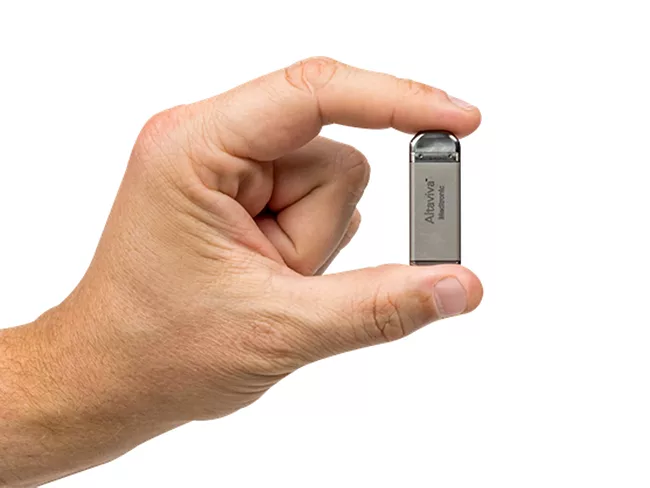
Medtronic plc received U.S. FDA approval for Altaviva, a minimally invasive implantable tibial neuromodulation device designed to treat urge urinary incontinence. Insertion near the ankle requires neither sedation nor imaging and patients walk out the clinic door with the device already activated.
Relief Srl raised more than €1 million (US$1.08 million) in financing for Urorelief, its endourethral medical device which treats stress urinary incontinence. The Italian startup will use the funds to conduct clinical trials to validate the device as it looks to transform the lives of men and women suffering from the condition.
At least half of women experience urinary incontinence at some point in their lives but few discuss the condition with their physicians. In part, that’s because most women believe few effective treatments exist for urinary leakage – and until recently, they were right. Several advances in 2024, however, offer new hope.
Stimvia s.r.o. recently secured Medical Device Regulation certification for its Uris neuromodulation system to deliver both percutaneous tibial nerve stimulation and peroneal electrical transcutaneous neuromodulation to treat lower urinary tract symptoms.
The first patenting from Los Angeles-based Ecate LLC sees the company’s founder, Allesandro Maggi, describe a bi-directional, closed-loop spinal cord machine interface that can bridge the gap in communication between the brain and the body in paralyzed patients.
EG 427 SAS has received IND clearance from the FDA for EG-110A, a gene therapy for the treatment of neurogenic detrusor overactivity in patients with spinal cord injury. A phase Ib/IIa study is being initiated.
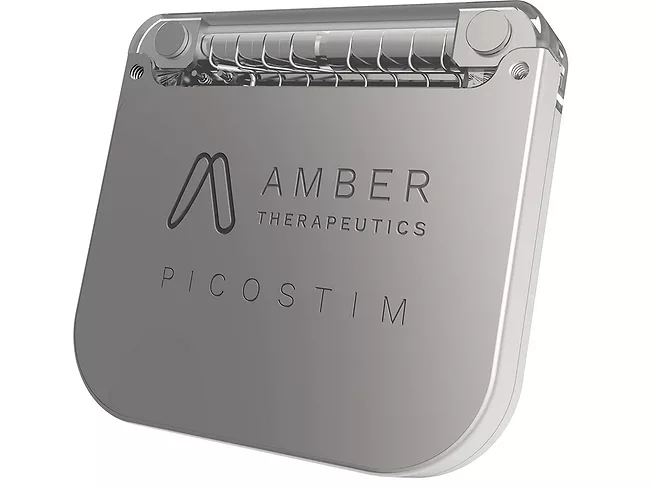
Amber Therapeutics Ltd. has raised $100 million in a series A funding round to further develop its implantable closed-loop bioelectrical therapy to treat women suffering from mixed urinary incontinence. The financing is one of the largest series A rounds ever seen in Europe’s medical technology space and comes at a time when many med-tech companies are struggling to raise funds.
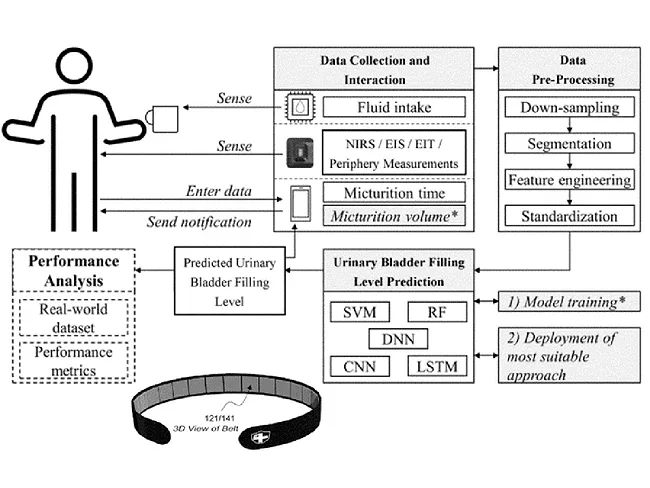
In what represents the first PCT filing to be published in the name of Bayreuth, Germany-headquartered Incontalert GmbH, the company’s co-founders seek protection for a wearable device which employs machine learning techniques to non-invasively predict the bladder filling level for incontinence patients.