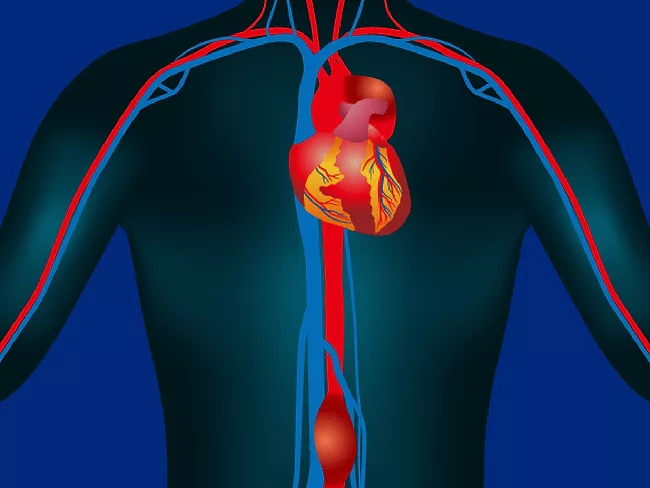
Abdominal aortic aneurysm is a life-threatening cardiovascular disease characterized by chronic inflammation and irreversible dilatation of the abdominal aorta and is asymptomatic at the early stages of the disease, with diagnosis usually relying on imaging techniques and surgery being the main approach for treating it.
Researchers have identified glutathione peroxidase 4 (GPX4) as a therapeutic target in abdominal aortic aneurysm, a vascular disease characterized by permanent and focal dilatation of the abdominal aorta, with a mortality rate of up to 85% in case of rupture.
Researchers from Sun Yat-sen University and affiliated organizations published data from a study that aimed to assess the role of the TNF receptor-associated factor 6 (TRAF6), E3 ubiquitin ligase previously shown to be involved in cardiovascular diseases, in formation of abdominal aortic aneurysm (AAA).
Endoron Medical Ltd. raised $10 million in its series A funding round to accelerate clinical validation work on its catheter-based endostapling system, Aortoseal, which repairs abdominal aortic aneurysms. The round was led by Sofinnova Partners, with participation from the European Innovation Council Fund.
The largest genetic analysis of abdominal aortic aneurysm (AAA) carried out to date has identified almost 100 new risk variants linked to the disorder. The study also highlighted a possible therapeutic target for this pathology that, at the moment, has no treatment. AAA affects 4% of people over 65 years of age in the U.S. and causes 41,000 deaths per year. The incidence is three to four times higher in men than in women.
The 10-year update to Medtronic plc’s ENGAGE registry for its Endurant abdominal aortic aneurysm (AAA) stent graft system demonstrated high degrees of protection from aneurysm and sac regression in a real-world setting. The results were presented at the 2023 Charing Cross Symposium in London on April 26.
One way to strike fear into patients and cardiologists alike is to merely mention the abdominal aortic aneurysm (AAA), an event that claims more than 10,000 lives per year in the U.S. alone. That death count might fall substantially going forward thanks to the U.S. FDA’s award of a 510(k) for the AAA algorithm by Viz.ai Inc., a new algorithm which may help clinicians address imminent rupture quickly enough to save the lives of thousands of American patients each year.
Getinge AB reported a partnership with Medtronic plc for the Radiant stent, the first covered stent indicated for chimney endovascular aneurysm repair (ChEVAR). This new balloon-expandable stent graft for renal arteries obtained CE mark approval on Sept. 20.
There are several devices on the market to repair the dreaded abdominal aortic aneurysm (AAA), but these carry some serious risks that have prompted multiple FDA advisories. The agency’s latest announcement recommends routine clinical follow-up for these patients for life, and the formation of a “real-world surveillance system” that may require the financial and technical assistance of industry and medical societies to develop.
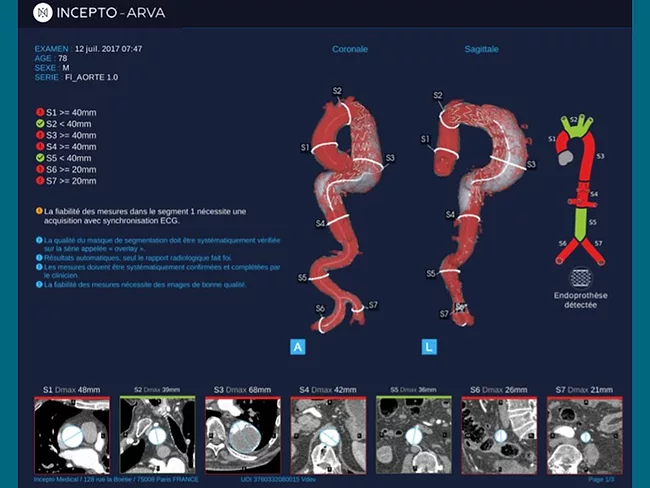
PARIS – Incepto Medical SAS, in partnership with Marie-Lannelongue Hospital, is developing an automated system to measure maximum aorta diameter. Called ARVA (Augmented Radiology for Vascular Aneurysm), it’s hosted in the cloud and is CE marked as a class I device. “Our tool uses the first algorithm to provide automatic measurement of external aortic diameter along the entire aorta, from ascending aorta to the iliac arteries,” Antoine Jomier, co-founder and CEO of Incepto, told BioWorld. This new tool for radiologists and surgeons will be used to diagnosis and monitor aneurysms.