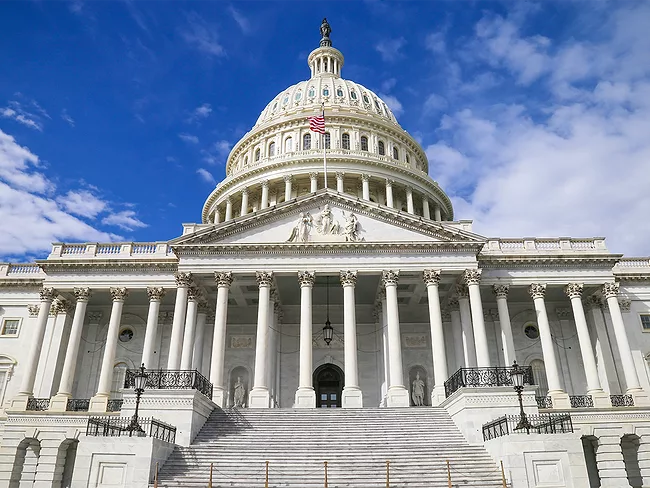
The continuing proliferation of U.S. state privacy law drew the attention of developers of med-tech wearables for some time, but a recent Senate hearing delivered the news to Congress that a failure to preempt it will slow digital health innovation to a crawl.
The bankruptcy of genetic testing service 23andme Holding Corp. prompted a reaction from many quarters, but a June 11 Senate hearing highlighted an interest in federal privacy legislation that would be directed toward genetic privacy as well as comprehensive and preemptive federal privacy legislation.
The bankruptcy of genetic testing service 23andme Holding Corp. prompted a reaction from many quarters, but a June 11 Senate hearing highlighted an interest in federal privacy legislation that would be directed toward genetic privacy as well as comprehensive and preemptive federal privacy legislation.
The thicket of state-based privacy regulation in the U.S. grows thicker by the day, but Congress seems poised to step in with a bipartisan group that may propose legislation that preempts privacy law.
Makers of digital health apps are not often subject to the provisions of the Health Insurance Portability and Accountability Act (HIPAA), but any such liabilities may soon become more onerous. The Department of Health and Human Services released a draft update for HIPAA cybersecurity mandates – the final version of which is sure to be accompanied by much more vigorous enforcement.
Privacy legislation was passed and implemented in the European Union, but the picture in the U.S. is pockmarked by state legislation, a scenario that raises concerns about a fractured and impracticable compliance regime.
Privacy considerations have been front and center for U.S. federal government agencies for more than two decades, but several states have jumped into the privacy arena with their own legislative imperatives. While companies in the medical device industry would like to see a less imposing thicket of related enforcement requirements, Nancy Perkins of Arnold & Porter LLP said there is little prospect that Congress will relieve the predicament with anything resembles preemptive legislation.
The U.S. Federal Trade Commission (FTC) reported a settlement with San Francisco-based 1Health.io Inc. for allegations that the consumer gene testing company failed to properly secure customers’ data, an oversight that will cost the company only $75,000 in fines.
As biopharma and med-tech companies grapple with restrictive data privacy laws in the EU and China while trying to meet the demand for greater diversity reflective of the U.S. population, there’s been more of an interest in conducting clinical trials in the U.S., Stacy Amin, a partner at Morrison & Foerster LLP, told BioWorld.
As biopharma and med-tech companies grapple with restrictive data privacy laws in the EU and China while trying to meet the demand for greater diversity reflective of the U.S. population, there’s been more of an interest in conducting clinical trials in the U.S., Stacy Amin, a partner at Morrison & Foerster LLP, told BioWorld.