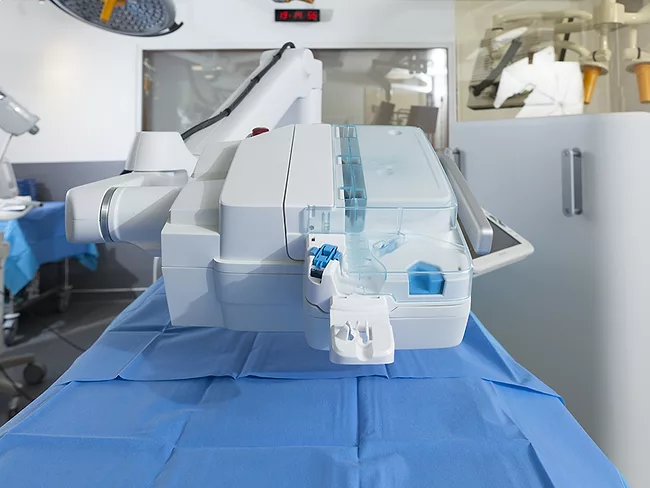
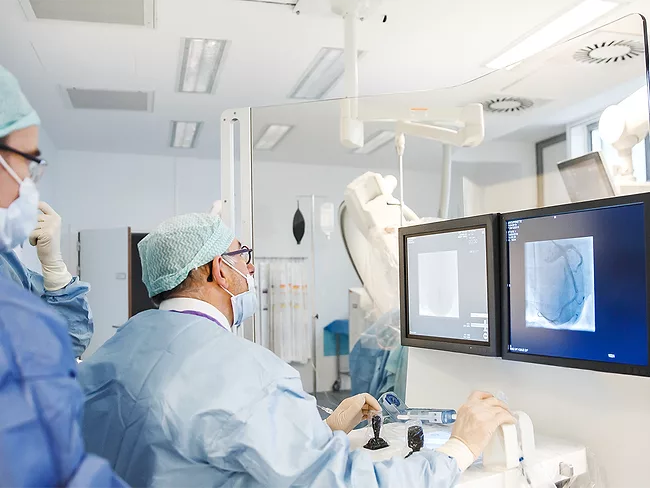
Robocath SAS is about to embark on a limited market release of its robotic platform, the R-One+, which will not only make performing coronary angioplasties easier and safer but will protect cardiologists from radiation, CEO Lucien Goffart told BioWorld in an interview. However, the launch comes on the heels of a decision by Siemens Healthineers Inc. to discontinue its robotic-assisted endovascular cardiology business as it did not meet the company’s “initial expectations.”
Robocath SAS said Cathbot, its joint venture set up in 2020, has enrolled the final patient for its clinical study in China to evaluate the safety and the efficacy of its robotic platform for percutaneous coronary intervention (PCI). “The completion of our PCI robotic multicenter trial in China is a crucial milestone in our development in this part of the world,” Philippe Bencteux, president and founder of Robocath, told BioWorld.
Robocath SAS presented results from the R-Evolution European clinical study assessing the safety and efficacy of its R-One robot for coronary angioplasty procedures. The study, which included 62 patients across six European centers, met all three primary endpoints, showing 100% clinical success, >95% technical success, and 84.5% average reduction in physician radiation exposure.
PARIS – Robocath SAS has concluded an initial clinical study in Europe to demonstrate the safety and efficacy of robotic coronary angioplasty performed using its R-One platform. Sixty-two patients from six European hospitals participated in the R-Evolution clinical study. The study was aimed at assessing the safety and efficacy of the R-One robotic assistance platform.
PARIS – Robocath SAS, of Rouen, France, has secured a new $43 million funding round to boost roll-out of its R-One robotic system for treating vascular disease. This series C funding was led by Hong Kong-based Microport Scientific Corp.