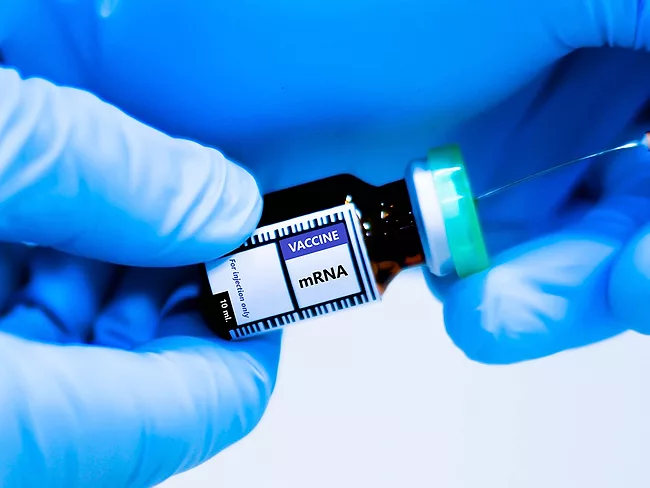
The Andes virus, a member of the Hantaviridae, is the only member of this family known to have the ability to spread efficiently from person to person through close contact with respiratory secretions. In a letter published in The Lancet, researchers from the University of Texas Medical Branch report they demonstrated the potential of single-dose mRNA vaccines against Andes hantavirus.
On the eve of the June 17 Vaccines and Related Biological Products Advisory Committee (VRBPAC) meeting, which will discuss Moderna Inc.’s mRNA-1010, researchers at Washington University School of Medicine in St. Louis have reported that the vaccine conferred broader and more durable protection than a standard flu shot.
The University of Oxford and Moderna Inc. have announced authorization by the U.K.’s Medicines and Healthcare products Regulatory Agency (MHRA) to initiate a phase I/II study of mRNA-4194, Moderna’s investigational mRNA-based cancer vaccine for Lynch syndrome.
Researchers from Chengdu Kanghua Biological Products Co. Ltd. recently published information on their novel varicella zoster virus (VZV) mRNA vaccine candidate (KH014). KH014 contains sequence-optimized mRNAs encoding full-length glycoprotein E encapsulated in ionizable lipid nanoparticles.
In what it says could be the largest disclosed patent settlement in the pharmaceutical industry, Roivant Sciences Ltd. has reached a potential $2.25 billion settlement with Moderna Inc. over the use of its lipid nanoparticle delivery technology in the Spikevax COVID-19 vaccine.
Moderna Inc. blamed a switcheroo by the U.S. FDA for the refusal-to-file (RTF) letter on the seasonal influenza vaccine mRNA-1010. Shares of the firm (NASDAQ:MRNA) closed Feb. 11 at $40.51, down $1.49, having traded as low as $36.66 as investors learned of the RTF letter, which Moderna said is “inconsistent with feedback” the company was given by regulators during pre-phase III as well as pre-BLA-submission talks.
BioWorld’s 2022 end-of-year highlights included a toast to the future – of universal vaccines. Even before SARS-CoV-2 vaccines were developed in record time and saved countless lives during the COVID-19 pandemic, vaccines were a rare bright spot in the fight against infectious diseases. Bacteria are becoming multidrug resistant far faster than new classes of antibiotics are being developed, viral spillover events and vector ranges are increasing, and climate change is helping bacteria and fungi alike breach human thermal protections against infections.
A consortium including Korea Disease Control and Prevention Agency (KDCA), International Vaccine Institute (IVI), ST Pharm Co. Ltd. and Seoul National University (SNU) is joining forces with CEPI to advance a new AI-designed mRNA vaccine to protect against tick-borne severe fever with thrombocytopenia syndrome (SFTS) virus, or Dabie bandavirus. CEPI is providing up to US$16 million to the project, led by IVI, to test the vaccine’s safety and ability to generate a suitable immune response in healthy adults in preclinical and phase I/II trials in Korea.
Investigators from the University of Science and Technology of China and RNAlfa Biotech have described a novel mRNA-based vaccine candidate against Dabie Banda virus (DBV), which has fatality rates of up to 30% in some East Asian countries.
Researchers from Cincinnati Children’s Hospital Medical Center and collaborating institutions in the U.S. have developed a novel approach using allergen-encoding mRNA encapsulated in lipid nanoparticles (LNPs) for both therapy and prevention of allergic responses.