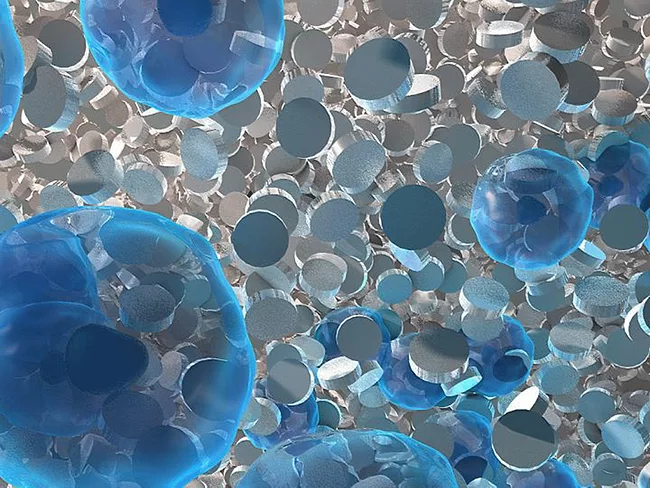
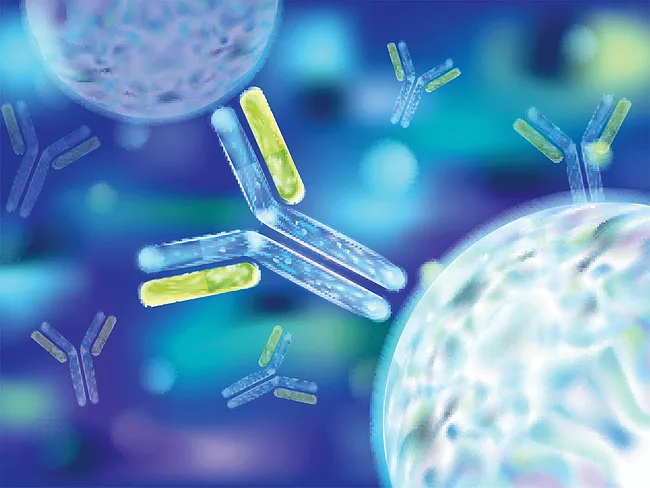
The structurally similar cytokines IL-2 and IL-15, and their shared beta subunit CD122, are keeping developers busy across a range of indications. Though some scientific confusion has plagued the space historically, drug candidates have drawn deals and Wall Street interest aplenty. Amgen Inc., Novartis AG, and Incyte Corp. are among those who’ve made their interest known.
CD122 – shared beta subunit of the IL-15 and IL-2 receptors, two targets for the figurative price of one – has drawn the eyes of many drug developers, among them Anaptysbio Inc., which will roll out phase Ib results in celiac disease during the fourth quarter of this year with ANB-033. The San Diego-based firm intends to weigh the candidate in a second inflammatory disease. A phase Ib study with ANB-033 in eosinophilic esophagitis will begin this quarter.
Investigators at the Netherlands Hubrecht Institute have developed a novel gut organoid model, and used it to gain insight into the functions on human microfold (M) cells. Their experiments, which were published in the Dec. 10, 2025, issue of Nature, showed that M cells present gluten-derived antigens to T cells, which suggests a role for this cell type in the onset of celiac disease.
Investigators at the Netherlands Hubrecht Institute have developed a novel gut organoid model, and used it to gain insight into the functions on human microfold (M) cells. Their experiments, which were published in the Dec. 10, 2025, issue of Nature, showed that M cells present gluten-derived antigens to T cells, which suggests a role for this cell type in the onset of celiac disease.
The U.K. has released a huge repository of children’s genomic data after sequencing blood samples from three large cohorts recruited at birth and followed across three decades. The power of the data is amplified by the large volume of longitudinal health information, biological samples and responses to surveys and questionnaires that has been provided by participating families. Before this, large-scale publicly available genome sequences were limited to adult cohorts, and the only childhood genome sequence data was from children with rare diseases.
The U.K. has released a huge repository of children’s genomic data after sequencing blood samples from three large cohorts recruited at birth and followed across three decades. The power of the data is amplified by the large volume of longitudinal health information, biological samples and responses to surveys and questionnaires that has been provided by participating families.
During a busy day of dealmaking, Cour Pharmaceutical Development Co. Inc. entered a pact with Roche Holding AG’s Genentech unit to advance tolerogenic nanoparticle treatments for an autoimmune disease indication, garnering up to $940 million in up-front and milestone payments. Cour’s partnership with Genentech is its biggest to date, and the largest deal announced by a biopharma company on Dec. 3. A total of seven deals amounted to a combined single-day deal value of $3.67 billion.
Securing clinical proof of concept for its nanoparticle platform, Topas Therapeutics GmbH reported promising top-line phase IIa results of TPM-502 for celiac disease. Results show a clear statistically significant dose response for antigen-specific markers of tolerance. The effects persisted throughout the follow-up period, and the candidate was safe at all doses tested, according to the Hamburg, Germany-based company.
A company focused on regulating immune response through nanoparticle technology, Cour Pharmaceuticals Development Co. Inc. has raised $105 million in a series A round to move its lead autoimmune disease products into phase IIa trials.
Patients with celiac disease have gluten-specific CD4+ T cells that recognize gluten via disease-associated human leukocyte antigen (HLA) molecules, specifically HLA-DQ2.5, leading to immune activation and enteropathy.
.webp?height=488&t=1769119579&width=650 "Molecular model of interleukin-15 (IL-15)")