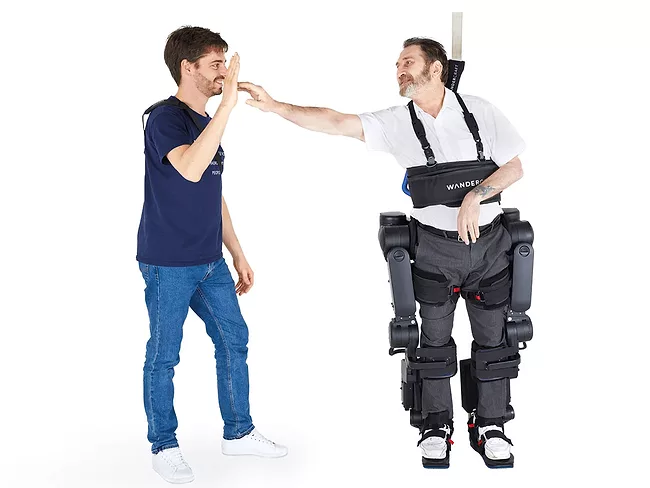
Wandercraft SAS secured $75 million in funding in a series D round to grow its AI-powered robotics solutions. Funds will be spent on its exoskeletons, Atalante X and Eve, as well as on the industrial development and rollout of Calvin 40, its humanoid robot.
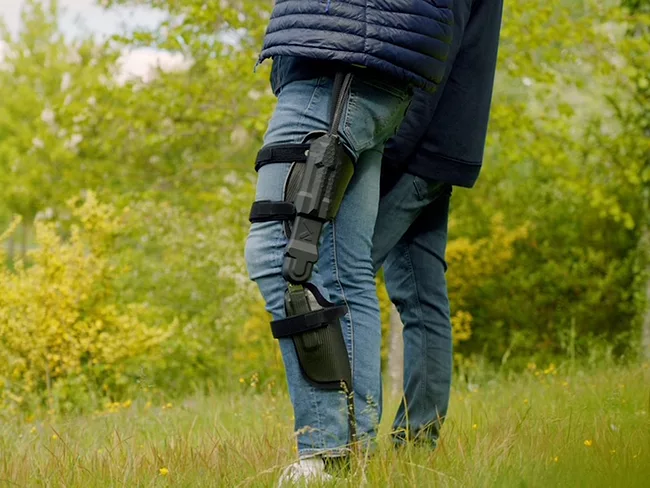
Researchers from Case Western Reserve University and the U.S. Department of Veterans Affairs, continue their development of a neuroprosthetic which comprises a system of implanted or wearable sensors.
Wandercraft SAS broadened its U.S. FDA clearance for the Atalante X to include rehabilitation in individuals with spinal cord injuries at levels T5 to L5. The self-balancing exoskeleton was already given the greenlight by the FDA for use in stroke rehabilitation in December 2022. “We are thrilled to have two FDA clearances, first for stroke and now spinal cord injury, in less than a year,” CEO Matthieu Masselin, told BioWorld.
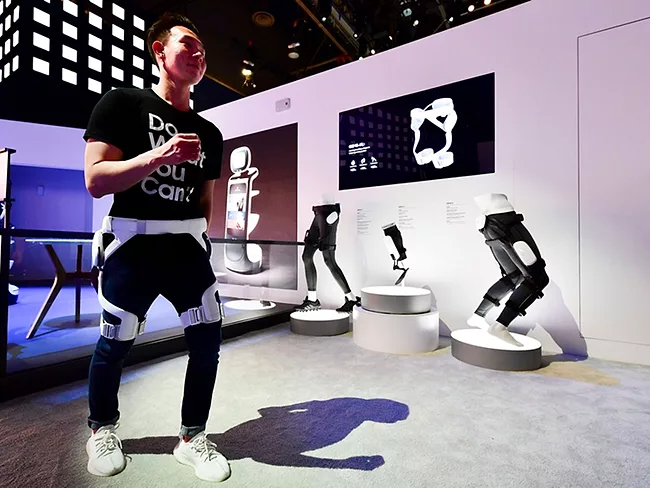
A new wearable “hip-assist” robot developed by Samsung Electronics Co. Ltd. significantly improves gait, balance and dynamic movement in older adults and has the potential to not only enhance physical function but also mitigate the risk of falls.
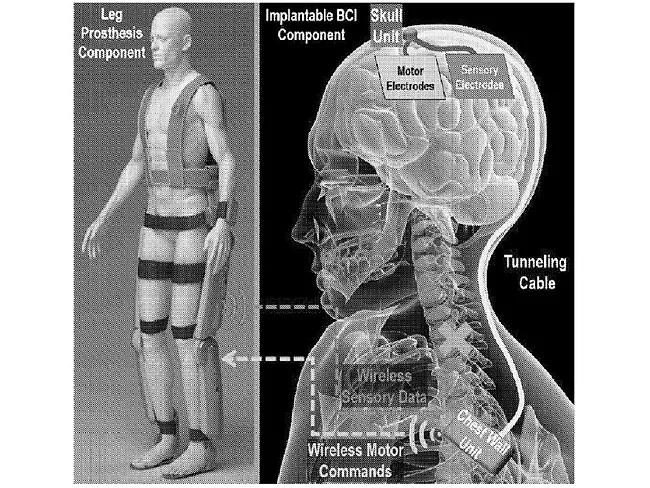
Researchers from three California-based institutions are seeking patent protection for systems, devices and methods that allow brain-controlled limb movement and sensation.
Rewalk Robotics Ltd. has integrated advanced sensing technologies and artificial intelligence (AI) into its latest exoskeleton prototype to enable autonomous decisionmaking. This milestone, coupled with Rewalk’s capabilities, holds enormous potential to create a new generation of exoskeletons that are more intuitive and respond to real-world conditions that users encounter daily, Rewalk CEO Larry Jasinski told BioWorld.
Wandercraft SAS has begun commercial operations of its exoskeleton, Atalante X, in the U.S., offering another solution to the millions of people living with mobility impairments. The company also formed a partnership with the Kessler Foundation whose research team will investigate the possible benefits of the Atalante X for neurologically impaired patients, including those recovering from stroke, spinal cord injuries and motor neuron disease.
Rewalk Robotics Ltd. took strides to expand its portfolio—and achieve profitability—with an agreement to acquire Alterg Inc., a provider of anti-gravity systems for use in physical and neurological rehabilitation. Alterg uses NASA-derived differential air pressure (DAP) technology to reduce gravity’s effects on individuals with mobility challenges and pain. The $19 million deal is expected to close August 11, with additional cash earnouts tied to future revenue growth over the next two years.
In a move that put Ekso Bionics Holdings Inc. on a path to walk over other firms developing exoskeletons, the company acquired the Human Motion and Control (HMC) business unit from Parker Hannifin Corp. The deal expands Ekso’s lower-limb exoskeleton line to include the Indego Personal and Indego Therapy devices, which like its own exoskeleton platform, help patients recovering from stroke or spinal cord injuries walk again. The transaction also includes the development of related robotic-assisted orthotic and prosthetic devices.