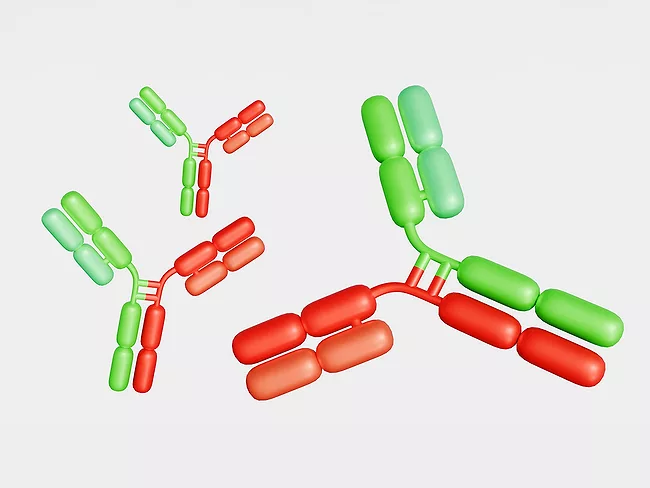
Wall Street pundits were divided about the likely fate of ivonescimab, Summit Therapeutics Inc.’s bispecific antibody partnered with Akeso Pharmaceuticals Inc., of Hong Kong, and undergoing phase III testing in first-line squamous non-small-cell lung cancer (NSCLC).
Results from the global phase III Harmoni trial presented at the International Association for the Study of Lung Cancer 2025 World Conference on Lung Cancer (WCLC) showed a statistically significant increase in progression-free survival after treatment with ivonescimab plus chemotherapy compared to chemotherapy alone, but failed to show a statistically significant benefit in overall survival (OS).
Summit Therapeutics Inc.’s presentation for bispecific antibody ivonescimab in non-small-cell lung cancer could draw some extra attention at next month’s World Conference on Lung Cancer meeting thanks to promising overall survival data from partner Akeso Pharmaceuticals Inc.’s China study of the PD-1/VEGF candidate.
The BioWorld Cancer Index reversed its early year losses, rebounding from a 4.74% decline at the end of the first quarter (Q1) to finish Q2 up 12.78%. The Dow Jones Industrial Average followed a similar pattern, dropping to -4.41% by the end of April before recovering to a 3.64% gain by Q2’s end. Meanwhile, the Nasdaq Biotechnology Index, down 5.37% at the end of May, narrowed its losses to close June down just 1.92%.
For the second time in as many months, the lack of statistically significant overall survival data sent shares of Summit Therapeutics Inc. sliding, despite otherwise positive findings for PD-1/VEGF bispecific candidate ivonescimab in non-small-cell lung cancer. But analysts noted the stock reaction overlooks the consistency of the efficacy data to date, as well as the fact that the phase III Harmoni study marks the first pivotal trial testing ivonescimab in a global population.
The intriguing VEGFxPD-1 bispecific antibody space gained oomph with phase III results disclosed April 23 by Akeso Pharmaceuticals Inc. related to Harmoni-6, testing ivonescimab in combination with platinum-based chemotherapy compared with Tevimbra (tislelizumab, Beigene Ltd.), a PD-1 inhibitor also paired with platinum-based chemo in patients with locally advanced or metastatic squamous non-small-cell lung cancer irrespective of PD-L1 expression. Those data were followed by a green light from the U.S. FDA April 24 for marketing the PD-1 monoclonal antibody penpulimab in combination with cisplatin or carboplatin and gemcitabine for the first-line treatment of adult recurrent or metastatic non-keratinizing nasopharyngeal carcinoma.
Summit Therapeutics Inc. has identified proteolysis targeting chimera (PROTAC) compounds comprising an E3 ubiquitin ligase binding moiety coupled to a GTPase KRAS (G12D) targeting moiety through a linker acting as KRAS (G12D) inhibitors and degradation inducers reported to be useful for the treatment of cancer.
The intriguing VEGFxPD-1 bispecific antibody space gained oomph with phase III results disclosed April 23 by Akeso Pharmaceuticals Inc. related to Harmoni-6, testing ivonescimab in combination with platinum-based chemotherapy compared with Tevimbra (tislelizumab, Beigene Ltd.), a PD-1 inhibitor also paired with platinum-based chemo in patients with locally advanced or metastatic squamous non-small-cell lung cancer irrespective of PD-L1 expression. Those data were followed by a green light from the U.S. FDA April 24 for marketing the PD-1 monoclonal antibody penpulimab in combination with cisplatin or carboplatin and gemcitabine for the first-line treatment of adult recurrent or metastatic non-keratinizing nasopharyngeal carcinoma.
Last October, having chalked another trial failure with E-selectin antagonist uproleselan, Glycomimetics Inc. made known its acquisition plan for privately held, solid tumor-focused Crescent Biopharma Inc. – backed by $200 million from a syndicate of investors who liked the odds of success with CR-001, a preclinical VEGFxPD-1 bispecific antibody.
Biopharma stocks saw a year of ups and downs in 2024, with the BioWorld Stock Index rising as much as 21% before dipping below 2% and ultimately closing the year up 5.16%. This performance follows a 33.59% gain in 2023 and a sharp 32.75% decline in 2022. Among the 509 stocks analyzed in the index, 169 companies (33%) ended the year with gains, while 340 (67%) saw their shares decline.