Two companies with European ties signed billion-dollar deals with large pharma firms in the last two days to discover and develop molecular glue drugs, as well as to advance a preclinical Alzheimer’s disease prospect. For both companies, the up-front payments are relatively small, only $10 million for Alzecure Pharma AB, and just $40 million for Orionis Biosciences Inc. But it’s the back-end milestone amounts that are headline-grabbing.
A patient death marred Erasca Inc.’s phase I dose-escalation efforts with pan-RAS molecular glue ERAS-0015 in cancer, and shares (NASDAQ:ERAS) ended April 28 at $9.90, down $9.25. ERAS-0015 is being tested in RAS-mutant solid tumors, specifically non-small-cell lung and pancreatic ductal adenocarcinoma.
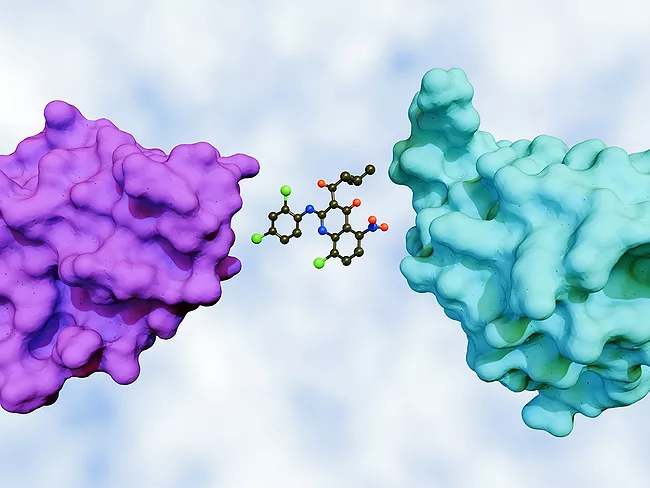
Degradation is a therapeutic strategy that could offer possibilities to get at currently undruggable target proteins. In targeted degradation, compounds induce interactions between a target protein and a protein that can tag the target for degradation. In principle, there are several pathways that could be used for such tagging; the most attention has gone to ubiquitin ligases, in particular cereblon, a protein that is part of a ubiquitin ligase complex and the target of several approved drugs.
Degradation is a therapeutic strategy that could offer possibilities to get at currently undruggable target proteins. In targeted degradation, compounds induce interactions between a target protein and a protein that can tag the target for degradation. In principle, there are several pathways that could be used for such tagging; the most attention has gone to ubiquitin ligases, in particular cereblon, a protein that is part of a ubiquitin ligase complex and the target of several approved drugs.
Degradation is a therapeutic strategy that could offer possibilities to get at currently undruggable target proteins. In targeted degradation, compounds induce interactions between a target protein and a protein that can tag the target for degradation. In principle, there are several pathways that could be used for such tagging; the most attention has gone to ubiquitin ligases, in particular cereblon, a protein that is part of a ubiquitin ligase complex and the target of several approved drugs.
Orionis Biosciences Inc. is sticking with Genentech Inc. in a second deal to discover small-molecule monovalent glue therapies for treating cancer. Privately held Orionis is getting $105 million up front and could earn more than $2 billion in R&D, development, commercial and net sales milestones, plus royalties. The multiyear collaboration calls for Orionis to handle discovery and optimization of molecular glues, with Genentech in charge of later-stage preclinical and clinical development, regulatory filing and commercialization of any small molecules the partnership produces.
Researchers from Captor Therapeutics Inc. presented the preclinical characterization of CT-01, a first-in-class GSPT-1 targeted degrader under investigation for the treatment of hepatocellular carcinoma.