
Now that hepatitis C virus has many therapeutic options, biopharma companies have turned their attention to finding a potential cure – or at least a functional cure – for hepatitis B virus (HBV), targeting not only the reservoir virus but also finding ways to boost immunity, as they continually seek research funding.
A liver infection transmitted by bodily fluids, HBV is most prevalent in the western Pacific and African regions where more than 6% of adults are infected, according to the World Health Organization (WHO). An estimated 257 million people live with the disease worldwide.
Finding an HBV cure was a hot topic of discussion at the International Liver Congress 2019 (ILC 2019), the 54th annual meeting of the European Association for the Study of the Liver (EASL), held in Vienna earlier this month.
"One of the messages of this conference is that cure is not possible as long as there is residual virus present," said Jacob Lalezari, of Quest Clinical Research in San Francisco, who presented data on Assembly Biosciences Inc.'s core protein inhibitor, ABI-H0731.
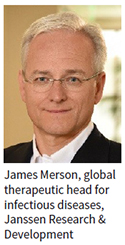 To find residual virus, patients must partake in liver biopsies, an uncomfortable procedure many decline, leaving physicians with a peripheral blood check instead. Patients are considered cured if they have no detectable virus six months after therapy ends. However, while most stay viral-negative, "some actually do rebound" five or 10 years later, said James Merson, the global therapeutic area head for infectious diseases at Janssen Research & Development, a unit of New Brunswick, N.J.-based Johnson & Johnson.
HBV illness can be acute or chronic, with chronic disease often leading to cirrhosis or liver cancer, from which 900,000 people die each year. The HBV vaccine, available since 1982, is routinely given to infants and is 95% effective in preventing infection. There is no treatment for acute HBV, although several drugs are approved in the U.S. for the chronic form.
"It's interesting because people have understood HBV for decades, but we actually still don't fully understand its life cycle and what works and what doesn't," Merson told BioWorld. "I think what there is an increasing appreciation of is how important the immune system is, how the virus distracts the immune system from clearing hepatically infected cells, and what one needs to do to reset the immune system to now allow it to recognize HBV-infected cells and remove them."
Patients are currently treated with immunomodulators or nucleos(t)ide analogues, which they must take for life to reduce the risk of liver disease and to prevent passing on the infection to others. Only 3% attain a functional cure, Merson said.
In addition to interferon injections and liver transplants, treatments include oral antiviral medications, Baraclude (entecavir, Bristol-Myers Squibb Co.), Viread (tenofovir disoproxil fumarate, Gilead Sciences Inc.), Vemlidy (tenofovir alafenamide, Gilead), Epivir (lamivudine, Glaxosmithkline plc), Hepsera (adefovir, Gilead) and Tyzeka (telbivudine, Idenix Pharmaceuticals Inc. and Novartis AG).
Efforts to increase funding, research, access
WHO recommends tenofovir or entecavir due to their potency, lack of drug resistance and few side effects, but it acknowledges that only 1.7 million people who know of their diagnosis are currently receiving treatment. That realization, along with a lack of research funding and patient access, has led to concerted efforts in recent years to find an HBV cure.
The World Health Assembly's Global Health Sector Strategy on Viral Hepatitis, 2016-2021 aims to eliminate viral hepatitis, reducing new infections by 90% and deaths by 65% by 2030. To complement that endeavor, the International Coalition to Eliminate Hepatitis B virus (ICE-HBV), a nonprofit created in 2016 by academic researchers, announced at ILC 2019 its Global Scientific Strategy to Cure Hepatitis B in which it will identify research gaps and help bring together key stakeholders.
 "Despite the impact and havoc that chronic hepatitis B wreaks on so many lives, the funding that goes into researching this disease is fairly pitiful," said Peter Revill, chair of ICE-HBV and head of molecular virology at Melbourne, Australia-based Victorian Infectious Diseases Reference Laboratory. "In the U.S.A. alone, HIV research currently receives about $4 billion each year. In the same period, hepatitis B research received $47 million, which is about 1%. HBV cure research funding worldwide is almost non-existent."
While the NIH is one source for research funding in the U.S., public markets and private investors also play a role in advancing therapies through development. According to BioWorld's BioPharma Financings Report – Infection Market, companies working on HBV therapies raised $913.38 million in 2018. The numbers include public offerings raising $60.4 million for Pasadena, Calif.-based Arrowhead Pharmaceuticals Inc. in January, $165.6 million for Assembly Biosciences in July, and $37.5 million for Hopkinton, Mass.-based Spring Bank Pharmaceuticals Inc. in August. All three companies presented HBV data at ILC 2019.
Assembly's core protein inhibitor, ABI-H0731, was the subject of a late-breaking abstract detailing interim phase IIa data that showed deep declines of HBV RNA and DNA to significantly low levels when used in combination with nucleos(t)ide analogues. (See BioWorld, April 16, 2019.)
Spring Bank's immunomodulatory candidate, inarigivir, showed a consistent reduction in HBV DNA demonstrated with higher doses in the phase II Achieve trial, specifically in the fourth cohort of 200 mg over 12 weeks. It also showed a uniform antiviral response in all patients, particularly in high viral burden hepatitis B e-antigen (HBeAg)-positive patients who had not yet responded to the lower doses of the monotherapy in earlier cohorts. Separate results presented of a 400-mg dose of inarigivir tested in healthy patients had a favorable tolerability profile and showed it increased activation markers of innate immunity on circulating peripheral monocytes and dendritic cells, which was sustained over 10 days of dosing.
Arrowhead's interim analysis from an ongoing phase I/II study of the siRNA drug JNJ-3989 (formerly ARO-HBV) found that three doses rapidly reduced hepatitis B surface antigen (HBsAg) in patients that had 24 weeks or more of HBsAg assay data. Specifically, all 40 patients achieved ≥1 Log10 IU/mL HBsAg reduction. The product, which Janssen licensed from Arrowhead last year, reduced all measurable viral products, and was well-tolerated when administered subcutaneously at doses up to 400 mg in all cohorts.
The importance of targeting cccDNA
In addition to JNJ-3989, Janssen's other lead product is JNJ-6379, a capsid assembly modulator (CAM), in phase IIa development. It prevents the virus inside an infected hepatocyte from maturing.
"It's a novel mechanism, totally different mechanism from nucleosides," Merson said. "Nucleosides prevent reduction of the viral DNA from RNA inside the cell. And they also prevent infectious virus being produced in the peripheral, just like our CAMs do."
But nucleosides work mainly in later-stage disease, whereas CAM inhibitors have potential for both the acute and chronic phases of HBV. Another CAM inhibitor in Janssen's pipeline is JNJ-440, which is in a phase Ib study and has shown similar activity as '379, but at lower doses.
"There is hypothesized a second mechanism that potentially can prevent generation of what we call covalently closed circular DNA, which is the precursor of the HBV genome going into the human genome," Merson said. "So we can prevent production of the cccDNA because when the viral capsid comes into the cells, it has to uncoat and release its viral genome. If it can't uncoat because of the CAM, '379 and '440, then you should be able to, in theory, prevent integration of the HBV gene."
Anna Lok, the Alice Lohrman Andrews research professor in hepatology, director of clinical hepatology and assistant dean for clinical research at the University of Michigan, urged researchers to take incremental steps, first reaching toward sustained viral suppression in order to stop long-term treatment, and then to eliminate HBsAg completely, leading to a functional cure.
"The reason we call it a functional cure, and not a sterilizing cure and not a total cure, is because we do recognize that the virus DNA is still there, the cccDNA, which is the template of the virus still inside the liver cell, and that the integrated virus DNA is also still there," she said. "Ultimately, we hope that we would also be able to control and eliminate the cccDNA and the integrated HBV DNA, but that may be a lot longer time."
Nevertheless, research presented at ILC 2019 appears promising, suggesting that a cure "is by no means a pipe dream," as Revill described it.
Lu Gao, of Roche Innovation Center in Shanghai, China, shared data on an orally administered small molecule, ccc_R08, which, when administered two days after infection in a mouse model, significantly reduced levels of cccDNA without any significant effects on the mitochondrial DNA or signs of cellular toxicity. In a follow-on experiment in which ccc_R08 was administered orally twice daily for two weeks, serum levels of HBV DNA, pregenome RNA, HBsAg and HBeAg were all significantly reduced and the levels were sustained during post-treatment follow-up. By the end of the follow-up, levels of HBV cccDNA-like molecule in the liver were below the lower limit of quantification, whereas a control group of animals that received entecavir showed no impact on cccDNA.
"We have observed a small molecule that can now reduce all of the right biomarkers and the pre-existing cccDNA level in hepatocytes," Gao said. "This is the first time in the research history that we have demonstrated that something is feasible."
Assembly's ABI-H0731 blocks the trafficking of the HBV DNA into the nucleus, and the encapsidation of the RNA coming out of it, essentially achieving deeper levels of viral suppression than what is seen with nucleos(t)ides, and blocking the formation of the cccDNA.
"The good news is that rather than looking at an indefinite process with no end in sight, I think the emerging data are suggesting that this might be a finite process," Lalezari said. "It might not be hepatitis C where you stop viral replication and eight weeks later patients have cleared out all of their virus. But this isn't HIV, either."
Other HBV candidates in early development include Toll-like receptor (TLR) agonists, such as Gilead's TLR8 agonist, GS-9688, and Janssen's TLR7 agonist, JNJ-4964. Data presented at ILC 2019 provided in vitro evidence of an antiviral immune response with GS-9688, and showed that oral administration of JNJ-4964 in mice resulted in HBsAg seroconversion and detectable HBsAg-specific T-cell and B-cell responses.