Even with a concerted international effort, it may take several months to stop the Ebola epidemic that has claimed nearly 1,000 lives. And there may be more cases in the U.S. That's not the news the House Foreign Affairs Subcommittee on Africa wanted to hear as members interrupted their vacation for an update Thursday on the crisis gripping Guinea, Liberia and Sierra Leone.
Tom Frieden, director of the Centers for Disease Control and Prevention (CDC), told the lawmakers that more Americans traveling from the impacted areas in West Africa may contract the virus and possibly infect family members back home, but he doesn't expect much of an outbreak in the U.S.
"We can stop Ebola," Frieden said. "We know how to do it. . . . We have to stop it at the source in Africa." And it will need to be stopped through tried and true means of containment and control, he added. With no approved treatments or vaccines for the deadly virus, the only methods available involve identifying patients quickly, isolating them and finding out whom they've had contact with.
The epidemic is serving as a wakeup call. In opening the hearing, Subcommittee Chairman Christopher Smith (R-N.J.) said Ebola wasn't included on the list of top neglected diseases because health officials thought it was isolated to remote areas where it could be contained. This outbreak – which, in terms of numbers, is set to surpass all previous ones combined – was the first in West Africa, the first to hit a heavily populated urban area and the first to enter the U.S.
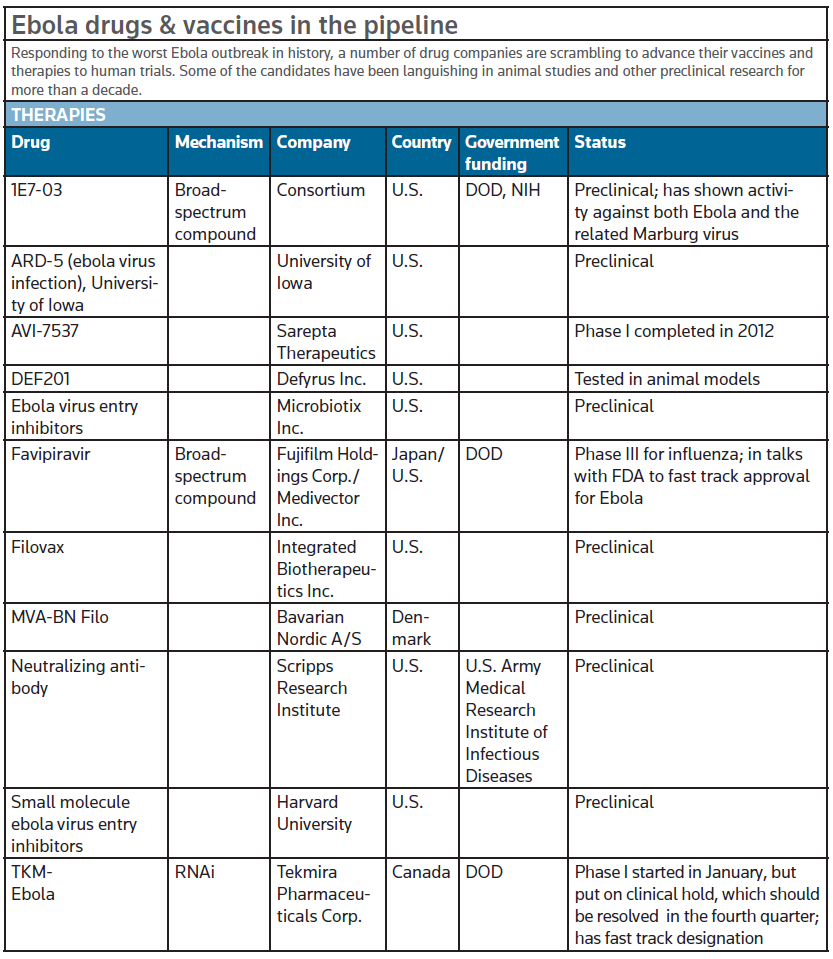
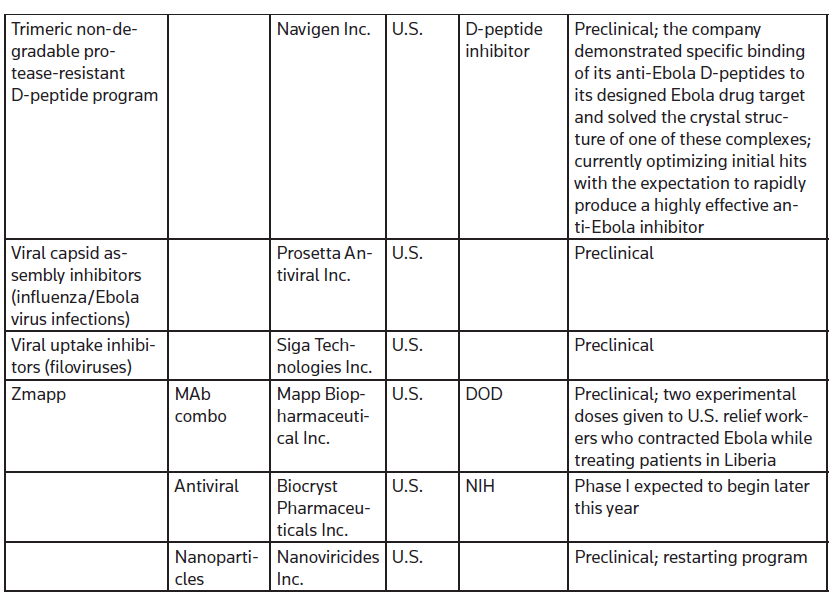
Noting the lack of treatments, Smith and Rep. Frank Wolf (R-Va.) quizzed Frieden about progress on experimental drugs like Mapp Biopharmaceutical Inc.'s Zmapp, which has yet to enter clinical trials, and Tekmira Pharmaceuticals Corp.'s TKM-Ebola. The FDA had placed a clinical hold on Tekmira's RNAi drug, which entered phase I in January. (See BioWorld Today, Aug. 5, 2014.)
AT LEAST A YEAR AWAY
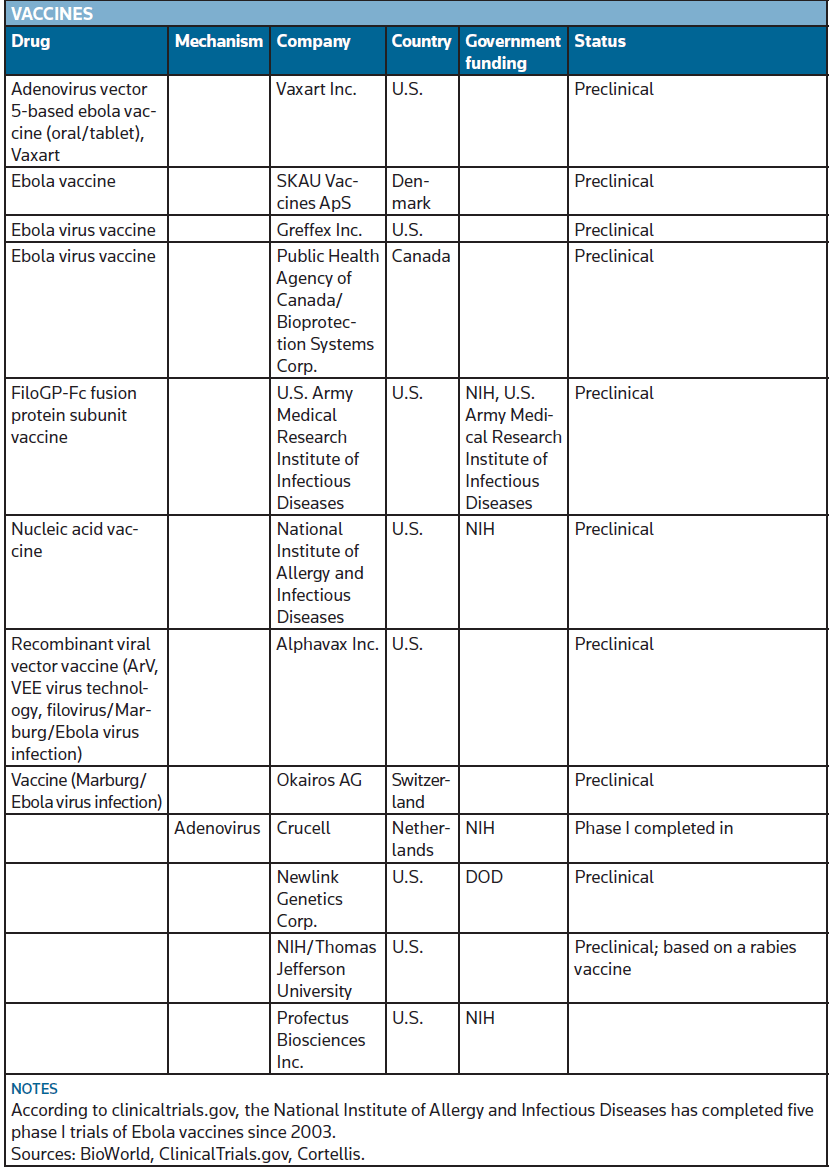
Not wanting to spread false hope, Frieden stressed that the drugs were experimental and not in production in significant quantities. Although Zmapp was given to two American health care workers, Frieden said it would be impossible to say whether it worked for them as some Ebola patients do recover. He also noted that the administration of the drug was complex and required adequate health care facilities. It could be at least a year before there are significant quantities of experimental drugs or vaccines that could be used to fight the crisis, he added.
Meanwhile, Tekmira announced that the FDA has verbally confirmed that it would modify the clinical hold on TKM-Ebola, enabling its potential use in individuals infected with the virus. However, the hold remains on the multi-ascending dose portion of the phase I trial in healthy volunteers.
Tekmira CEO and President Mark Murray welcomed the news. "This current outbreak underscores the critical need for effective therapeutic agents to treat the Ebola virus. We recognize the heightened urgency of this situation and are carefully evaluating options for use of our investigational drug within accepted clinical and regulatory protocols," he said.
CONTAINMENT EFFORTS
Once drugs are available, containment will still be the best prevention. To keep the virus from getting a hold in other countries, airports will need to screen passengers coming and departing, carefully hustling those that may be exhibiting symptoms to the proper care. The CDC has issued Level 3 travel advisories for the three West African nations, discouraging nonessential travel to that region. It's issued a Level 2 advisory for Nigeria, urging enhanced precautions for travelers there. Nigeria recently reported its first Ebola-related death – an American who had traveled from the infected region. As of Wednesday, nine other cases, including some health care workers, had been reported in Nigeria.
Ken Isaacs, vice president of international programs and government relations for Samaritan's Purse, didn't share Frieden's confidence that the outbreak, which has reportedly infected more than 1,700 people, could be so easily contained. Samaritan's Purse is one of a few nonprofit relief agencies that have been caring for Ebola patients in Liberia since the outbreak started in March.
What's needed are vaccines, treatments, medical professionals and proper isolation units. Otherwise, the death toll is going to be unimaginable, Isaacs warned. "It's clear to say that the disease is uncontained and is out of control," he said, adding that "the international response has been a disaster."
Shortly after the first cases were reported in March, there was a bit of a respite before the epidemic began to spike in West Africa. Isaacs expects the same pattern to occur in the more heavily populated Nigeria.
"The Ebola crisis was not a surprise. . . . We saw it coming back in April," Isaacs said. However, the epidemic didn't get much international attention until last week when the two American health care workers were infected. One of them was a doctor with Samaritan's Purse.
Because of recent civil wars, poverty, illiteracy, cultural practices and lack of medical facilities, containment and control will be difficult, Frank Glover, a missionary doctor with SIM, testified. Putting a poster up to warn people doesn't do any good when 75 percent of the people can't read, he said. The CDC is making its diagnostic test, with its two-hour results window, available to hospitals, but such tests are nearly useless in remote areas where there is no health care, he noted.
BLEAK PICTURE
The picture Isaacs and Glover painted of the situation on the ground in Liberia was bleak. Isaacs said it resembled something out of "Apocalypse Now," with corpses lying on the ground and gangs threatening to burn down hospitals. The death toll and number of cases being reported are 25 percent to 50 percent of what's really happening, he added.
Prior to the outbreak, fewer than 200 doctors were available in Liberia, which has 4 million residents. Now there are about 50, Glover said, as many of the ex pat doctors returned home when the first cases were reported. The nursing situation is just about as grim as nurses have walked off the job because they haven't been given the gloves and clothing necessary to protect them from infection. Most of the hospitals have closed. And the two that remain open have faced protests because residents didn't want infected patients coming into their communities.