As competition rises in the Keytruda (pembrolizumab) biosimilar space, Celltrion Inc. is the latest to announce that it filed an IND application to the U.S. FDA to start a global phase III trial for its own Keytruda biosimilar, dubbed CT-P51. Incheon, South Korea-based Celltrion, which previously said it would differentiate from the pack by developing an easier-to-administer subcutaneous biosimilar of pembrolizumab, announced June 17 plans to start a global comparative phase III study of CT-P51 and Keytruda.
As competition rises in the Keytruda (pembrolizumab) biosimilar space, Celltrion Inc. is the latest to announce that it filed an IND application to the U.S. FDA to start a global phase III trial for its own Keytruda biosimilar, dubbed CT-P51. Incheon, South Korea-based Celltrion, which previously said it would differentiate from the pack by developing an easier-to-administer subcutaneous biosimilar of pembrolizumab, announced June 17 plans to start a global comparative phase III study of CT-P51 and Keytruda.
Miami-headquartered Summit Therapeutics Inc. expanded rights to Akeso Inc.’s non-small-cell lung cancer (NSCLC) drug, ivonescimab (SMT-112; AK-112), June 3 while raising $200 million to advance the therapy.
After shares climbed 36% on May 24 following the release of an American Society of Clinical Oncology abstract detailing an impressive phase II overall response rate in first-line head and neck cancer with bispecific antibody petosemtamab in combination with pembrolizumab, Merus NV is raising $400.2 million in an upsized follow-on offering.
Citing a high rate of patients leaving the study, Merck & Co. Inc. has discontinued the anti-TIGIT antibody vibostolimab and the anti-PD-1 Keytruda (pembrolizumab) portion of it phase III Keyvibe-10 trial as an adjuvant treatment for those with resected high-risk melanoma.
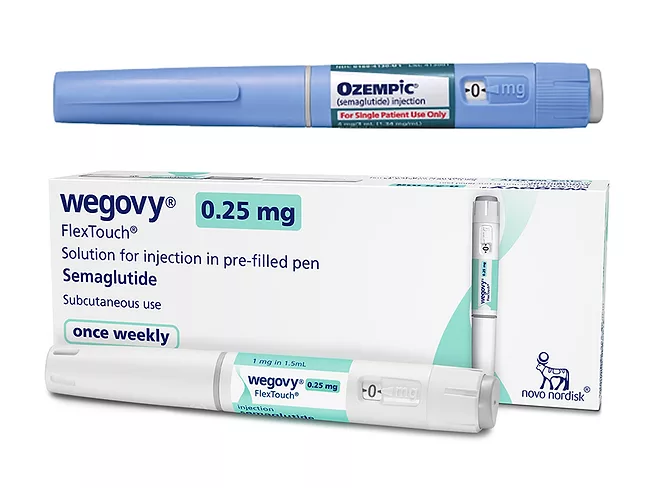
There was a time not that long ago when Merck & Co. Inc.’s Keytruda (pembrolizumab), with its multiple cancer indications, was seen as the heir apparent to Humira’s title of the biggest blockbuster drug. Not anymore. That title now belongs to Novo Nordisk A/S’ semaglutide, approved as Ozempic in 2017 to treat diabetes and as Wegovy in 2021 to help with weight loss.
Amid intensifying competition in the PD-1/PD-L1 checkpoint space, Samsung Bioepis Co. Ltd. kicked off a phase I study of SB-27, a biosimilar of Merck & Co Inc.’s blockbuster immunotherapy, Keytruda (pembrolizumab), for lung cancer. Posted on clinicaltrials.gov on Feb. 20, the randomized, double-blind, three-arm, parallel group and multicenter phase I study will examine the pharmacokinetics, efficacy and safety of SB-27 against an EU-sourced and U.S.-sourced Keytruda in 135 patients with non-small-cell lung cancer.
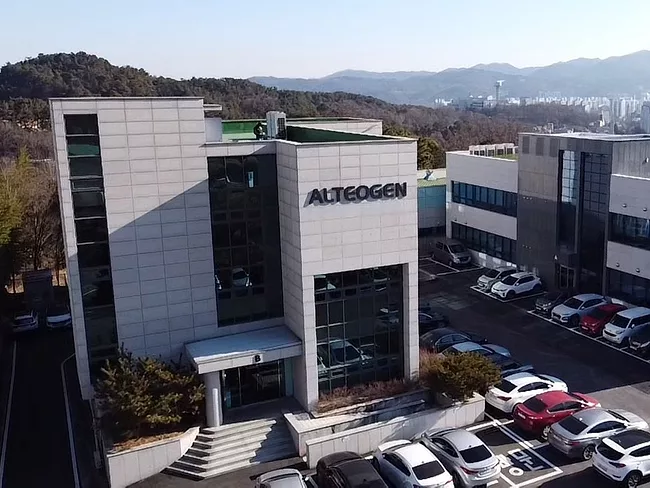
In a surprise reveal that propelled stocks by 25%, Alteogen Inc., of Daejeon, South Korea, named MSD International Business GmbH as its counterpart in a near-$4 billion technology transfer agreement inked in 2020, while upping terms of the deal.
In a surprise reveal that propelled stocks by 25%, Alteogen Inc., of Daejeon, South Korea, named MSD International Business GmbH as its counterpart in a near-$4 billion technology transfer agreement inked in 2020, while upping terms of the deal.