Function Oncology Inc. emerged from stealth on April 12 with the announcement of a $28 million series A financing that will continue support development of its CRISPR-enabled platform to profile cancer in patient-specific detail. The platform goes beyond next-generation sequencing to measure gene function, potentially allowing identification of new therapeutic targets and better matching of available therapies to vulnerabilities in an individual’s tumors.
The researcher who pioneered prenatal surgery to correct neural tube defects has turned her attention to using CRISPR-edited gene therapies to correct severe monogenic diseases in utero. The availability of prenatal genetic diagnosis and advances in treating fetuses, and also in gene therapy/gene editing, make it possible to repair almost any defect in the genetic code. At the same time, there is a clear rationale for intervening before birth, Tippi MacKenzie, professor of surgery at UCSF’s School of Medicine, told attendees of the third International Human Genome Editing Conference in London on March 7.
By applying deep learning methods to a large database of zinc finger nucleases, researchers at the University of Toronto and New York University have developed an algorithm, Zfdesign, that was able to design custom zinc fingers for any given stretch of DNA. “I think this system levels the playing field for zinc fingers and CRISPR,” said Philip Kim, co-corresponding author of the team's paper published online in Nature Biotechnology on Jan. 26, 2023.
Bacterial abortive infection is a defense mechanism by which an infected bacterial cell enters dormancy or dies to limit phage replication and protect the clonal population. Recent studies observed that CRISPR RNA-guided adaptive immune systems that target RNA also cause abortive-infection phenotypes by activating indiscriminate nucleases.
After long years of painstaking work, the commercialization of cell and gene therapies picked up pace in 2022, with multiple approvals. More progress is expected in 2023, with several firsts in the offing and products for larger patient populations reaching the market.
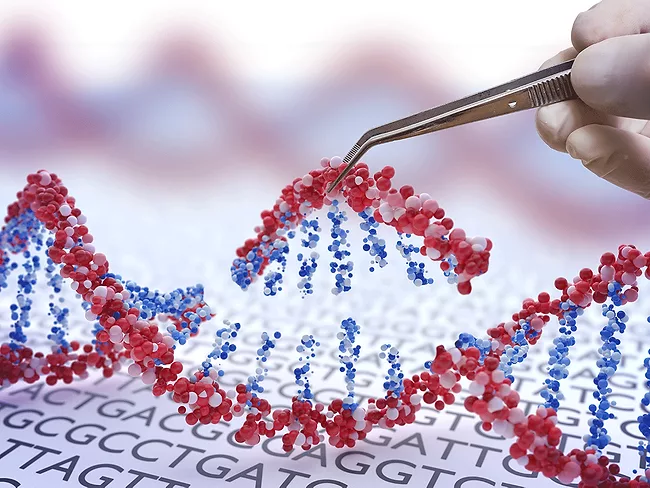
CRISPR, or clustered regularly interspaced palindromic repeats, is transforming biomedical research, and making rapid inroads into the clinic, with its ability to easily target specific DNA and RNA sequences. CRISPR itself is made of RNA. It recognizes target sequences and delivers CRISPR-associated (Cas) proteins, nucleases that cut the target sequence. In two papers published online in Nature on Jan. 4, 2023, researchers have demonstrated that a recently discovered type of Cas protein, Cas12a2, can degrade double-stranded DNA when its associated CRISPR guide RNA recognizes its target sequence.
CRISPR gene editing has been one of the important advances of the last decade, in biotechnology and increasingly in medicine. First applied to human cells in 2013, and honored with the 2020 Nobel Prize in Physiology or Medicine, its meteoric rise can make CRISPR look like the molecular equivalent of a miracle healer. But in the research and clinical trenches, CRISPR-based approaches, like any others, need to find applications where their desired effects outweigh their side effects. And finding those applications necessitates ways to identify off-target effects.
Programmable genome insertion of long DNA sequences, useful for both gene therapy and basic research, commonly relies on cellular responses to double-strand breaks (DSBs) using programmable nucleases, such as CRISPR-Cas9, for induction of repair pathways such as non-homologous end joining (NHEJ). To overcome the current limitations of gene integration approaches, scientists from the Massachusetts Institute of Technology and colleagues developed a new strategy based on advances in programmable CRISPR-based gene editing, such as prime editing, together with the application of precise site-specific integrases.
Researchers at the Walter and Eliza Hall Institute of Medical Research (WEHI) in Melbourne, Australia, have developed a new genome editing technique than can activate any gene, including those that have been silenced, allowing new drug targets and causes of drug resistance to be explored.