The U.S. FDA has applied a class I designation to the recall of Flow-c and Flow-e anesthesia systems manufactured by Getinge AB of Gothenburg, Sweden, due to reports of faulty on-off switches, which could lead to a failure to provide the needed suction. While no injuries or fatalities have been reported in connection with the problem, the FDA said one possible consequence of device failure is pulmonary obstruction that could ultimately lead to death.
The U.S. FDA’s efforts to improve medical device quality includes a recent draft guidance that pertains to the pilot version of a voluntary improvement program, but stakeholders see a number of critical issues with the draft. A coalition of device makers said this pilot program should include disclosure guardrails that parallel similar guardrails provided for medical device reports (MDRs), a provision related to discovery during product liability litigation that is seen as critical if device makers are to take part in the voluntary improvement pilot.
As was the case for all medical device inspections, the Medical Device Single Audit Program (MDSAP) was hampered by the COVID-19 pandemic, but the participant regulators agreed to allow the use of remote audits to fill in for live MDSAP inspections. This program has been renewed again through the end of September 2022, but the sponsoring regulatory agencies said this will be the last extension, barring exceptional circumstances.
The U.S. FDA reported a proposed down-classification for two device types intended for detection of melanoma, a move that would ease the premarket path for similar devices. The agency noted that it has received only one PMA application each for optical diagnostic devices and electrical impedance spectrometers, which suggests the agency sees these device types as suffering for want of interest on the part of device makers.
The U.S. FDA posted an updated safety communication regarding pulse oximetry accuracy with an eye toward those with darker skin pigmentation, a problem that has surfaced in the medical literature. The FDA said it intends to convene an advisory committee hearing later this year, suggesting that more strict performance standards for pulse oximeters are on the way.
In an era of ever-increasing change in regulation of medical devices, the 2021 draft regulatory proposal by the U.K.’s Medicines and Healthcare Products Regulatory Agency (MHRA) might have seemed like an invitation to regulatory balkanization. However, MHRA said the responses to the draft proposal indicated widespread support for “international collaboration with like-minded regulators,” thus reassuring industry that their developmental devices won’t face an entirely new set of barriers to access to a market of more than 67 million.
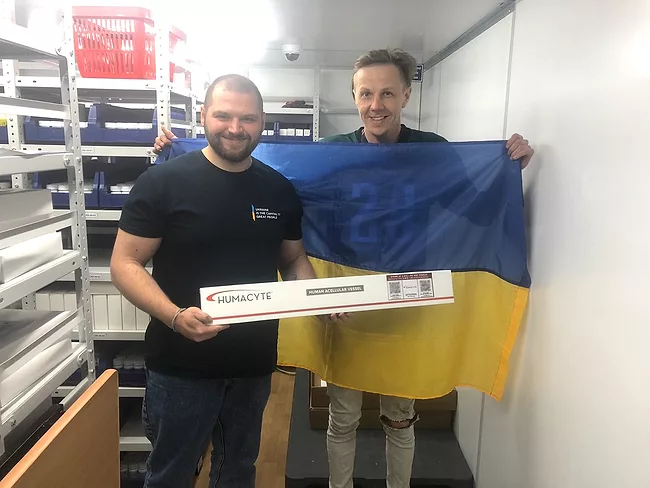
Humacyte Inc. provided its Human Acellular Vessel (HAV) implants to Ukrainian hospitals on the front-line of the Russian invasion as part of the company’s humanitarian relief initiative. Two patients have received the implants for treatment of vascular trauma injuries. One patient had sustained a severe gunshot wound to the leg and the other was injured by shrapnel.
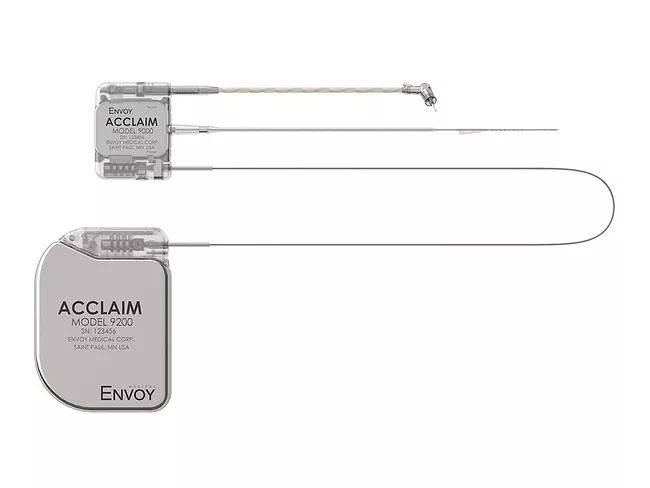
The U.S. FDA gave Envoy Medical Corp. the thumbs up to conduct an early feasibility study of its Acclaim cochlear implant. The fully implanted system, which earned a breakthrough device designation from the FDA, aims to be the first cochlear implant to address hearing loss without the use of any external components.
The U.K. Medicines and Healthcare Products Regulatory Agency (MHRA) is still considering a drastic overhaul of the 2002 medical device regulatory framework, but may have sent a signal that its new framework won’t deviate too far from established regulatory approaches.
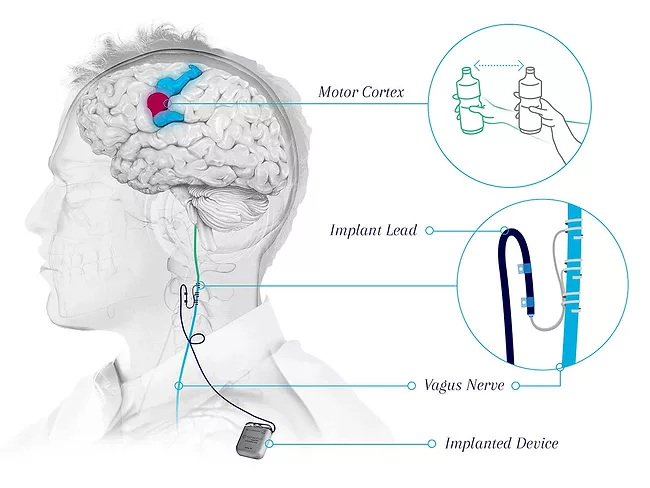
Microtransponder Inc. raked in $53 million in an oversubscribed series E round that exceeded its best previous fundraising by nearly 500% and brought the company’s total funds raised to date to $93 million. The new money will be used to commercialize the Vivistim paired VNS system, which received premarket approval in 2021 as what the FDA called the “first stroke rehabilitation option using vagus nerve stimulation.”