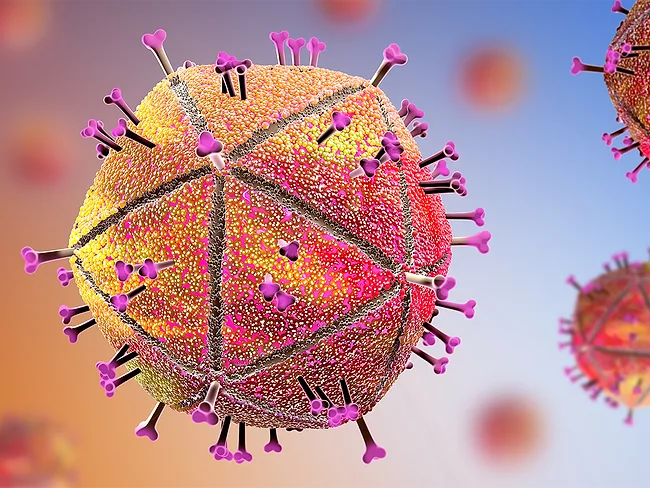
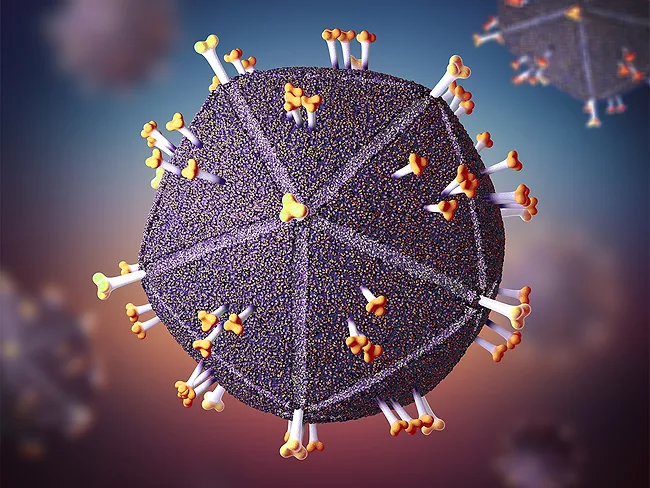
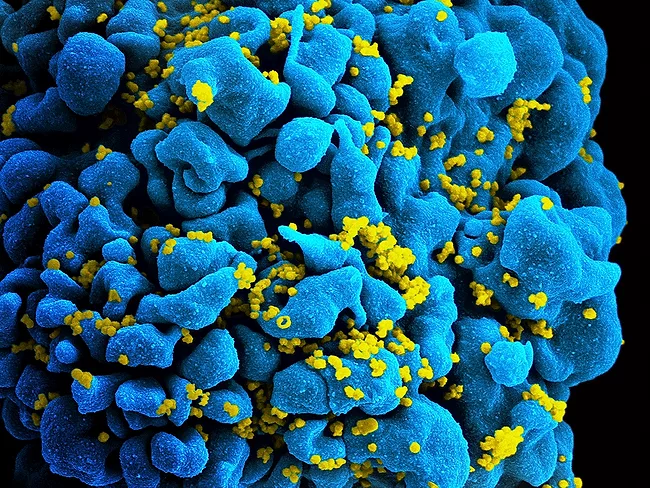
A designed chimeric virus induced broadly neutralizing antibodies against the macaque equivalent of HIV. The strategy works in two steps: first it uses an envelope protein with a mutation that reduces the glycan shield that makes it invisible to the immune system, and then it exposes the part of the protein most likely to generate these antibodies capable of blocking many variants of the virus. The macaques developed potent and diverse antibodies with this approach, which pave the way for the development of an HIV-1 vaccine.
A designed chimeric virus induced broadly neutralizing antibodies (bNAbs) against the macaque equivalent of HIV. The strategy works in two steps: first it uses an envelope protein (Env) with a mutation that reduces the glycan shield that makes it invisible to the immune system, and then it exposes the part of the protein most likely to generate these antibodies capable of blocking many variants of the virus. The macaques developed potent and diverse antibodies with this approach, which pave the way for the development of an HIV-1 vaccine.
A new vaccination strategy designed to induce antibodies that recognize the apex of the HIV Env protein uses Env trimers displayed on liposomes to increase their density and orient them correctly. This presentation enhanced apex-focused antibody responses in macaques, and the monoclonal antibodies isolated after immunization showed binding modes and structural features resembling human broadly neutralizing antibodies (bNAbs), indicating that the vaccine can steer the antibody response toward this vulnerable site.
CAR T-cell therapy can be applied to treat some chronic infectious diseases, particularly to provide a functional cure for HIV-1 in people living with HIV. However, the effectiveness of CAR T cells for persistent suppression of HIV still faces many constraints, including the high mutation rate of reverse transcriptase, which enables the emergence of immune escape viral variants.
Tessera Therapeutics Inc. has received a grant from the Gates Foundation to support early-stage research exploring multiple genetic approaches aimed at developing a scalable cure for HIV. This research will evaluate several potential strategies leveraging Tessera’s Gene Writing platform to engineer immune cells in vivo.
Shionogi & Co. Ltd. has disclosed heterocyclic derivatives characterized as reverse transcriptase/ribonuclease H (HIV-1) inhibitors for potential use in the treatment of HIV infection.
Gilead Sciences Inc.’s integrase strand transfer inhibitor (INSTI) GS-3242 is in early clinical development for HIV infection (NCT07001319). The company presented nonclinical data on the candidate at the recent CROI meeting in Denver.
A new isoform of proliferating cell nuclear antigen (PCNA) – cancer-associated PCNA (caPCNA) – that is specifically expressed in cancer tissues has been reported. Because cancer cells and HIV-infected cells have similar features, researchers from City of Hope National Medical Center tested the anit-HIV effects of a small-molecule compound, AOH-1996, that targets caPCNA.
Broadly neutralizing antibodies (bNAbs) target conserved HIV envelope regions to neutralize diverse strains, eliminate infected cells and reduce viral reservoirs, complementing antiretroviral therapy and supporting prevention and functional cure strategies.