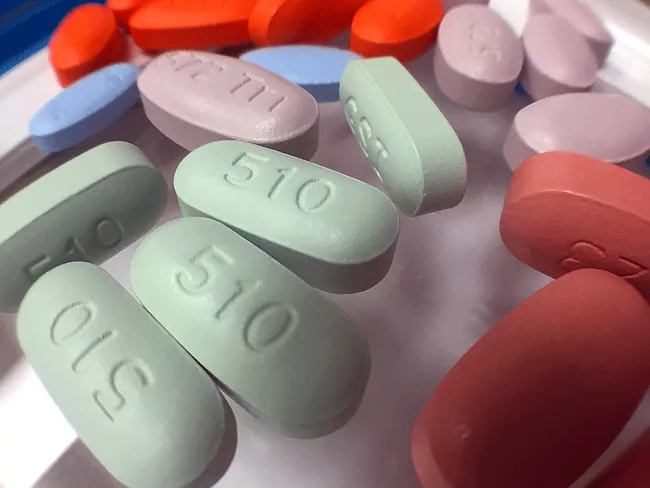
A global HIV prevention study comparing a long-acting injectable antiretroviral from Viiv Healthcare Ltd. to a daily pill from Gilead Sciences Inc. has stopped early after Viiv's cabotegravir proved 69% more effective than the current standard of care, Gilead's Truvada (emtricitabine/tenofovir), in preventing HIV acquisition (95% CI 41%-84%).
The COVID-19 pandemic has gripped the conversation regarding diagnostic and surveillance testing, but stakeholders nonetheless saw fit to populate the docket for the FDA’s proposal to down-classify tests for the human immunodeficiency virus (HIV) to class II. One of the themes of the feedback was that the proposal excludes a few key items, such as quantitative nucleic acid tests and testing for viral load monitoring, leaving the FDA with some difficult decisions to make.
Like Berlin patient Timothy Ray Brown before him, London patient Adam Castillejo, whose case was top story of the 2019 Conference on Retroviruses and Opportunistic Infections (CROI), energized the HIV cure research field by his sheer existence. Curing HIV, Pablo Tebas told the audience at a themed discussion on curative strategies, “has been considered [for] a long time the holy grail.”
CYBERSPACE – Continuing improvements in HIV treatment and progress toward a cure notwithstanding, an effective vaccine will be necessary to gain the upper hand in the decades-long fight against the pandemic.
With Friday’s last-minute decision to move to an all-virtual format, the opening session of the 2020 Conference on Retroviruses and Opportunistic Infections (CROI) was certainly an unusual one. “We are in uncharted waters,” conference co-chair Sharon Hillier, Richard Sweet Professor of Reproductive Infectious Disease at the University of Pittsburgh School of Medicine, told the audience via livestream.
Modest revenue growth and a 2020 outlook that left analysts uninspired about its near-term prospects pushed Gilead Sciences Inc. shares (NASDAQ:GILD) down about 2% to close Feb. 5 at $65.87, despite growing sales of its HIV medicine, Biktarvy (bictegravir, emtricitabine and tenofovir alafenamide), and what CEO Daniel O'Day called "a sense of urgency" around further business development.
HONG KONG – South Korea’s Avixgen Inc., which recently secured ₩10.6 billion (US$9 million) in pre-IPO investment and has raised total funding of ₩27 billion since its series A in 2015, plans to use funds to further develop drug platform technologies and therapeutics for virus-causing diseases such as HIV-1/AIDS.
LONDON – Initiating antiretroviral treatment (ART) as soon as infants who are positive for HIV-1 infection are born has significant protective effects, with fewer viral reservoir cells and improved immune system development, according to new research.
Bowing to congressional pressure, the U.S. Department of Health and Human Services (HHS) Wednesday filed suit against Gilead Sciences Inc. for infringing government patents related to the use of HIV drugs Truvada and Descovy for pre-exposure prophylaxis (PrEP).
Singapore-based Vela Diagnostics Holding Pte. Ltd. has received U.S. FDA authorization via the de novo approval pathway for an in vitro diagnostic test to detect HIV-1 genomic drug resistance mutations (DRMs). The Sentosa SQ HIV-1 Genotyping Assay – the first HIV-1 genotyping next-generation sequencing (NGS) assay to win an FDA nod – uses plasma of patients infected with HIV-1 to detect HIV-1 Group M DRMs in the protease, reverse transcriptase and integrase regions of the pol gene in a single test.