What one analyst called “the single most important” nucleoside reverse transcriptase inhibitor in development – Merck & Co. Inc.’s islatravir – has met rocky terrain, with the firm and its partner, Gilead Sciences Inc., pausing combo trials.
Investigators from the Ragon Institute of MGH, MIT and Harvard have reported new details on a so-called exceptional elite controller, a patient who has rid herself of an HIV infection.
A closely watched phase IIb test of JNJ-9220, an investigational HIV vaccine regimen developed by Johnson & Johnson's Janssen Vaccines & Prevention BV, has been stopped because the regimen provided insufficient protection against HIV infection. Though safe, the candidate's efficacy was just 25.2%, according to statisticians who analyzed data from the study, called Imbokodo. Further analysis of the study will continue, and the study was deemed to have provided sufficient data for further immunological correlates research, according to J&J.
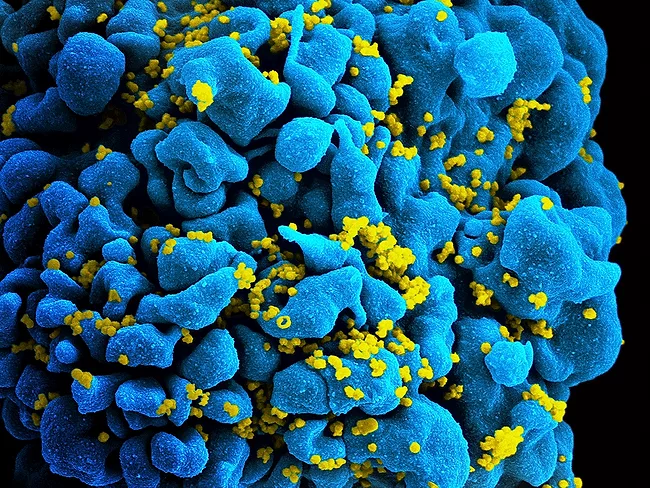
Finding a functional cure to HIV is one of the biggest challenges in modern medicine, a task made so much tougher because of the virus’s ability to incorporate itself permanently into a host’s genome. But Diaccurate SAB, of Paris, thinks it may have a solution – and it’s all down to a discovery showing that the virus seems to make crucial immune CD4 cells go “bumpy”, lose their function and die.
China’s NMPA gave conditional approval to Henan Sincere Biotech Co. Ltd.’s dual-targeting, oral HIV drug, azvudine, to treat HIV-1-infected adult patients with high viral loads. Azvudine could challenge lamivudine, a drug extensively used for treating HIV infection.
The complete relegation of conferences to cyberspace that began with one HIV conference, CROI 2020, ended with another, the 2021 IAS meeting. Though the conference was still largely virtual, there was also an in-person component held in Berlin.
Brii Biosciences Ltd. raised HK$2.482 billion (US$319 million) in its IPO in Hong Kong and will use the proceeds to support the development of its key assets, which includes programs for hepatitis B virus (HBV), HIV and drug-resistant infections.
Investigators at the Wistar Institute have identified biomarkers that could discriminate HIV-infected post-treatment controllers, that is, HIV-infected individuals who do not experience viral rebound after analytical treatment interruption.
The World Health Organization (WHO) and the Global Fund to Fight AIDS, Tuberculosis and Malaria signed a cooperation and financing agreement to implement 10 initiatives in 2021 through 2023 aimed at addressing persistent challenges impeding global progress against the three diseases and protecting hard-won gains from new pandemics like COVID-19.
Viiv Healthcare Group has continued its quest for patient-friendly long-acting HIV drugs, signing a potential $740 million deal with Halozyme Therapeutics Inc. to develop injections that could be dosed more than six months apart.