The mechanisms behind the mortality associated with early antiretroviral therapy (ART) treatment in children infected perinatally with HIV are poorly understood. Researchers sought to find potential biomarkers associated with the increased mortality. They created three groups of subjects: deceased (dead HIV+, n=20), nondeceased HIV+ (HIV+, n=59) and healthy controls (n=13).
Researchers from IrsiCaixa Institute for AIDS Research presented data from a study that aimed to identify biomarkers associated with virus control during monitored antiretroviral pause (MAP) in patients with HIV.
A lot of focus has been put on targeting T-cell immunoreceptor with Ig and ITIM domains (TIGIT) for HIV infection treatment, but no attention has been given to targeting its ligand, CD155.
Antiretroviral (ARV) therapy suppresses HIV, but viral replication rebounds once treatment is discontinued. The redistribution of lipids in the plasma membrane to form microdomains is crucial for viral entry and biogenesis during HIV infection. Researchers at Johns Hopkins University School of Medicine found neutral sphingomyelinase 2 (nSMase2) to be a key component of the late stages of HIV viral assembly and maturation; they hypothesized that nSMase2 inhibitors could help avoid viral rebound.
To date, there is a lack of consensus in anal cancer screening. DNA methylation markers zing finger protein 582 (ZNF582) and achaete-scute homolog 1 (ASCL1) have been associated with anal intraepithelial neoplasia (AIN3) and anal carcinoma risk in people with HIV infection.
Autoantibodies are typically not good news. But a group of researchers from Bellinzona, Switzerland, have observed that the presence of autoantibodies against chemokines, a special class of cytokines, is associated with mild disease and less risk of developing long COVID. “Our hypothesis was that antibodies to chemokines, if they existed, would also be associated with a negative outcome of the disease. But, what we found, in fact, was the exact opposite of what we were predicting,” Davide Robbiani, director of the Institute for Research in Biomedicine, told BioWorld.
A year and a half gone, two HIV vaccine studies shut down. That’s the case with the Janssen Pharmaceutical Cos. of Johnson & Johnson as the phase III Mosaico study of its HIV vaccine regimen was not effective in preventing infection compared to placebo. Based on a data and safety monitoring board’s report saying the study was not expected to hit its primary endpoint, Janssen discontinued the clinical trial more than a year ahead of its estimated March 2024 completion date.
Jiangsu Hengrui Medicine Co. Ltd. and Shanghai Senhui Pharmaceutical Co. Ltd. have identified pyridine compounds acting as HIV integrase inhibitors reported to be useful for the treatment of HIV infections.
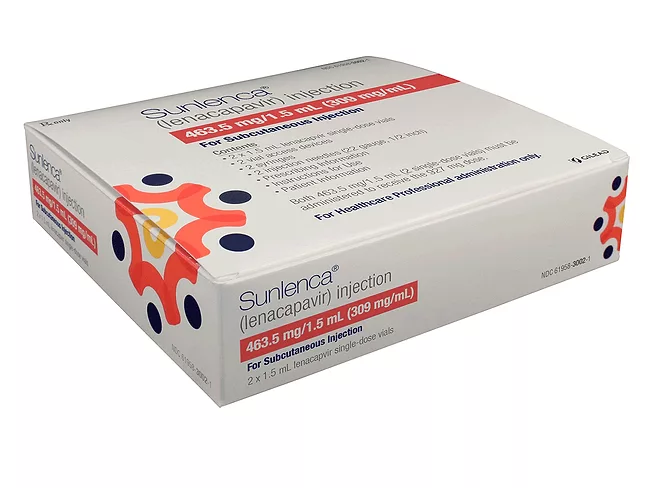
Viral specialist Gilead Sciences Inc.’s U.S. FDA clearance for twice-yearly Sunlenca (lenacapavir) in combination with other antiretroviral therapies for HIV-1 infection provides heavily treatment-experienced patients a new option, and gives the company room to flex with new add-ons.