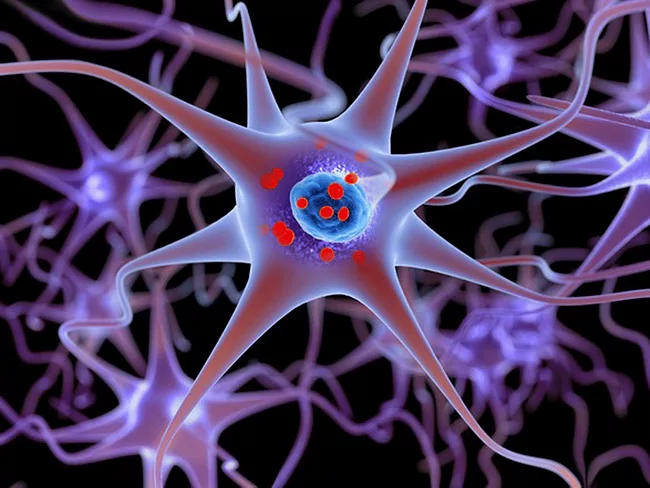
Targeting the toxic alpha-synuclein protein found in the brains of people with Parkinson’s is one of the most promising approaches to treat the disease in the clinic – but getting any drug into the brain is a challenge. Sanofi SA has joined with ABL Bio Inc. to solve this problem, in-licensing ABL-301, a preclinical bispecific antibody that locks on to misfolded alpha-synuclein but also includes a molecular “shuttle” that allows it to penetrate the blood-brain barrier.
Targeting the toxic alpha-synuclein protein found in the brains of people with Parkinson’s is one of the most promising approaches to treat the disease in the clinic – but getting any drug into the brain is a challenge. Sanofi SA has joined with ABL Bio Inc. to solve this problem, in-licensing ABL-301, a preclinical bispecific antibody that locks on to misfolded alpha-synuclein but also includes a molecular “shuttle” that allows it to penetrate the blood-brain barrier.
Cross-border startup Scineuro Pharmaceuticals Ltd., which focuses on central nervous system (CNS) diseases, inked a deal with Eli Lilly and Co. to license in the greater China rights of alpha-synuclein-targeted antibody therapies to follow the global drug development trend in this space.
Bold up-fronts and even bigger milestones defined ambitious neurology deals Abbvie Inc. struck with Voyager Therapeutics Inc. in 2018 and 2019. With vectorized antibodies, they planned to target multiple indications tied to excess aggregations of tau and tragic synucleinopathies. Considerable progress was made, said Omar Khwaja, Voyager's chief medical officer. But despite millions of dollars invested in the programs, Abbvie has now decided to quit the venture, leaving Voyager to either go it alone or find a new partner in its work on the challenging indications.
It has been more than 200 years since British doctor James Parkinson first identified the symptoms of a condition that he termed shaking palsy; unfortunately, there is still no cure to the disease that carries his name.
Parkinson’s disease (PD) is a neurodegenerative disorder. But not just. And it may not start that way.
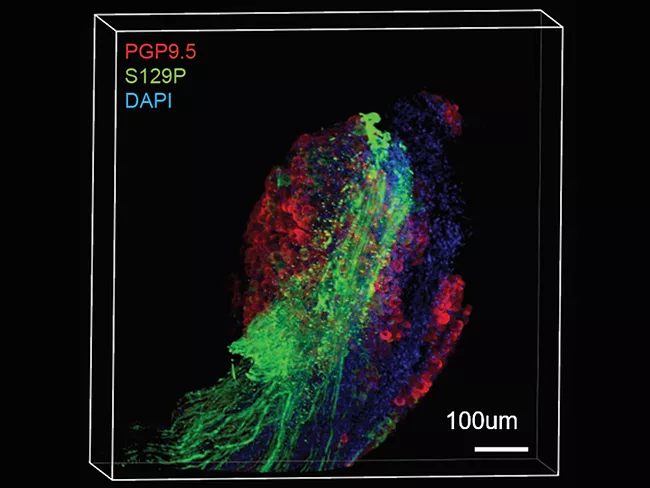
There is increasing evidence that a-synuclein, the protein whose aggregates eventually destroy midbrain dopaminergic neurons in PD (and that are the cause of other diseases collectively known as the synucleinopathies), first aggregates “in enteric neurons, the neurons that control gastrointestinal function,” Collin Challis told BioWorld.