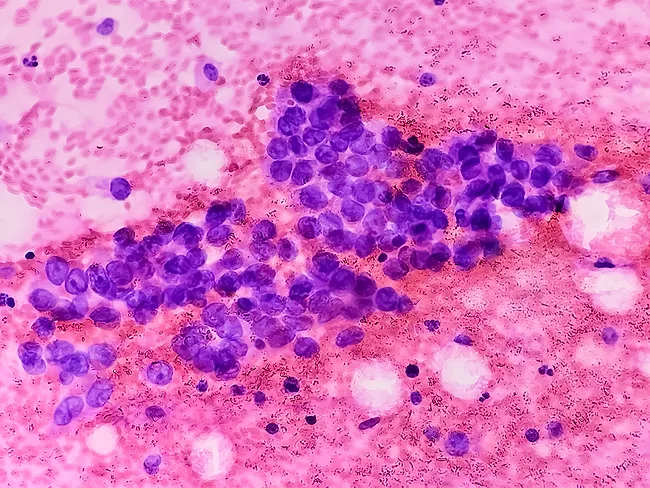
CD47, or integrin-associated protein, is a ubiquitously expressed cell surface protein that is overexpressed in many solid tumors and hematologic malignancies, including multiple myeloma, with higher levels associated with poor prognosis. In a recent study published in iScience, researchers from Westlake University (China) engineered an oncolytic vaccinia virus encoding an anti-mouse CD47 nanobody (OVV-aCD47nb) that combines direct oncolysis with localized CD47-SIRPα axis blockade.
Colorectal cancer remains one of the leading causes of cancer-related mortality worldwide. Recent advancements in immunotherapy have demonstrated the potential of targeting immune checkpoints and co-inhibitory pathways to enhance antitumor responses.
Obesity is a major public health concern, and effective treatments are still elusive. AMP-activated protein kinase (AMPK) is a crucial regulator of energy homeostasis and has been proposed as a target for metabolic diseases, including obesity. However, most available AMPK agonists target multiple tissues to activate AMPK, which can cause adverse effects.
Shattuck Labs Inc. opted, as one analyst put the matter, to do “the right thing early” by ending the clinical program with phase I-stage SL-172154 and shift resources to SL-325, a death receptor 3 antagonist, initially for inflammatory bowel disease, where TL1A/DR3-blocking antibodies have shown compelling monotherapy efficacy.
Investors wanted more from ALX Oncology Holdings Inc.’s phase II study testing evorpacept (evo) combination therapy in gastric tumors, and the stock (NASDAQ:ALXO) tumbled 36% or $1.77 to close Aug. 1 at $3.04.
A new approach against non-small-cell lung cancer (NSCLC) has combined immunotherapy with molecularly targeted therapy to activate the immune response and inhibit oncogenic pathways, which prevented tumor progression and eliminated cancer cells. Brigham and Women’s Hospital scientists have developed nanoparticles loaded with antibody conjugates that could deliver large amounts of treatment to the tumor tissue. This new strategy could improve the results of conventional immunotherapy in these patients and reduce toxicity of existing treatments.
China’s National Medical Products Administration has cleared Immuneonco Biopharmaceuticals Co. Ltd.’s’ IMM-01 (timdarpacept) to enter a pivotal phase III trial in combination with Beigene Co. Ltd.’s PD-1 inhibitor, tislelizumab, in relapsed or refractory classical Hodgkin lymphoma patients who relapsed or progressed after treatment with PD-1 inhibitors.
China’s National Medical Products Administration has cleared Immuneonco Biopharmaceuticals Co. Ltd.’s’ IMM-01 (timdarpacept) to enter a pivotal phase III trial in combination with Beigene Co. Ltd.’s PD-1 inhibitor, tislelizumab, in relapsed or refractory classical Hodgkin lymphoma patients who relapsed or progressed after treatment with PD-1 inhibitors.
Gilead Sciences Inc. has officially discontinued work on anti-CD47 antibody magrolimab in hematologic cancers, nearly four years after shelling out $4.9 billion to acquire its developer, Forty Seven Inc. The company announced in its full-year 2023 earnings Feb. 6 call that the phase III Enhance-3 study testing magrolimab as a first-line treatment in unfit acute myeloid leukemia patients was discontinued following a futility analysis and higher incidence of grade 5 adverse events.
Wall Street will be watching closely for such adverse effects as anemia that foiled Gilead Sciences Inc.’s CD47-binding magrolimab earlier this year, but so far Shattuck Labs Inc.’s SL-172154 looks strong in combination with azacitidine to treat front-line higher-risk myelodysplastic syndrome (HR-MDS) and TP53-mutant (TP53m) acute myeloid leukemia (AML).