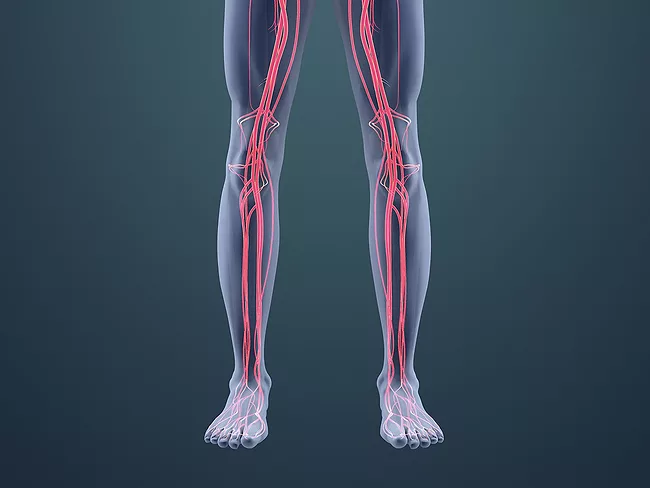
Endologix LLC reported 12-month results from the second of two studies of a fully percutaneous, transmural arterial bypass therapy for treating peripheral arterial disease. Presented at this month's annual Vascular Interventional Advances Conference in Las Vegas, the Detour-2 study revealed technical success in 100% of treated patients using the system which also surpassed a 30-day, major adverse event rate of just 7%.”
Med tech patents have been especially vulnerable to litigation in recent years, and a new decision by the Court of Appeals for the Federal Circuit affirms yet again the vulnerability of patents undergoing litigation. The Federal Circuit said nine claims found in two patents held by Becon Medical Ltd., of Batavia, Ill., were invalid due to obviousness, presenting the company a significant loss in its infringement litigation with Talexmedical LLC, of Malvern, Pa.
It’s been a decade since the America Invents Act (AIA) transformed the U.S. patent landscape from a first-to-invent to a first-inventor-to-file system and added new contours with the creation of the Patent Trial and Appeal Board (PTAB) to hear post-grant patent challenges outside of court. While the AIA’s inter partes review process and other post-grant procedures have helped weed out weak patents, they’ve also increased the uncertainty and unpredictability of many patents. Now, 10 years on, Congress is assessing how the PTAB has developed in real life and considering what course corrections may be needed.
Ethicon Endosurgery Inc. and Intuitive Surgical Inc. have been sparring in the courts over patents for robot surgery systems for some time, and the U.S. Court of Appeals for the Federal Circuit has ruled on yet another of those disputes.
Patent law cases are known for lengthy, intricate arguments and explanations, but a recent decision by the U.S. Court of Appeals for the Federal Circuit flew against this trend.
The U.S. Patent Trial and Appeal Board’s (PTAB) decision Feb. 28 that Broad Institute scientists were the first to invent the use of CRISPR/Cas9 genome editing in eukaryotic cells is just another chapter in the ongoing saga of who has patent rights to various elements of the CRISPR platform.
Ethicon Endosurgery Inc. has had its hands full protecting a patent for robotic surgical systems, but the U.S. Court of Appeals for the Federal recently delivered some good news. The Federal Circuit affirmed the results of an inter partes review (IPR) of three claims for an endocutter patent, leaving Ethicon with another win in its efforts to sustain a critical patent for the robotic surgical space, and major player Intuitive Surgical Inc. coming out on the short end of the argument.
The U.S. Court of Appeals for the Federal Circuit struck a blow Nov. 30 to Biogen Inc.’s blockbuster multiple sclerosis (MS) drug, Tecfidera, affirming a lower court’s determination that a patent claiming a method of treating MS was invalid for lack of written description. In two other precedential cases the next day, the appellate court opened the door for Arbutus Biopharma Corp. to seek royalties on Moderna Inc.’s COVID-19 vaccine.
The narrative that a little company has little chance of beating a big company in patent lawsuits doesn’t always play out in the real world, and such was the case in a dispute between Snyders Heart Valve LLC and St. Jude Medical. The U.S. Court of Appeals recently handed Snyders a win in the court’s reversal of an inter partes review (IPR) of a Snyders patent for heart valves, the second time in the past year Snyders prevailed over the larger company in a patent hearing at the Federal Circuit.
The U.S. Supreme Court’s decision in the case of U.S. v. Arthrex might be seen as having fully resolved the interaction between the Appointments Clause and the inter partes review (IPR) process, but there are other controversies brewing, nonetheless. Patent attorney James Lovsin, of McDonnell Boehnen Hulbert & Berghoff LLP (MBHB), said on an Aug. 17 webinar that because the current commissioner of patents is only an acting commissioner, his review of IPRs may also be a violation of the Appointments Clause, thus invoking the possibility that some patent cases will be subject to additional administrative delays.