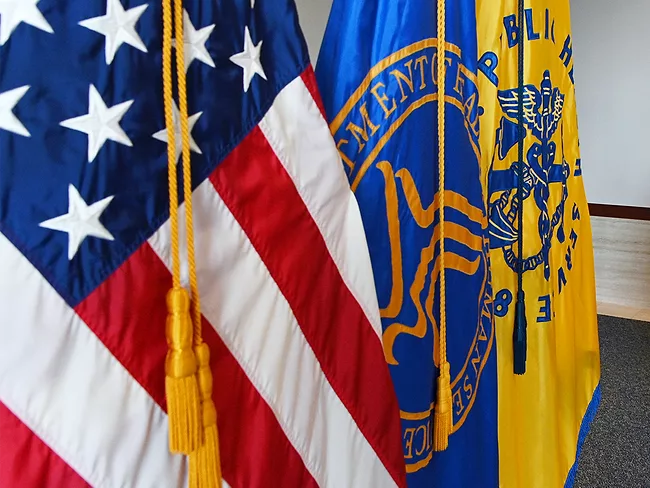
The European Commission and the U.S. Department of Health and Human Services (HHS) recently signed an arrangement to strengthen their cooperation on preparedness and response to public health threats.
A rule forcing the FDA and other agencies in the U.S. Department of Health and Human Services (HHS) to evaluate and clean out old regulations will never see the light of day.
Ignoring congressional sentiment, U.S. Health and Human Services Secretary Xavier Becerra announced the formal establishment of the Advanced Research Project Agency for Health as an independent entity within the NIH.
A U.S. district court slapped down a controversial Department of Health and Human Services rule that threatened the future of biopharma companies’ patient assistance programs, which are intended to help patients cover their out-of-pocket costs for pricy drugs.
Even though at least two different U.S. district courts have ruled that the 340B enforcement letters the Department of Health and Human Services’ (HHS) Health Resources and Services Administration has sent to biopharma companies violate the Administrative Procedures Act, the agency continues to send the letters, along with threats of civil money penalties, to companies that place restrictions on the 340B discounts to contract pharmacies.
Making his first in-person appearance April 27 before the House Energy and Commerce Subcommittee on Health, U.S. Health and Human Services Secretary Xavier Becerra was prepared to answer questions about President Joe Biden’s fiscal 2023 budget that would increase HHS’ discretionary budget to $127 billion, nearly a 27% increase over the 2021 enacted level.
For the second time in four years, the FDA has issued a draft guidance for cybersecurity in premarket applications, just one of several actions undertaken recently by the U.S. federal government in connection with cybersecurity.
Even as many in the U.S. are looking for the end of the COVID-19 public health emergency, Health and Human Services (HHS) Secretary Xavier Becerra reinforced expectations April 5 that he will continue the emergency declaration into the summer, if not beyond. When asked during a Senate Finance Committee budget hearing if he saw the emergency ending this summer, Becerra declined to give a date, but reiterated his commitment to give stakeholders at least 60 days’ notice.
The U.S. is making strides in addressing the drug and device supply chain vulnerabilities revealed by the COVID-19 pandemic, but there’s still a lot of work to do to reduce dependance on sole source suppliers and foreign manufacturing, according to a new Health and Human Services (HHS) report.
The Biden administration has posted a request for information (RFI) about the conditions necessary for the in vitro diagnostic industry to sustain testing capacity for communicable disease outbreaks, although the letter commits to no specific actions. The Advanced Medical Technology Association responded to the RFI with the recommendation that the administration quickly commit to the provision of resources as a means of ensuring that “market volatility will no longer determine test availability.”