With $70 million in hand, Excellergy Inc. is ready to advance its lead candidate for allergic diseases into clinical trials. The series A round was led by Samsara Biocapital with co-investments from Red Tree Venture Capital and Decheng Capital.
Arcus Biosciences Inc. has announced five new research programs for autoimmune and inflammatory diseases, and is targeting initiation of the first clinical studies next year.
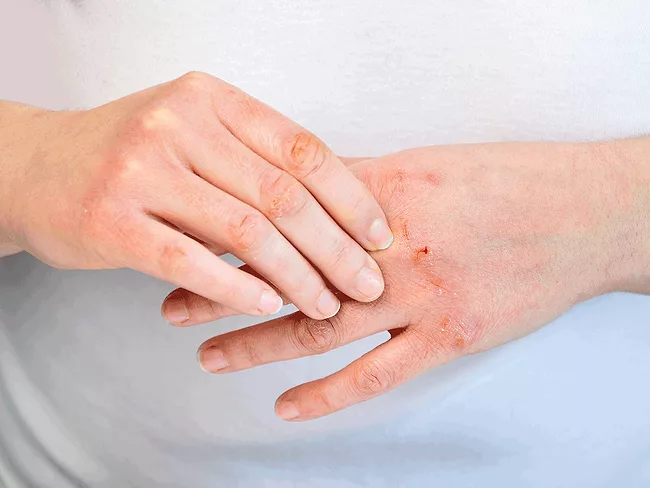
Recent evidence in atopic dermatitis (AD) points to the involvement of additional pro-inflammatory pathways besides core Th2 responses. Current therapeutic approaches that work target mostly the IL-4/IL-13 pathway, but the duration of response and depth could be improved.
Interleukin-1 receptor-associated kinase 4 (IRAK-4) is a modulator of IL-1 receptor and Toll-like receptor (TLR) signaling and has emerged as a promising therapeutic target for several inflammatory diseases. Gilead Sciences Inc. and Nurix Therapeutics Inc. recently presented data generated in a preclinical murine model of AD with their IRAK-4 degrader GS-6791.
Phase III results from Sanofi SA’s study of amlitelimab in treating atopic dermatitis met the primary and key secondary endpoints, but investors took a step back.
Akeso Pharmaceuticals Inc.’s gumokimab (AK-111) and manfidokimab met all primary efficacy endpoints in its phase III trials in active ankylosing spondylitis and in moderate to severe atopic dermatitis, respectively.
Among the strong points of Nektar Therapeutics Inc.’s atopic dermatitis (AD) prospect, rezpegaldesleukin (rezpeg), an IL-2 pathway agonist and regulatory T-cell proliferator, is the drug’s faster onset of action – a feature that experts say may help differentiate the compound from competitors in the OX40 space.
Apogee Therapeutics Inc. plans to enter a crowded atopic dermatitis market with established drugs, such as Dupixent (dupilumab, Regeneron Pharmaceuticals Inc. and Sanofi SA) and Ebglyss (lebrikizumab-lbkz, Eli Lilly and Co.), which are sold by much larger competitors. But the company thinks it can compete with its anti-IL-13 antibody, APG-777, thanks to the drug’s 77 day half-life that may allow it to be dosed only two to four times a year in the maintenance phase, compared to 13 to 26 injections per year for the established competitors.
Atopic dermatitis data from Nektar Therapeutics Inc. put investors even more in the mood for further results with rezpegaldesleukin (rezpeg), an IL-2 pathway agonist and regulatory T-cell proliferator, also in the works for severe to very severe alopecia areata.
At the ongoing International Society for Stem Cell Research meeting, Chinese researchers reported they demonstrated that SPT6 homolog, histone chaperone and transcription elongation factor (SPT6) promotes epidermal stem/progenitor cells differentiation by facilitating transcriptional elongation, but its role in vivo in skin homeostasis is not well defined.