Surgical aortic valve replacement (SAVR) devices are widely believed to be considerably more durable than transcatheter aortic valve replacement (TAVR) devices, but five-year data for Medtronic plc’s Corevalve Evolut, presented this week at the Cardiovascular Research Technologies Conference in Washington, seem to suggest that TAVR devices are closing that gap.
While still pending clearance in the U.S., Medtronic plc’s Minimed 780G advanced hybrid closed loop (AHCL) system continues to post strong results in clinical trials. Results of two studies presented at the 2023 Advanced Technologies & Treatments for Diabetes Conference in Berlin on Feb. 27 demonstrated that patients with type 1 diabetes (T1D) who used the device for one year maintained a 26.7% increase in time in range for adults and a 14% increase in time in range for children aged 7 to 17 compared to their baseline using multiple daily injections with a continuous glucose monitor (CGM).
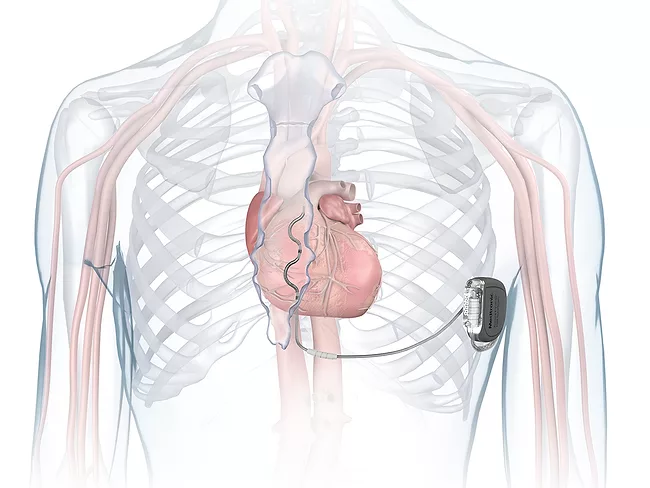
Medtronic plc recently received the CE mark for its Aurora extravascular implantable cardioverter-defibrillator (EV-ICD) strengthening its cardiovascular portfolio which saw a 7% year-on-year growth in the third quarter of its fiscal year 2023.
The patent wars over the design of transcatheter aortic valve replacement (TAVR) devices seemed to disappear roughly nine years ago, but there is at least one more episode for Dublin-based Medtronic plc before the company could lay the issue to rest. A jury declared that Medtronic is liable for more than $100 million in damages over alleged infringement of a patent held by Broomfield, Colo.-based Colibri Heart Valve LLC, but the contested patent has expired, and Medtronic said it intends to pursue the matter further.
Globus Medical Inc. entered into a definitive agreement to buy Nuvasive Inc. in an all-stock transaction that will combine two leaders in the musculoskeletal industry into one of the largest companies in the spinal surgery market. While there are many companies in the spine market, the acquisition may still set off an alarm among regulators concerned about consolidation in the field. Both boards unanimously approved the deal.
The U.S. FDA has posted or updated several recalls in the second half of January 2023, such as the class I recall of Mahurkar hemodialysis catheters distributed by Medtronic plc., reported Jan. 30. This recall is associated with two injuries but no fatalities to date, but the potential for mixing of venous and arterial blood has forced Medtronic to request that its customers quarantine any unused catheter kits, which could be a substantial amount of product given the nearly 23,000 units are affected by the recall.
A U.K. real world nationwide study of the clinical effectiveness of hybrid close loop (HCL) insulin administration systems has found they improve glycemic control in type 1 diabetes compared to the earlier generation of devices.
Chinabridge (Shenzhen) Medical Technology Co. Ltd.’s extracorporeal membrane oxygenation (ECMO) machine Lifemotion gained NMPA approval, making it the first domestically developed ECMO unit given a greenlight in China. The approval includes the ECMO machine and the disposable consumables used in combination to treat acute respiratory failure or acute cardiopulmonary failure in seriously ill COVID-19 patients.
Baxter International Inc. wasted no time in tackling its New Year’s resolution to trim down the business. On Friday morning, the company revealed details around the divestitures it foreshadowed in its third quarter 2022 earnings call with the announcement that it planned a tax-free spin off its Renal Care and Acute Therapies businesses into an independent, publicly traded company within the next 12 to 18 months.
A surgical team from the Curie-Montsouris Chest Center in Paris, has successfully performed thermal ablation of a metastatic lung lesion using microwaves via a computer tomography (CT)-guided endobronchial approach.