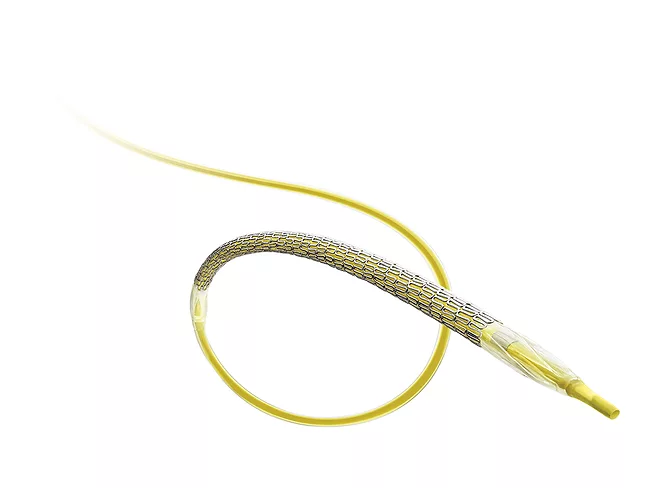
Following last week’s FDA approval of its Onyx Frontier drug eluting stent (DES), Medtronic plc released results at EuroPCR from a real-world, multicenter prospective study using its Resolute Onyx platform for percutaneous coronary interventions (PCI) in the left main artery. Rehovot, Israel-based Pi-Cardia Ltd. also released early data for patients treated with its Short Cut transcatheter device for coronary obstruction prevention.
Medtronic plc has presented three-year data on its global, multicenter, blinded, randomized and sham-controlled renal denervation (RDN) clinical program Spyral HTN-ON MED during the late-breaking clinical trial session at EuroPCR on May 17. The trial enrolled 80 typical uncontrolled hypertensive patients, randomized to RDN or sham control.
Medtronic plc received FDA premarket approval for its Onyx Frontier drug-eluting stent, an update to the company’s Resolute Onyx stent. The Frontier is designed for treatment of patients with coronary artery disease (CAD), a leading cause of death in the U.S. Medtronic expects the stent to receive CE mark shortly.
Intersect ENT Inc., of Menlo Park, Calif., picked up Fiagon AG Medical Technologies less than two years ago in a bid to expand its footprint in the ear/nose/throat (ENT) business, but that acquisition is about to be undone. The U.S. Federal Trade Commission (FTC) said Intersect will have to jettison Fiagon because of Dublin-based Medtronic plc’s acquisition of Intersect, thus unwinding a transaction that was valued at €60 million (US$62.4 million) in September 2020.
Acutus Medical Inc. is selling its left-heart access portfolio to Medtronic plc in a deal worth upwards of $50 million. The portfolio of devices includes a line of sheath-compatible septal crossing devices and steerable sheaths. Under the terms of the agreement, Medtronic will make an upfront cash payment to Acutus of $50 million and additional undisclosed payments based on milestones and future sales.
Investors showed some love to French remote patient monitoring and cardiac data startup Implicity SAS, contributing $23 million to the company’s series A financing round. New investors Crédit Mutuel Innovation and Bpifrance led the round with support from BNP Paribas Development and returning seed investors Serena, Xange and Karista.
As was the case with left atrial appendage closure, renal denervation (RD) as a treatment for hypertension has proven to be difficult to move along into routine clinical usage. New data for a study sponsored by Medtronic plc showed that RD offers a statistically significant improvement over sham treatment in reducing hypertension, but the data do not seem to suggest that patients will be able to drop their antihypertensive medications after RD treatment.
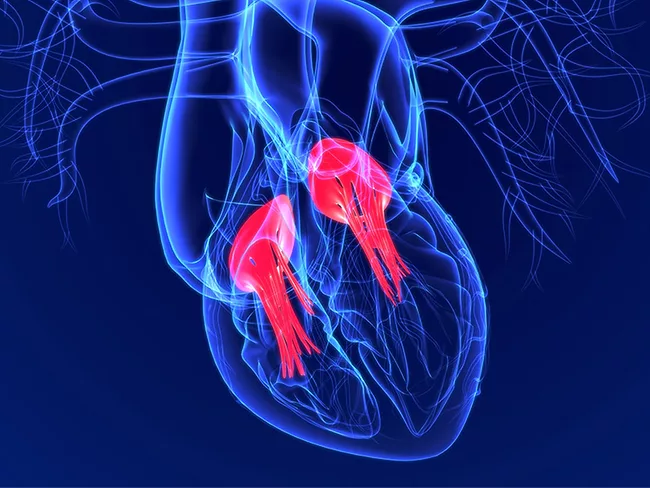
The tricuspid valve at times seems the lost child of the heart’s valves, but new research hints that regurgitation of this valve can be resolved with a transcatheter replacement. Adam Greenbaum, of Emory University School of Medicine, said the early feasibility study of the Pascal valve by Edwards Lifesciences Inc., of Irvine, Calif., demonstrated a large improvement in mortality at one year and significant improvements in heart failure status, a result that offers new hope for these patients.
A 2,000-patient U.K. study has been set up to generate real-world evidence of the value of using AI technology to detect bowel polyps (adenomas) during colonoscopy procedures. The aim is to show whether Medtronic plc’s GI Genius system improves the detection of polyps when deployed in both expert centers and non-specialist units, in the routine diagnostic screening of patients referred from primary care or through the national fecal immunochemical testing program.
While a number of companies cited continued supply chain issues in recent investor calls and earnings reports, few med-tech leaders have expressed concerns about serious disruption to operations or loss of revenue because of the destruction wrought by the invasion of Ukraine or the associated sanctions on Russia. Most companies derive less than 1% of their revenue from the two countries.