The FDA has approved Medtronic plc’s Evolut FX TAVR system for patients with symptomatic severe aortic stenosis. During Medtronic’s fiscal first quarter earnings call CEO Geoffrey Martha said the company will roll the latest generation system out in the U.S. market later this year, with a full launch planned in 2022.
Medtronic plc reported it will acquire Intersect ENT, a deal that represents a major expansion of Medtronic’s footprint in the ear/nose/throat (ENT) space. Intersect’s products for chronic rhinosinusitis will give Medtronic access to a medical market said to be among the top 10 most expensive conditions for employers, with a potential patient population of 35 million in the U.S. alone.
The annual scramble for elevated payment rates under the U.S. Medicare inpatient rule has concluded, and at least one artificial intelligence product came up short in its bid for a new technology add-on (NTAP) payment. However, Medtronic plc, Boston Scientific Corp. and Cook Medical Inc. all secured or sustained NTAP payments for products that are critical for patients with a variety of life-threatening conditions, such as severe pulmonary valve regurgitation in pediatric patients.
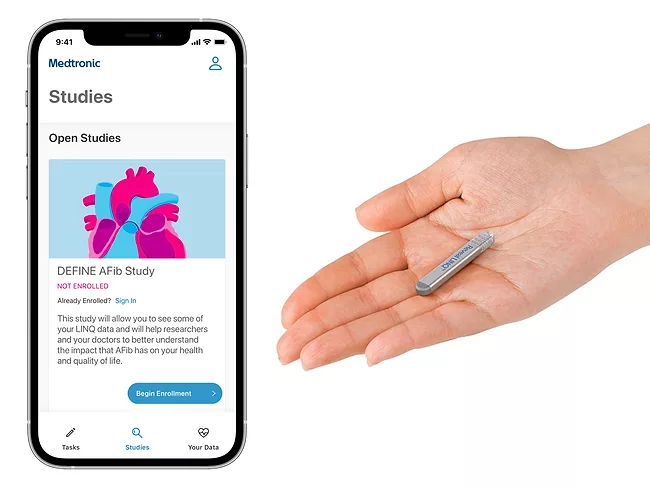
Medtronic plc got a thumbs up from the FDA for two Accurhythm algorithms to detect atrial fibrillation and asystole in patients who have heart rhythm abnormalities. The new artificial intelligence (AI)-based algorithms are designed for use on the company’s Linq II insertable cardiac monitor (ICM). Dublin-based Medtronic said the Accurhythm AI algorithms will be available on its Carelink Network later this year for use with all implanted Linq II devices in the U.S.
Medtronic plc launched the newest product in its coronary portfolio, the Prevail drug-coated balloon (DCB) catheter, in Europe following CE mark approval. The device is intended for use during minimally invasive procedures to open narrowed or clogged arteries in patients with coronary artery disease.
Medtronic plc kicked off an app-based research study to improve understanding of atrial fibrillation (AF) disease burden and its impact on patient outcomes, quality of life and health care utilization. The first patients in the DEFINE AFib study were enrolled at Duke University Medical Center and the Florida Electrophysiology Associates in Atlantis, Fla. “When it comes to managing atrial fibrillation, there is not a ‘one-size-fits-all’ approach, and the hope is that DEFINE AFib may give us the tools to help personalize AF management based on a patient’s individual health profile and physiology,” said Jonathan Paul Piccini, director of cardiac electrophysiology and associate professor of medicine at Duke University School of Medicine and chair of the DEFINE AFib Steering Committee. “DEFINE AF will harness the power of digital health to make fundamental discoveries about how we can manage atrial fibrillation better in each and every one of our patients.”
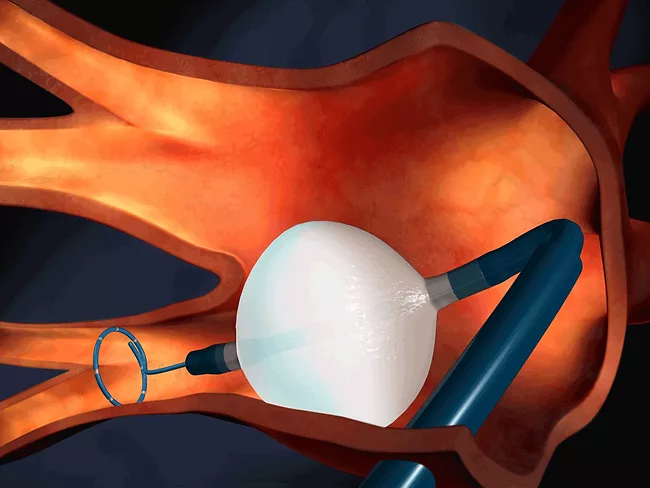
Medtronic plc won expanded FDA 510(k) approval for its Arctic Front family of cardiac cryoablation catheters for alternative treatment of recurrent symptomatic paroxysmal atrial fibrillation (AF) as an alternative to the current standard first-line treatment, antiarrhythmic drug (AAD) therapy. The Arctic Front family of catheters are the first catheter ablation devices in the U.S. approved to help physicians improve AF patient outcomes before drug failure. They have also been proven to shorten the time to diagnosis, according to Dublin-based Medtronic.
TORONTO – Titan Medical Inc. has received a $10 million license payment from Medtronic plc for a total of $30 million that the Irish med-tech firm has invested in robotic-assisted surgical technologies developed by Titan. Titan is pursuing gynecologic surgical applications for its Enos robotic single access surgical system, licensing it and related intellectual property to Medtronic while retaining worldwide rights to commercialize technologies for use with the Enos system.
Medtronic plc snagged FDA premarket approval for its recharge-free implantable neurostimulator (INS), Vanta, for patients with intractable pain. The spinal cord stimulator offers up to 11 years of device life, with optimal programming. That represents a 10% improvement on the Dublin-based company’s previous longest-lasting INS, Primeadvanced, and a near doubling of device life compared to Abbott Laboratories’ Proclaim and Boston Scientific Corp.’s Wavewriter Alpha, using the settings recommended in the clinician manuals.
Medtronic plc is ceasing global sales and distribution of its Heartware ventricular assist device (HVAD) due to safety concerns. The news sent Medtronic shares down about 1% in early morning trading. The Dublin-based company said it made the decision to stop selling the HVAD left ventricular assist device after clinical comparisons found a higher frequency of neurological adverse events, including stroke and mortality, with its heart pump device vs. other circulatory support systems.