Leadless cardiac electrophysiology devices have been around for a while now, but Abbott Laboratories of Abbott Park, Ill., has managed to beat the competition in the market for dual chamber pacing via two leadless devices. The company reported July 5 that the U.S. FDA has approved the Aveir DR, a two-unit device configuration that provides pacing for both the right ventricle and the right atrium and which some analysts believe helps to make Abbott shares an underappreciated asset for investors.
The European Society of Hypertension (ESH) has recommended that renal denervation (RDN) be offered as an adjunctive therapy to patients with resistant hypertension. Releasing new and updated guidelines on the management of arterial hypertension, the ESH said recent randomized controlled trials showed that endovascular RDN can be associated with a significant, albeit not marked, office and ambulatory blood pressure reduction in patients with uncontrolled hypertension.
At the American Diabetes Association (ADA) Annual Meeting this weekend, Medtronic plc provided an update for investors and showcased results from its devices that all demonstrated better time in range for users. The Dublin-based company provided strong results with the U.S. FDA warning letter now behind it and the 780G Minimed pump and Guardian 4 sensor launches well underway.
The Vanta device by Medtronic plc, provides relief from pain for thousands of patients, but the Vanta might also feel the pain when the patient is undergoing cardioversion. According to a field safety notice from Dublin-based Medtronic, two patients in Europe have undergone explant procedures for the device due to damage sustained during cardioversion, but the company urges physicians to pay heed to the labeled indication, which recommends that the device be temporarily reprogrammed to reduce the risk of damage to the device, an action that Medtronic indicated should ward off any such issues.
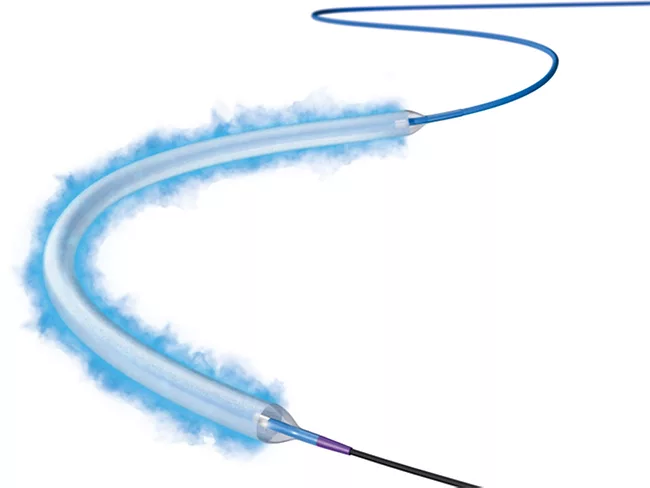
Boston Scientific Corp. said that three-year primary patency and the four-year freedom from target lesion revascularization (TLR) rate for patients treated with the Ranger drug-coated balloon (DCB), in the Ranger II superficial femoral artery (SFA) study, are the best ever reported data for randomized trials using DCBs.
Renal denervation (RDN) was described as the “comeback kid” at the recent EuroPCR conference in Paris where participants argued that following the success seen in several sham-controlled trials, there is now no doubt about the safety and the efficacy of the technology as a treatment for hypertension. The device-based procedure should now be used as a therapy option to reduce high blood pressure in patients, delegates heard.
Medtronic plc agreed to acquire Eoflow Co. Ltd., the manufacturer of Eopatch, a tubeless, wearable and fully disposable insulin delivery service, for $738 million. The deal, which is expected to provide a significant boost to Medtronic’s beleaguered diabetes unit, is slated to close in the second half of 2023. The deal announcement coincided with Medtronic’s release of its fourth quarter results for fiscal 2023.
Patent disputes over medical technology exert a significant influence on a company’s fortunes in the marketplace, and a recent decision by the U.S. Court of Appeals for the Federal Circuit reinforces yet again the importance of patent protection for device manufacturers. In a decision filed May 24, the Federal Circuit decreed that patents for catheters held by Teleflex Innovations were not rendered ineligible by what Dublin-based Medtronic plc had asserted was prior art, thus dealing Medtronic a blow in its efforts to have the five Teleflex patents in question rendered null.
Bringing both ventricles back into synchrony has long been the subject of cardiological hopes in patients with heart failure, but current approaches to maximizing the function of the left ventricle leave many patients in a desperate state of cardiac dyssynchrony. However, Ebr Systems Inc., has reported the results of a study that demonstrates that its WiSE device can pace the left ventricle in patients who are unresponsive to conventional pacing in an effort to restore optimal left ventricular function, a development Sunnyvale, Calif.-based Ebr says will allow the company to conclude a premarket filing with the U.S. FDA.
Pulsed field ablation (PFA) seems to have seized the moment in the field of cardiac electrophysiology, given its seemingly superior performance over other ablation modalities as a treatment for atrial fibrillation (AF). New data from three studies were presented at this year’s annual meeting of the Heart Rhythm Society that further confirm the value of PFA as a treatment for both persistent and paroxysmal AF with data sets that seem to confirm that PFA is poised to sweep aside the current standards for ablation, potentially overturning a treatment paradigm that took decades to establish.