Orexia Therapeutics Ltd. has divulged 2-(3-ethynylbenzyl)-substituted heterocycle derivatives acting as orexin OX2 receptor agonists reported to be useful for the treatment of narcolepsy, hypersomnia, insomnia and sleep apnea.
Just days after taking the helm of Royal Philips NV, CEO Roy Jakobs told shareholders that the company plans to “immediately reduce our workforce by around 4,000 roles globally” as a result of multiple challenges that contributed to poorer than expected third quarter results. The company posted a net loss for the quarter, missing consensus, which it attributed to continuing supply chain issues and the deteriorating economic environment.
For a company that dominates the market for devices designed to improve breathing during sleep, Royal Philips NV has had the devil of time catching its own breath over the last 15 months as it has issued wave after wave of recalls.
The U.S. FDA has given Resapp Health Ltd. the green light for its 510(k) Sleepcheckrx app to detect moderate to severe sleep apnea in adults as a prescription-only software-as-a-medical device. The FDA cleared the app as a class II medical device. Brisbane, Australia-based Resapp submitted the 510(k) premarket notification to the FDA in November 2021 for Sleepcheckrx for at-home sleep apnea screening.
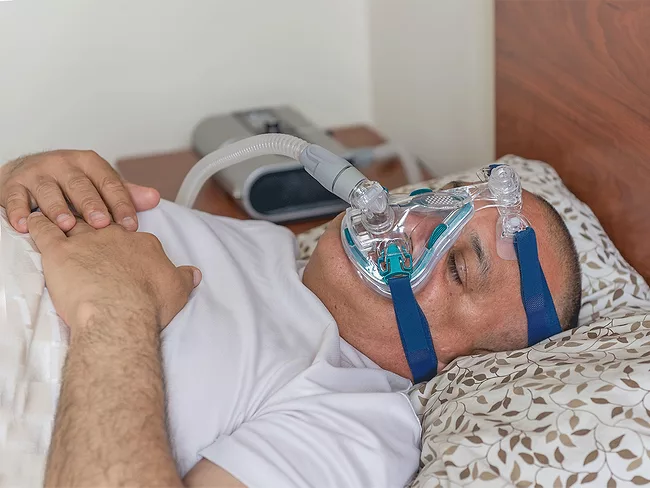
Device servicing by third parties has been topical of late, although not in the context of continuous positive airway pressure (CPAP) systems. That seems likely to change thanks to the ongoing recall of CPAP machines made by Philips Respironics Inc., of Murrysville, Pa., which was driven by reports of degradation of foam used in the device for insulation.
Little more than a month after selling a narcolepsy drug from its portfolio, Jazz Pharmaceuticals plc has replaced it with another. The company entered an exclusive development and commercialization rights agreement Sumitomo Pharma Co. Ltd.’s candidate for treating narcolepsy along with idiopathic hypersomnia and other sleep disorders. Sumitomo retains the rights for Japan, China and certain other Asia-Pacific countries and regions while Jazz gets the rights to everywhere else.
The U.S. Preventive Services Task Force (USPSTF) has decided to consider the merits of screening for obstructive sleep apnea (OSA), a condition thought to contribute significantly to the onset of heart disease. Even though five years have passed since the task force considered the merits of screening for asymptomatic patients, USPSTF indicated that there is still insufficient evidence to support the proposition, citing an evidence gap that if filled could prove tremendously useful to makers of devices that diagnose and treat the condition.
This year saw continued advances in smartwatches as they increasingly move from wellness assistants to medical monitors. Nowhere has that been clearer than in cardiovascular health, where multiple wearables now allow users to quickly detect atrial fibrillation, a notoriously shy condition previously only detectable in early stages by chance in a physician’s office or by wearing a cumbersome Holter monitor for 24 to 48 hours.
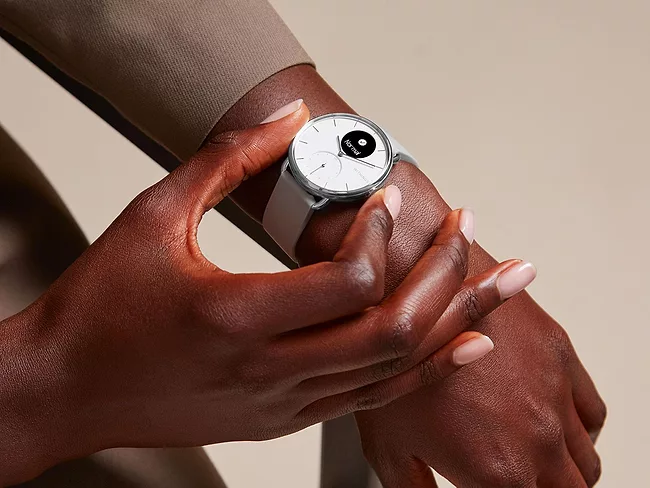
After nearly two years of waiting, Withings SA won FDA clearance for its Scanwatch, a smartwatch that can take an electrocardiogram and monitor for sleep disturbances indicative of sleep apnea or respiratory illnesses such as chronic obstructive pulmonary disease. The FDA action makes the watch the first cleared for both functions.