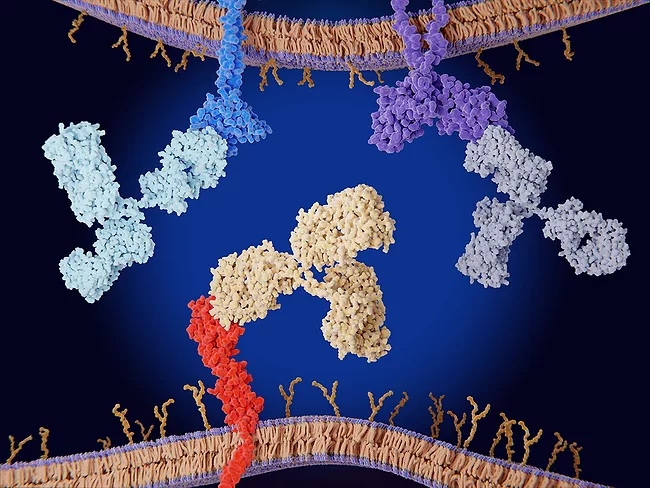
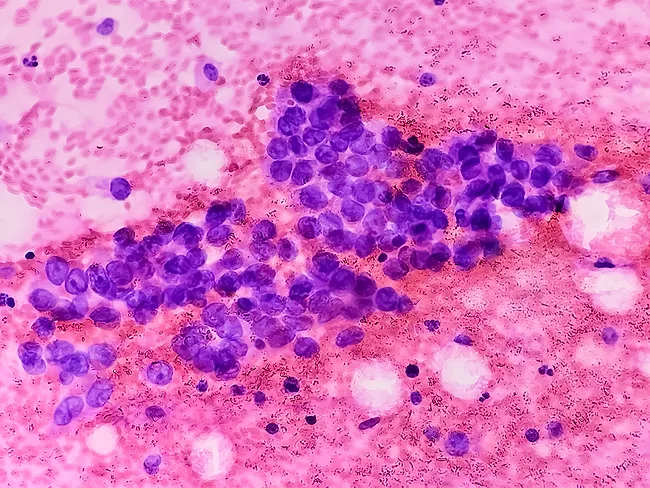
The FDA’s Oncologic Drugs Advisory Committee (ODAC) met for what chairperson Christopher Lieu called, at the end, “an incredibly long day” to decide whether approval of immune checkpoint inhibitors should be restricted in accordance with expression levels of PD-L1.
The U.S. FDA’s Oncologic Drugs Advisory Committee (ODAC) on Sept. 26 will take up a controversy that’s hardly new: whether approval of immune checkpoint inhibitor drugs should be restricted in accordance with PD-L1 expression.
Instil Bio Inc. plans re-energize the company by in-licensing the development and commercial rights to antibodies outside of China from Shanghai-based Immuneonco Biopharmaceuticals Inc. In return, Immuneonco is getting an undisclosed up-front payment and the chance for near-term payments of up to $50 million.
Instil Bio Inc. plans re-energize the company by in-licensing the development and commercial rights to antibodies outside of China from Shanghai-based Immuneonco Biopharmaceuticals Inc. In return, Immuneonco is getting an undisclosed up-front payment and the chance for near-term payments of up to $50 million.
The European Commission has approved Cstone Pharmaceuticals Ltd.’s PD-L1 monoclonal antibody, sugemalimab, in combination with platinum-based chemotherapy for first-line treatment of adults with metastatic non-small-cell lung cancer with no sensitizing EGFR mutations, or ALK, ROS1 or RET genomic tumor aberrations.
Two weeks after reporting positive top-line results in first-line head and neck cancer with its lead candidate, eftilagimod alfa, in combination with Merck & Co. Inc.’s Keytruda (pembrolizumab), Immutep Ltd. presented updated data indicating the treatment could offer a non-chemotherapy option for patients with negative PD-L1 expression. Data from cohort B of the Tacti-003 (Keynote-PNC-34) phase IIb trial, which included 31 evaluable patients with PD-L1 expression of less than 1, as measured by Combined Proportion Score, showed a 35.5% objective response rate per RECIST 1.1 assessment.
Two weeks after reporting positive top-line results in first-line head and neck cancer with its lead candidate, eftilagimod alfa, in combination with Merck & Co. Inc.’s Keytruda (pembrolizumab), Immutep Ltd. presented updated data indicating the treatment could offer a non-chemotherapy option for patients with negative PD-L1 expression. Data from cohort B of the Tacti-003 (Keynote-PNC-34) phase IIb trial, which included 31 evaluable patients with PD-L1 expression of less than 1, as measured by Combined Proportion Score, showed a 35.5% objective response rate per RECIST 1.1 assessment.
A new approach against non-small-cell lung cancer (NSCLC) has combined immunotherapy with molecularly targeted therapy to activate the immune response and inhibit oncogenic pathways, which prevented tumor progression and eliminated cancer cells. Brigham and Women’s Hospital scientists have developed nanoparticles loaded with antibody conjugates that could deliver large amounts of treatment to the tumor tissue. This new strategy could improve the results of conventional immunotherapy in these patients and reduce toxicity of existing treatments.
Amid intensifying competition in the PD-1/PD-L1 checkpoint space, Samsung Bioepis Co. Ltd. kicked off a phase I study of SB-27, a biosimilar of Merck & Co Inc.’s blockbuster immunotherapy, Keytruda (pembrolizumab), for lung cancer. Posted on clinicaltrials.gov on Feb. 20, the randomized, double-blind, three-arm, parallel group and multicenter phase I study will examine the pharmacokinetics, efficacy and safety of SB-27 against an EU-sourced and U.S.-sourced Keytruda in 135 patients with non-small-cell lung cancer.
Amid intensifying competition in the PD-1/PD-L1 checkpoint space, Samsung Bioepis Co. Ltd. kicked off a phase I study of SB-27, a biosimilar of Merck & Co Inc.’s blockbuster immunotherapy, Keytruda (pembrolizumab), for lung cancer. Posted on clinicaltrials.gov on Feb. 20, the randomized, double-blind, three-arm, parallel group and multicenter phase I study will examine the pharmacokinetics, efficacy and safety of SB-27 against an EU-sourced and U.S.-sourced Keytruda in 135 patients with non-small-cell lung cancer.