The U.S. Centers for Medicare & Medicaid Services (CMS) has released the prospective payment rule for end-stage renal disease (ESRD) for calendar year 2024, and advocates had some luck prompting the agency to boost the base ESRD payment rate. However, Atlanta-based Pain Care Labs Inc. came up short in its transitional add-on payment application for the Buzzy Pro for relief of puncture wound site pain because, according to CMS, the device does not represent a substantial improvement over currently available remedies.
The proposed U.S. Medicare framework titled Transitional Coverage for Emerging Technologies (TCET) promises to expand on existing mechanisms for Medicare device coverage, but industry has serious misgivings about the proposal.
The debate in the U.S. over the process by which the Medicare program covers new medical technologies has intensified over the past three years and the debate has now spilled onto the pages of the Journal of the American Medical Association. An article in JAMA asserts that only 44% of a group of 64 novel devices had achieved meaningful coverage and reimbursement milestones within a median of 5.7 years after FDA market authorization, adding yet more pressure on the legislative and executive branches to act to deal with what device makers characterize as the med-tech valley of death.
The U.K. National Institute for Health and Care Excellence (NICE) is considering a coverage policy for stenting of the carotid arteries in asymptomatic patients, a change that could give these stents a significantly larger patient population in the U.K.
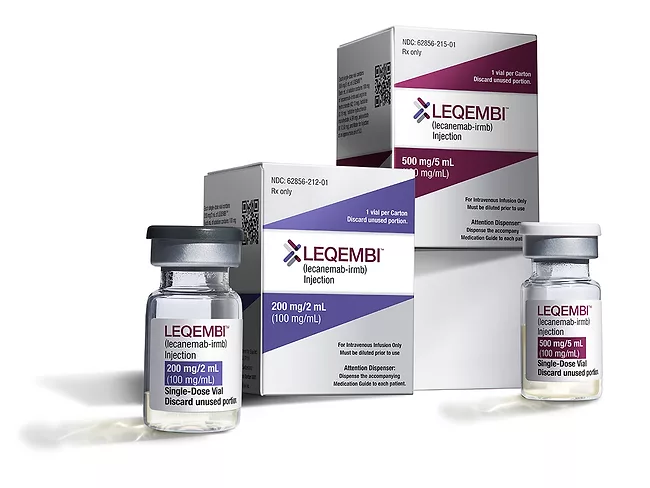
The black box warning appended to the label of Alzheimer’s disease (AD) drug Leqembi (lecanemab) took some on Wall Street mildly aback but failed to surprise others, as analysts mulled what the full approval, granted July 6 by the U.S. FDA, might mean for other developers in the space.
The black box warning appended to the label of Alzheimer’s disease (AD) drug Leqembi (lecanemab) took some on Wall Street mildly aback but failed to surprise others, as analysts mulled what the full approval, granted July 6 by the U.S. FDA, might mean for other developers in the space.
For several years, the U.S. CMS has been musing a coverage policy specifically for breakthrough medical devices, and the absence of activity on this front has once again drawn the attention of Congress. Rep. Cathy McMorris Rodgers (R-Wash.), said a representative of CMS had recently appeared before a House subcommittee for the first time in four years, and that the subcommittee is prepared to act on breakthrough devices coverage if CMS doesn’t produce a final rule this year.
Abbott Laboratories Inc. landed U.S. FDA clearance for its Freestyle Libre 3 integrated continuous glucose monitoring system (CGM)’s reader device a bit earlier than expected. With the regulatory greenlight for the durable medical equipment component received, the company is now pursuing coverage by the CMS for the entire Freestyle Libre 3 system. The system’s sensor received FDA clearance in May 2022.
The U.S. CMS has a few changes in mind for the new technology add-on program (NTAP) for fiscal year 2024, including a proposal to allow manufacturers to apply for an NTAP payment only after the sponsor has filed a completed premarket application with the FDA. Perhaps more significantly, the deadline for FDA approval would also be moved up earlier in the calendar year, from July 1 to May 1, a change that could eliminate a year of NTAP eligibility for a significant number of products.
The Feb. 13-14 meeting of the U.S. Medicare Evidence Development and Coverage Advisory Committee (MedCAC) was the second step in an effort by CMS to overhaul the coverage with evidence development (CED) mechanism. While the meeting took place with the overhang of the issue of coverage for U.S. FDA-designated breakthrough devices, it seems there are changes coming to the CED program regardless of the breakthrough devices question, such as the imposition of CED study milestones that would presumably thwart the never-ending CED study per a vote held during the hearing.