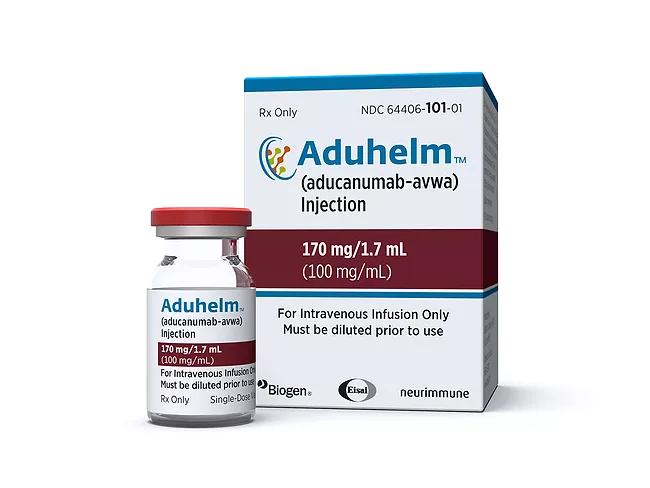
In proposing a national coverage determination to limit coverage of a class of Alzheimer’s drugs to those being used in clinical trials approved by the U.S. Center for Medicare & Medicaid Services or the NIH, CMS appears to be treading in FDA territory. “For the first time ever, Medicare is second-guessing FDA – and not only on work that it has already done, but on work FDA will do in the future,” said George Vradenburg, chair and co-founder of Us Against Alzheimer’s, a patient advocacy group. “HHS [the Department of Health and Human Services] is clearly at war with itself, with one agency approving this class of drugs and another slamming the door shut on treatment. . .. Does CMS no longer trust the FDA’s work?”
This could be a make-or-break week for Biogen Inc., with the U.S. Centers for Medicare & Medicaid Services (CMS) expected to announce a draft coverage decision for the company’s Alzheimer’s drug, Aduhelm.
A U.S. price-slashing Trump-era rule establishing a most-favored nation (MFN) model for part B drugs is officially dead. The death of the interim final rule that originally was scheduled to go into effect Jan. 1, 2021, comes as no surprise. Following court challenges that resulted in a preliminary injunction against the launch of the seven-year mandatory pricing model, the Biden administration proposed a rule rescinding the model in August.
The FDA’s recent release of documents related to its accelerated approval of Aduhelm (aducanumab) did little to reduce the controversy surrounding that decision and the U.S. pricing of Biogen Inc.’s Alzheimer’s drug.
The history of Medicare coverage of transcatheter aortic valve replacement (TAVR) devices has not lacked for controversy despite the massive positive impact on outcomes. Ashwin Nathan, of Hospital of the University of Pennsylvania, said a new analysis made clear that the expansion of centers qualified to perform TAVR procedures has been nearly all in high population density areas with an existing TAVR program, thus leaving out the still-forgotten rural patient.
Responding to concerns about last-minute changes the Trump administration made to the Part D Payment Modernization Model for calendar year 2022, the Centers for Medicare & Medicaid Services (CMS) said March 16 that it is not moving forward with the formulary flexibilities that could have restricted Medicare patients’ access to necessary drugs.
A new rule intended to give drug manufacturers the flexibility they need to enter into value-based purchasing agreements with state Medicaid programs and commercial payers could end up hurting patients at the pharmacy counter in the U.S.
The latest global regulatory news, changes and updates affecting medical devices and technologies, including: FDA posts list of essential devices, drugs; Members of Congress query NIH’s Collins on RADx program; Imminent malware threat reported; CDC posts telehealth report; CMS unveils seven AI competition finalists.
If a new federal rule withstands politics and potential court challenges, U.S. health care prices may finally be freed from their historic black box. The Centers for Medicare & Medicaid Services, along with the Departments of Labor and the Treasury, issued the Transparency in Coverage final rule Oct. 29 requiring most private health plans to disclose pricing and cost-sharing information so Americans will know in advance how much they will have to pay for prescription drugs, medical devices and other health care products and services.
After 30 years of following the same rules to ensure Medicaid receives the lowest price available for prescription drugs, the U.S. Centers for Medicare & Medicaid Services (CMS) is starting to adapt those rules for the 21st century.