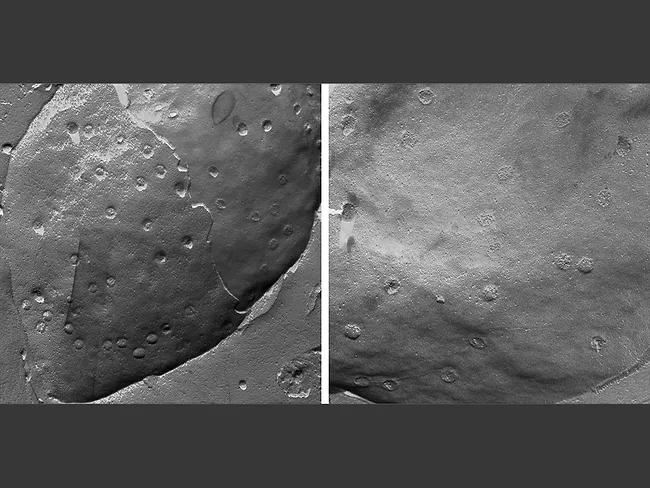
As they matured from prenatal to adult, heart cells reduced the number of nuclear pores by more than 60%. That decrease protected them from the consequences of stress, but also impaired their ability to regenerate. “These findings are an important advance in fundamental understanding of how the heart develops with age and how it has evolved to cope with stress,” senior author Bernhard Kühn, professor of pediatrics and director of the Pediatric Institute for Heart Regeneration and Therapeutics at the University of Pittsburgh School of Medicine, said in a press release. Kühn and his colleagues published those findings in the Oct. 24, 2022, issue of Developmental Cell.
The 2022 Transcatheter Cardiovascular Therapeutics annual meeting highlighted mostly positive outcomes from major trials conducted by nearly all the big players in the cardiac device market. Here’s our round-up of the meeting’s high points, with updates from Abbott Laboratories, Abiomed Inc., Boston Scientific Corp., Edwards Lifesciences Corp., Inari Medical Inc., Medtronic plc and Recor Medical Inc.
In an unexpected turn of events, Medtronic plc presented results from the Symplicity HTN-3 trial at year 3 showed sustained reductions in blood pressure with radiofrequency renal denervation (RDN) for resistant hypertension, contrary to the trial’s results at the six-month mark—and it wasn’t alone in showing positive results for the procedure.
The U.S. FDA has granted breakthrough device designation to Potrero Medical Inc. for its AKI Predict machine learning algorithm for the advanced prediction of acute kidney injury (AKI) associated with intra-abdominal hypertension (IAH) in intensive care patients recovering from cardiac surgery.
Southern Marine Science and Engineering Guangdong Laboratory and Guangdong Medical University have disclosed peptides acting as angiotensin-converting enzyme (ACE) inhibitors reported to be useful for the treatment of hypertension.
Doctors will “unequivocally view as a major advance” Cincor Pharma Inc.’s oral baxdrostat for patients with treatment-resistant hypertension, said Deepak Bhatt, director of interventional cardiovascular programs at Brigham and Women’s Hospital and professor at Harvard Medical School. “There are a lot of these folks out there, and physicians don’t know what to do with them right now,” he said, noting that many end up in emergency rooms.
Orchestra Biomed Inc. struck a deal with Medtronic plc to develop a cardiac neuromodulation therapy as a potential integrated hypertension treatment for cardiac pacemaker patients. Medtronic also joined a $110 million series D round, led by RTW Investments, to invest in the biomedical company as it announced plans to list on the Nasdaq.
From 20 years of research on metabolic change as a result of salt intake, Karen Duggan discovered in 2003 that a naturally occurring molecule in the human body, native vasoactive intestinal peptide (VIP), was capable of reversing fibrosis caused by hypertension and other chronic diseases such as diabetes. From that discovery, Vectus Biosystems Ltd. was founded, and the company has developed a new class of mimetic drug candidates and a drug library based on VIP.
Philadelphia’s Mineralys Therapeutics Inc. has secured a further $118 million to develop MLS-101, a potential hypertension drug in-licensed from Mitsubishi Tanabe Pharma Corp.