Plexāā Ltd. recently raised $4.5 million to support the upcoming U.S. launch of Bloom43, its wearable device that helps patients prepare for breast cancer surgery and reconstruction by using a technique called supraphysiological preconditioning.
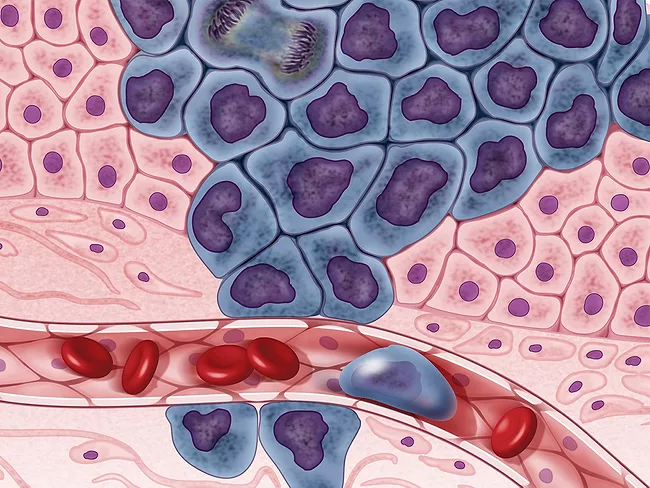
In the current landscape of cancer research, much attention is focused on the tumor microenvironment (TME) at both the primary site and established metastases. However, the early micrometastatic niche remains poorly understood. Researchers from the Hospital del Mar Research Institute (HMRI) have pinpointed T cell immunoglobulin and mucin domain 3 (TIM3) as a key vulnerability in tumor micrometastasis, revealing a new target to halt metastatic progression at its origin.
Dysfunction of the tumor suppressor p53, commonly resulting from MDM2 overexpression or gene mutations, plays a key role in breast cancer progression. While the bioactive compound piperine has been shown to enhance p53 activity, its clinical utility is limited by poor bioavailability, potential toxicity and the risk of adverse drug interactions.
Serac Imaging Systems Ltd. reported encouraging data from two clinical trials demonstrating the effectiveness of its Seracam portable hybrid gamma-optical camera as a point-of-care imaging solution. The studies show the camera’s value in nuclear medicine, particularly for small organ imaging and image-guided surgery, while also revealing new potential applications beyond those initially expected.
Nanjing Chia Tai Tianqing Pharmaceutical Co. Ltd. has disclosed bifunctional compounds acting as RAC serine/threonine-protein kinase (AKT; PKB) degraders reported to be useful for the treatment of cancer.
Researchers at the Chinese Academy of Sciences and collaborators have developed a new method to label and monitor dormant breast cancer cells over time, shedding light on how these cells survive chemotherapy and potentially trigger metastatic relapse in the lung. Breast cancer frequently recurs in distant metastatic sites, even after the primary tumor has fully regressed following initial therapy.
One of the functions of tumor-associated macrophages (TAMS) is to protect the tumor against the immune system, inhibiting T-cell engagement and reducing the efficacy of checkpoint inhibitors. Polyamidoamine hydroxyl dendrimers (HDs) target TAM without the need of a targeting ligand and are retained by TAMs for up to 1 month allowing radiation to deposit in the tumor.