Detailed data are expected later, but partners Biontech SE and Duality Biologics Co. Ltd. are celebrating a phase III interim analysis readout demonstrating that HER2-targeting antibody-drug conjugate (ADC) trastuzumab pamirtecan hit the primary endpoint of progression-free survival in patients with HER2-positive unresectable or metastatic breast cancer who have previously received trastuzumab and a taxane-based chemotherapy.
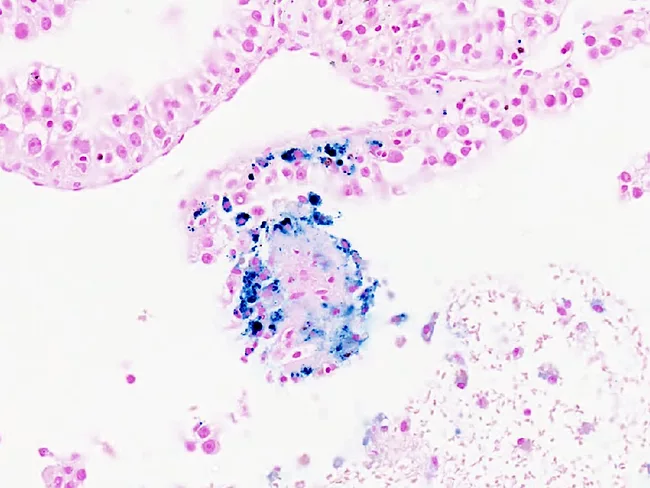
If a cancer patient has bone metastases, they will frequently have anemia as well. Given that the bone marrow is the site of blood cell formation, this observation is perhaps not unexpected. But its molecular underpinnings had been unclear to date. Now, researchers at Princeton University and the Rutgers Cancer Institute of New Jersey have identified a specialized group of iron-transporting macrophages in the metastasis-anemia link.
“New explosions in biotechnology are allowing us to interrogate cancers at a very sophisticated level compared to before,” Dennis Slamon told audience members at the Global Bio Conference in Seoul, South Korea Sept. 3.
Scientists at National University of Singapore and Agency for Science Technology & Research Bioprocessing Technology Institute have identified MAPK-interacting kinase (MNK) inhibitors, particularly MNK1 and MNK2 inhibitors reported to be useful for the treatment of triple-negative breast cancer (TNBC) metastatic to the brain.
Genescience Pharmaceuticals Co. Ltd. has identified camptothecin derivatives acting as DNA topoisomerase I inhibitors reported to be useful for the treatment of cancer.
Ensem Therapeutics Inc. has disclosed phosphatidylinositol 3-kinase α (PI3Kα) inhibitors, particularly PI3Kα mutant inhibitors, reported to be useful for the treatment of cancer.
Lee Dae-hong founded Aivis Inc. in January 2021 as an AI-powered pathology software company, having led the development of the world’s first commercial under-display fingerprint recognition algorithm that was later incorporated into the Galaxy S10 and Galaxy A series of smartphones of Samsung Electronics Co. Ltd.
Relay Therapeutics Inc. has disclosed compounds acting as phosphatidylinositol 3-kinase α (PI3Kα) inhibitors reported to be useful for the treatment of cancer and PIK3CA-related overgrowth spectrum (PROS).
The discovery of the ‘Warburg effect’ more than 80 years ago implied that inhibiting tumor cells’ ability to consume abnormally large amounts of glucose could prevent them from growing. Taking advantage of the fact that hexokinase-2 catalyzes the first step of glucose metabolism, researchers at Yıldız Teknik Üniversitesi and collaborators identified novel derivatives of the hexokinase-2 inhibitor lonidamine and identified at least one that was potentially more potent and less toxic.