Basal-like breast cancer is a particularly aggressive subtype of the malignancy, for which it has been difficult to identify good therapeutic targets. In collaboration, European researchers mined public transcriptome datasets to show that the aldehyde dehydrogenase 1A isoform ALDH1A3 was predominantly expressed in epithelial cells within basal-like tumors, whereas the isoforms ALDH1A1 and ALDH1A2 were predominantly expressed in stromal and immune-associated cells.
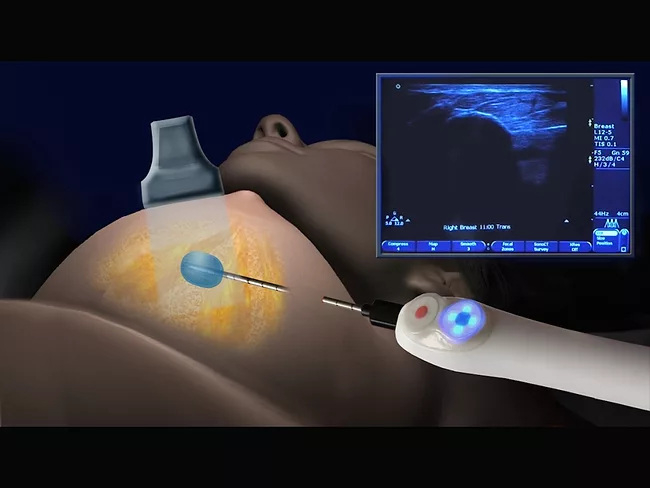
Icecure Medical Ltd. reported that the U.S. FDA has granted marketing authorization to Icecure's de novo application for the Prosense cryoablation system for the local treatment of breast cancer in patients 70 years of age or older with biologically low-risk tumors. The authorized indication includes patients that are not suitable for surgery for breast cancer treatment.
Beijing DP Technology Co. Ltd. has divulged proteolysis targeting chimera (PROTAC) compounds comprising an E3 ubiquitin ligase-binding moiety covalently bonded to a Myc proto-oncogene protein (c-Myc)-targeting moiety through a linker reported to be useful for the treatment of cancer, viral infections, and cardiovascular, immunological and cerebrovascular disorders.
Eli Lilly and Co.’s oral selective estrogen receptor degrader (SERD) imlunestrant has been approved by the U.S. FDA for treating late-stage breast cancer patients. Branded Inluriyo, the second-line treatment is for treating adults with estrogen receptor-positive, human epidermal growth factor receptor-2-negative estrogen receptor 1-mutant advanced or metastatic breast cancer.
Asieris Pharmaceuticals Co. Ltd. has identified compounds acting as inhibitors of CDK1/cyclin A2, CDK2/cyclin E1, CDK4/cyclin D1 and CDK6/cyclin D1 reported to be useful for the treatment of breast and ovary cancer.
Hangzhou Zhongmei Huadong Pharmaceutical Co. Ltd. has divulged antibody-drug conjugates (ADCs) comprising antibodies targeting human mucin-17 (MUC17) covalently linked to a cytotoxic drug through a linker reported to be useful for the treatment of cancer.